In the summer I listened to an EconTalk podcast with Prof. Robert Frank of Cornell University. The podcast can be listened to here. Consider this statement from Robert Frank:
"In Los Angeles, in order to meet the air quality targets they were shooting for, they had to adopt stringent nitrous oxide (NOx) requirements on new vehicles because they were unwilling to have old vehicles comply with the pollution requirements--mostly low income drivers drive the old vehicles and it was thought to be too onerous to require them to comply. So we ratcheted up the requirements on the new cars to meet the target and it was about $900 a pound to get all the NOx out of new cars--all the low-hanging fruit had already been picked in that domain--so for the inevitable democratic impulse to shield poor people from hardship we ended up spending $900/pound to get NOx out of the air, whereas if we had forced older vehicles to come into compliance we could have gotten that same pound out for $10. Way cheaper over all if we'd taxed wealthy motorists in California a little bit extra and given a voucher to poor motorists, who would turn in their old cars and buy a 5-year old Toyota Corolla or some other compliant vehicle."
The example above relates to the content of a class I am taking called "Environmental Policy Analysis".We talked today about pollution standards and how they could be inherently more inefficient in terms of social and economic costs. If we wanted to improve air quality for everyone (using the LA example), then it would be more sensible to tax the wealthier motorists so that enough money could be re-distributed to lower-income drivers to purchases cars that are less intensive in terms of NOx. This would be a much less expensive way to alleviate pernicious pollutants that cause respiratory illnesses. Standards are helpful but when considering overall economic costs, there are more efficient and equitable ways of doing it. Yes, this is also a political game, but political games such as these ones can make everyone worse off.
More to come on risk management, environmental policy and how to improve decisions that make everyone better off.
Tuesday, September 27, 2011


Thursday, September 22, 2011
An Integrated Planning Approach to Climate Change Adaptation
I will be presenting my research at the Eighth International Conference on Environmental, Cultural, Economic and Social Sustainability in January 2012. The conference will be held at the Robson Square, University of British Columbia, Vancouver, Canada from 10 to 12 January 2012.
My title is "An Integrated Planning Approach to Climate Change Adaptation: Exploring the Water Sector in Canada". My abstract is below and has been slightly revised since. But here is the gist:
Through my internship with the Pacific Institute for Climate Solutions, I have been exploring strategies and best practices surrounding climate change adaptation in the water sector in Canada and abroad. Interest in adaptation could not come at a more important time as various academics and practitioners are pressuring the Canadian government to reconsider a more holistic and robust water policy. Given the complexity and uncertainty surrounding climate change, adaptation must take a holistic and pro-active approach to consider environmental and economic strategies that will help us adapt today to bring a more promising tomorrow. Through a literature review, content analysis, and the use of social media, my project develops a planning guide based on best practices in the water sector that the federal government could use to make decisions on how fund or assist communities with their adaptation plans.
The intended results are to complement the growing national movement calling for a Canadian water policy. Through contacting professionals in the water field along with raising awareness of the value of water through social media, this project will engage various perspectives and beliefs - all of which are critical for creating robust adaptation plans with a supportive national water policy.
My title is "An Integrated Planning Approach to Climate Change Adaptation: Exploring the Water Sector in Canada". My abstract is below and has been slightly revised since. But here is the gist:
Through my internship with the Pacific Institute for Climate Solutions, I have been exploring strategies and best practices surrounding climate change adaptation in the water sector in Canada and abroad. Interest in adaptation could not come at a more important time as various academics and practitioners are pressuring the Canadian government to reconsider a more holistic and robust water policy. Given the complexity and uncertainty surrounding climate change, adaptation must take a holistic and pro-active approach to consider environmental and economic strategies that will help us adapt today to bring a more promising tomorrow. Through a literature review, content analysis, and the use of social media, my project develops a planning guide based on best practices in the water sector that the federal government could use to make decisions on how fund or assist communities with their adaptation plans.
The intended results are to complement the growing national movement calling for a Canadian water policy. Through contacting professionals in the water field along with raising awareness of the value of water through social media, this project will engage various perspectives and beliefs - all of which are critical for creating robust adaptation plans with a supportive national water policy.
Sunday, September 18, 2011
U.S. partisan divide over the causes of global warming
Stories in 2011 concering the debate about what causes global warming are always supremely entertaining for me. Check out this story from the Environmental Economics blog:
"37% of Democrats believe global warming is the result primarily of human action, while only 14% of Republicans believe this. Conversely, 43% of Republicans believe global warming is the result of natural causes, up from 35% in 2010. Self-identified Tea Party members display still more certainty (49%) that global warming is caused by natural events".
More here.
"37% of Democrats believe global warming is the result primarily of human action, while only 14% of Republicans believe this. Conversely, 43% of Republicans believe global warming is the result of natural causes, up from 35% in 2010. Self-identified Tea Party members display still more certainty (49%) that global warming is caused by natural events".
More here.
Saturday, September 17, 2011
An introduction to ecological economics
I am taking a course this term with Professor Bill Rees. Bill Rees is renowned for co-creating the Ecological Footprint concept back in the mid-1990s. Bill is also a distinguished professor in my graduate program (SCARP).
The course I am taking with Bill is all about about ecological economics. In short, ecological economics is about treating the economy as a subsystem of the ecosystem and has an emphasis upon preserving natural capital.
Here is short and informative introduction to the discipline.
The course I am taking with Bill is all about about ecological economics. In short, ecological economics is about treating the economy as a subsystem of the ecosystem and has an emphasis upon preserving natural capital.
Here is short and informative introduction to the discipline.
Thursday, September 15, 2011
A great article on financially sustainable mass transit systems
David Levinson is Professor of Transportation Engineering at the University of Minnesota. He blogs at The Transportationist. Check out his post on some ideas on how to achieve financially sustainable mass transit systems. Many cities around the world recognize that transit is an indispensable component of greening their cities. Transit brings a number of benefits with the obvious environmental gains being shown through decreased carbon emissions per capita in the transportation sector.
The real challenge being faced by transit agencies around the world is financing their systems. They have to overcome a lot of inefficiencies that are embedded in the system (often created by local governments). Levinson has some good ideas. Here is the start of his post:
"Mass transit systems in the United States are collectively losing money hand over fist. Yet many individual routes (including bus routes) earn enough to pay their own operating (and even capital costs). But like bad mortgages contaminating the good, money-losing transit routes are bogging down the system."
More here.
The real challenge being faced by transit agencies around the world is financing their systems. They have to overcome a lot of inefficiencies that are embedded in the system (often created by local governments). Levinson has some good ideas. Here is the start of his post:
"Mass transit systems in the United States are collectively losing money hand over fist. Yet many individual routes (including bus routes) earn enough to pay their own operating (and even capital costs). But like bad mortgages contaminating the good, money-losing transit routes are bogging down the system."
More here.
Wednesday, September 14, 2011
Links on climate change adaptation
Multidisciplinary team led by Indiana University professor Elinor Ostrom to conduct research on impact of climate change, capacity for adaptation.
For those who do not know Elinor Ostrom (2009 Nobel Laureate in Economic Sciences for her analysis of economic governance,) see here.
How to pursue policies that are based on climate change adaptation and mitigation to yield benefits in both camps.
For those who do not know Elinor Ostrom (2009 Nobel Laureate in Economic Sciences for her analysis of economic governance,) see here.
How to pursue policies that are based on climate change adaptation and mitigation to yield benefits in both camps.
Tuesday, September 13, 2011
Tim Jackson on prosperity without growth
Jackson says "prosperity consists in our ability to flourish as human beings within the ecological limits of a finite planet".
More here.
Monday, September 12, 2011
Private cities in the developing world
The idea sounds completely absurd but private cities are ostensibly taking off in many developing countries. Marginal Revolution tells the story here.
"Private cities are happening now for a reason. Africa, India, and China are urbanizing more rapidly than has ever occurred in human history. In Africa, the number of urban dwellers is projected to increase by nearly 400 million, in India at least 250 million will move to cities and in China more than 400 million will move to cities in just the next 20 years... The rising middle-class want to live in first-world cities and in many of these countries only the private sector can deliver those cities".
Private cities will surely provide the much desired amentities and infrastructure for those that can afford it, but I worry about the inequality and complete exclusion that can emerge from this. Yes, these cities can probably help places urbanize and provide what Jane Jacobs would call "multiplicity of choice". But if the benefits and opportunities are overwhelmingly concentrated in them -- while neglecting other places in the city -- there could be severe ramifications.
"Private cities are happening now for a reason. Africa, India, and China are urbanizing more rapidly than has ever occurred in human history. In Africa, the number of urban dwellers is projected to increase by nearly 400 million, in India at least 250 million will move to cities and in China more than 400 million will move to cities in just the next 20 years... The rising middle-class want to live in first-world cities and in many of these countries only the private sector can deliver those cities".
Private cities will surely provide the much desired amentities and infrastructure for those that can afford it, but I worry about the inequality and complete exclusion that can emerge from this. Yes, these cities can probably help places urbanize and provide what Jane Jacobs would call "multiplicity of choice". But if the benefits and opportunities are overwhelmingly concentrated in them -- while neglecting other places in the city -- there could be severe ramifications.
The transit funding discussion continues in Metro Vancouver
A recent article in the Globe and Mail titled "Transit advocates launch campaign for property-tax hike" adds to the hitherto highly mixed discussion regarding funding for TransLink, the regional transportation authority for Metro Vancouver.
The article makes reference to a group in Vancouver called the Sustainable Transportation Coalition:
"An influential group of planners, architects, and environmentalists is launching a campaign this week to persuade hesitant Metro Vancouver mayors to commit to property-tax increases in order to kick-start a plan for massive transit expansion."
The group favours a hike in property taxes to pay for transit, but they have also echoed support for using revenues from the carbon tax and road pricing as well. Here is some information about the funding plan that is going to be voted on within the next month among the 22 mayors in Metro Vancouver:
"The plan, which is a supplement to TransLink’s basic operating budget, would raise $700-million over 10 years. That would provide TransLink’s share for the long-delayed Evergreen Line in the northeast. It would also provide another $300-million for other major improvements, including a bus on King George in Surrey, a Highway 1 express bus for Langley commuters, and an extra SeaBus for the North Shore".
Whichever funding alternatives gets the green light, this will be a momentous decision for transit in Metro Vancouver for the future.
The article makes reference to a group in Vancouver called the Sustainable Transportation Coalition:
"An influential group of planners, architects, and environmentalists is launching a campaign this week to persuade hesitant Metro Vancouver mayors to commit to property-tax increases in order to kick-start a plan for massive transit expansion."
The group favours a hike in property taxes to pay for transit, but they have also echoed support for using revenues from the carbon tax and road pricing as well. Here is some information about the funding plan that is going to be voted on within the next month among the 22 mayors in Metro Vancouver:
"The plan, which is a supplement to TransLink’s basic operating budget, would raise $700-million over 10 years. That would provide TransLink’s share for the long-delayed Evergreen Line in the northeast. It would also provide another $300-million for other major improvements, including a bus on King George in Surrey, a Highway 1 express bus for Langley commuters, and an extra SeaBus for the North Shore".
Whichever funding alternatives gets the green light, this will be a momentous decision for transit in Metro Vancouver for the future.
Tuesday, September 6, 2011
Coping with a drought in Central Texas
This article from the NY Times tells a story of how Llano, Texas is coping with a water drought.
"Government has always had a hard time telling Texans how to live. But the ban on most types of outdoor watering has been embraced by people in Llano, where a kind of World War II-era rationing spirit has become a way of life."
Residents are taking several innovative steps to conserve water and make use with as little as possible. Alas, there is no discussion about water pricing. Texas, like many southern states, is subject to droughts. Implementing pricing measures to reflect water scarcity would go a long way in helping communities like Llano adapt to climate change. All this would mean is that when there are droughts and water supplies are limited, a pricing structure would be in place to reflect how much water there is. As droughts portend limited water, prices would be high and would theoretically send a signal to households to use less.
"Government has always had a hard time telling Texans how to live. But the ban on most types of outdoor watering has been embraced by people in Llano, where a kind of World War II-era rationing spirit has become a way of life."
Residents are taking several innovative steps to conserve water and make use with as little as possible. Alas, there is no discussion about water pricing. Texas, like many southern states, is subject to droughts. Implementing pricing measures to reflect water scarcity would go a long way in helping communities like Llano adapt to climate change. All this would mean is that when there are droughts and water supplies are limited, a pricing structure would be in place to reflect how much water there is. As droughts portend limited water, prices would be high and would theoretically send a signal to households to use less.
Monday, September 5, 2011
A radical SuperFreakonomics story has come to fruition
A year ago, I blogged about a famous book called "SuperFreakonomics" by Steven Levitt and Stephen Dubner (read my review here). One chapter in their book titled "What Do Al Gore and Mount Pinatubo Have in Common?" is all about solutions to climate change. In this chapter, Levitt and Dubner specifically embrace geo-engineering solutions which are highly controversial in climate change circles. One of the wild and far fetched geo-engineering ideas reported, evidently thought of by Intellectual Ventures, is the garden hose to the sky:
"A team of British researchers called SPICE (Stratospheric Particle Injection for Climate Engineering) is trying to pump particles of water into the atmosphere as a test run before moving onto sulfates and aerosols that would reflect sunlight away from earth, mimicking the aftereffect of a massive volcanic eruption. SPICE is building the garden hose at an undisclosed location, with £1.6 million in U.K. government funding and the backing of the Royal Society".
Essentially a long garden hose from the Earth would pump sulfur dioxide into the stratosphere to allow for a cooling effect.
Sound a little nuts to you? This is one of many geo-engineering ideas out there. Amid the ambivalence about how to mitigate GHGs and adapt to climate change, geo-engineering nerds and fanatics are proposing solutions that, while controversial on the surface, may have some merit if we explore our curiosities and gamble with risks. I am skeptical of geo-engineering myself but am interested nonetheless.
More about this here.
"A team of British researchers called SPICE (Stratospheric Particle Injection for Climate Engineering) is trying to pump particles of water into the atmosphere as a test run before moving onto sulfates and aerosols that would reflect sunlight away from earth, mimicking the aftereffect of a massive volcanic eruption. SPICE is building the garden hose at an undisclosed location, with £1.6 million in U.K. government funding and the backing of the Royal Society".
Essentially a long garden hose from the Earth would pump sulfur dioxide into the stratosphere to allow for a cooling effect.
Sound a little nuts to you? This is one of many geo-engineering ideas out there. Amid the ambivalence about how to mitigate GHGs and adapt to climate change, geo-engineering nerds and fanatics are proposing solutions that, while controversial on the surface, may have some merit if we explore our curiosities and gamble with risks. I am skeptical of geo-engineering myself but am interested nonetheless.
More about this here.
Wednesday, August 31, 2011
A less enthusiastic take on HSR in China
Image Credit: The Globe and Mail (August 12, 2011)
We have blogged about high speed rail (HSR) several times before, particularly focusing on China (see here and here). Amid my research this past year and constant enthusiasm for HSR in China, my own perspective on it has changed dramatically over the past few months. I was skeptical about its rapid progress to begin with, but the July 23rd crash only furthered my worries and general skepticism.

As shown in the map above, China leads the world in kilometres of HSR. The environmental motivations for this nation wide network are admirable, but given the citizens' demand for more low-cost transportation, along with a security of reaching destinations in a safe manner, HSR provides a case of tremendous uncertainty.
You can read this article for a more complete picture outlining genuine concerns of HSR in China. Take note: I am not against HSR in China. I think the country is on the right track in terms of sustainable transportation. However, rushing such projects with complete government control to ostensibly show off the nation's great technological rise is a bit idiotic, and when crashed do occur, this not only instills fear in the nation's citizens, but casts doubt from people all over the world.
We have blogged about high speed rail (HSR) several times before, particularly focusing on China (see here and here). Amid my research this past year and constant enthusiasm for HSR in China, my own perspective on it has changed dramatically over the past few months. I was skeptical about its rapid progress to begin with, but the July 23rd crash only furthered my worries and general skepticism.

As shown in the map above, China leads the world in kilometres of HSR. The environmental motivations for this nation wide network are admirable, but given the citizens' demand for more low-cost transportation, along with a security of reaching destinations in a safe manner, HSR provides a case of tremendous uncertainty.
You can read this article for a more complete picture outlining genuine concerns of HSR in China. Take note: I am not against HSR in China. I think the country is on the right track in terms of sustainable transportation. However, rushing such projects with complete government control to ostensibly show off the nation's great technological rise is a bit idiotic, and when crashed do occur, this not only instills fear in the nation's citizens, but casts doubt from people all over the world.
Monday, August 29, 2011
Is the G.O.P. Anti-Science?
In a recent Op-Ed in the NY Times', columnist Paul Krugman argues that the Grand Old Party (GOP for short and the nickname for the Republican Party in the U.S.) is becoming anti-science. Paul cites just a few examples of Republican party contender nominees who still question topics such as evolution and climate change:
"Mr. Perry, the governor of Texas, recently made headlines by dismissing evolution as “just a theory,” one that has “got some gaps in it” — an observation that will come as news to the vast majority of biologists. But what really got peoples’ attention was what he said about climate change: “I think there are a substantial number of scientists who have manipulated data so that they will have dollars rolling into their projects. And I think we are seeing almost weekly, or even daily, scientists are coming forward and questioning the original idea that man-made global warming is what is causing the climate to change.”
The article proceeds with Paul's worries and sentiments about the prospect of having a U.S. president -- or simply a U.S. party-- that is aggressively anti-science and anti-knowledge. This is concerning to say the least, particularly because of the emerging consensus about human induced climate change and the general importance of scientific research that informs public policy. Dismissing scientific research such as climate change or worse yet, cutting funding to it, is not only backwards but frightening!
Read the full article here.
"Mr. Perry, the governor of Texas, recently made headlines by dismissing evolution as “just a theory,” one that has “got some gaps in it” — an observation that will come as news to the vast majority of biologists. But what really got peoples’ attention was what he said about climate change: “I think there are a substantial number of scientists who have manipulated data so that they will have dollars rolling into their projects. And I think we are seeing almost weekly, or even daily, scientists are coming forward and questioning the original idea that man-made global warming is what is causing the climate to change.”
The article proceeds with Paul's worries and sentiments about the prospect of having a U.S. president -- or simply a U.S. party-- that is aggressively anti-science and anti-knowledge. This is concerning to say the least, particularly because of the emerging consensus about human induced climate change and the general importance of scientific research that informs public policy. Dismissing scientific research such as climate change or worse yet, cutting funding to it, is not only backwards but frightening!
Read the full article here.
Friday, August 26, 2011
A Case of Baptists and bootleggers?
From the Environmental Economics blog:
"A major environmental group has teamed up with a conservative think tank and others to urge the congressional supercommittee to slash oil, coal, ethanol and nuclear subsidies — a move the groups say would save $380 billion over the next five years.
Friends of the Earth, the Heartland Institute, Public Citizen and Taxpayers for Common Sense released a report Wednesday, dubbed “Green Scissors 2011,” that casts the cuts as benefiting both the environment and the economy.
“While all four groups have different missions, histories, goals and ideas about the role of government, we all agree that we can begin to overcome our nation’s budgetary and environmental woes by tackling spending that is not only wasteful but environmentally harmful,” the groups said in the report."
"A major environmental group has teamed up with a conservative think tank and others to urge the congressional supercommittee to slash oil, coal, ethanol and nuclear subsidies — a move the groups say would save $380 billion over the next five years.
Friends of the Earth, the Heartland Institute, Public Citizen and Taxpayers for Common Sense released a report Wednesday, dubbed “Green Scissors 2011,” that casts the cuts as benefiting both the environment and the economy.
“While all four groups have different missions, histories, goals and ideas about the role of government, we all agree that we can begin to overcome our nation’s budgetary and environmental woes by tackling spending that is not only wasteful but environmentally harmful,” the groups said in the report."
Thursday, August 25, 2011
$20 million for water research in Southern Ontario
A couple of days ago, the University of Toronto announced that the Southern Ontario Water Consortium (composed of many diverse groups and individuals including U of T researchers) will be receiving $19.58 million from the federal government. FedDev Ontario, an agency created in 2009 as part of Canada’s Economic Action Plan, was the agency that informed U of T of the grant.
"The funding will allow the Southern Ontario Water Consortium to build an integrated system for the development, testing and demonstration of new market-driven water technologies and services, primarily along the Grand River and adjacent watersheds".
This is important because the money will, among other things, help U of T researchers develop technologies to treat and improve water quality. Enviro Boys has blogged about water quality before, discussing the emerging contaminants of concern including pharmaceuticals, personal care products (deodorant, soap, shampoo, perfume etc.) and illicit drugs which have and continue to worry many public health experts.
With the $20 million grant, Professor Andrews and his team at U of T will be to further develop advanced oxidation technologies to treat the aforementioned compounds. Improving water quality and enhancing dis-infecting technologies, are critical for water systems and for ensuring that the water we drink is safe. Their research is applied driven; the results will be shared with municipalities in Ontario and the province with the intention of improving current standards and targets for water quality. You can find out more about this through viewing the video below. This news really excites me (as a water nerd) but should excite everyone who appreciates the great water we enjoy in Southern Ontario.
Interview with Professor Robert Andrews, U of T from U of T Engineering on Vimeo.
"The funding will allow the Southern Ontario Water Consortium to build an integrated system for the development, testing and demonstration of new market-driven water technologies and services, primarily along the Grand River and adjacent watersheds".
This is important because the money will, among other things, help U of T researchers develop technologies to treat and improve water quality. Enviro Boys has blogged about water quality before, discussing the emerging contaminants of concern including pharmaceuticals, personal care products (deodorant, soap, shampoo, perfume etc.) and illicit drugs which have and continue to worry many public health experts.
With the $20 million grant, Professor Andrews and his team at U of T will be to further develop advanced oxidation technologies to treat the aforementioned compounds. Improving water quality and enhancing dis-infecting technologies, are critical for water systems and for ensuring that the water we drink is safe. Their research is applied driven; the results will be shared with municipalities in Ontario and the province with the intention of improving current standards and targets for water quality. You can find out more about this through viewing the video below. This news really excites me (as a water nerd) but should excite everyone who appreciates the great water we enjoy in Southern Ontario.
Interview with Professor Robert Andrews, U of T from U of T Engineering on Vimeo.
Wednesday, August 24, 2011
Thursday, August 18, 2011
Using RCTs for Water Research
RCTs refer to Randomized Control Trials, a powerful statistical tool that has been used by the medical profession for quite some time. I am currently reading a book called "Poor Economics: A Radical Rethinking of the Way to Fight Global Poverty" by Abhijit Banerjee and Esther Duflo. These MIT researchers (both development economists) are using RCTs in a lot of the research they do on poverty.
One example of an RCT experiment is giving computers to kids in school to see if it improves their overall learning and educational experience. The example provided is that 100 schools are randomly selected. 50 are given computers (treatment group) 50 are not (control). Banerjee asks "if we find that the schools where children did have access to a computer did in fact learn more, does this mean it's because of the computers that they learned more, or is it because the government gave the computers to the schools where the students were more enthusiastic and were more interested, and that's why the kids learned more?
Banerjee says that one can easily conflate reasons for why children are doing better now because they received computers. But what randomized control does is it solves that problem of inference. It basically says: with this school and that other school, all the names of the students are put into a hat and we draw out 50 of their names at random. And so the schools that did get the computers are chosen at random, and that gives you the advantage that you can compare the two groups. There's no difference between them; decide by lottery which will be in each group. 100 is a smaller sample size but nonetheless, the idea is randomization which helps minimize selection bias.
There is a lot more sophistication to these experiments which you read about here. As someone who is learning more about statistics everyday and starting to appreciate them for their ability to produce policy recommendations, RCTs are certainly worth exploring beyond the medical field or international development. Indeed, water researchers can certainly use them. Suppose we wanted to use water meters as an intervention in a community to test whether meters help cut down on household water consumption. Meters are expensive to install and are politically and socially unpopular and some argue they don't even cut down on water consumption. Thus, doing an RCT to evaluate their effectiveness merits consideration. If our sample was 2000 community members (all with different socio-economic backgrounds), we could randomly select 1000 people for the trial (like pulling names out of a hat). The other 1000 would be homes that do not receive water meters so we can compare the two.
You would probably have to wait a few months for the meters to be fully installed, but this intervention (while not as interesting or significant as a drug experiment by the FDA or an experiment by Banerjee and Duflo), would still help decision-makers understand the effect of the meters on water consumption. The intervention might show us that water consumption has gone done considerably and because we have randomized the population (litterally by doing a coin toss) we can have a better idea of the effect of this intervention. Not that meters cause consumption to go down, but help give us more reliable information.
Every method of research has its limitations, but the more we can do to minimize biases, the more influential and cogent our recommendations will be for policymakers (whether it's water meters or computers in schools in developing countries).
One example of an RCT experiment is giving computers to kids in school to see if it improves their overall learning and educational experience. The example provided is that 100 schools are randomly selected. 50 are given computers (treatment group) 50 are not (control). Banerjee asks "if we find that the schools where children did have access to a computer did in fact learn more, does this mean it's because of the computers that they learned more, or is it because the government gave the computers to the schools where the students were more enthusiastic and were more interested, and that's why the kids learned more?
Banerjee says that one can easily conflate reasons for why children are doing better now because they received computers. But what randomized control does is it solves that problem of inference. It basically says: with this school and that other school, all the names of the students are put into a hat and we draw out 50 of their names at random. And so the schools that did get the computers are chosen at random, and that gives you the advantage that you can compare the two groups. There's no difference between them; decide by lottery which will be in each group. 100 is a smaller sample size but nonetheless, the idea is randomization which helps minimize selection bias.
There is a lot more sophistication to these experiments which you read about here. As someone who is learning more about statistics everyday and starting to appreciate them for their ability to produce policy recommendations, RCTs are certainly worth exploring beyond the medical field or international development. Indeed, water researchers can certainly use them. Suppose we wanted to use water meters as an intervention in a community to test whether meters help cut down on household water consumption. Meters are expensive to install and are politically and socially unpopular and some argue they don't even cut down on water consumption. Thus, doing an RCT to evaluate their effectiveness merits consideration. If our sample was 2000 community members (all with different socio-economic backgrounds), we could randomly select 1000 people for the trial (like pulling names out of a hat). The other 1000 would be homes that do not receive water meters so we can compare the two.
You would probably have to wait a few months for the meters to be fully installed, but this intervention (while not as interesting or significant as a drug experiment by the FDA or an experiment by Banerjee and Duflo), would still help decision-makers understand the effect of the meters on water consumption. The intervention might show us that water consumption has gone done considerably and because we have randomized the population (litterally by doing a coin toss) we can have a better idea of the effect of this intervention. Not that meters cause consumption to go down, but help give us more reliable information.
Every method of research has its limitations, but the more we can do to minimize biases, the more influential and cogent our recommendations will be for policymakers (whether it's water meters or computers in schools in developing countries).
Friday, August 12, 2011
Short video on NYC's water supply system
The YouTube video above provides a short (but comprehensive) overview of NYC's water supply system; where it comes from, how it's distributed, how a majority of the water is unfiltered and what steps PlaNYC is taking to protect its water supply from contamination. Despite NYC's water abundance, it's important to keep in mind that conservation initiatives (public education and water metering) should be critical components of its planning process and vision.
It would great to see other videos on other cities' water supply systems such as the one above. I would personally like to see one of Vancouver and Toronto. Short videos like these can go a long way in building awareness of a city's water system and the programs, risks and policies that should be known by residents.
Monday, August 8, 2011
Two links to check out
Edward Glaeser on the "The death of distance and the rise of cities". In this audio lecture, Glaeser discusses regional policy and declining cities, urban sprawl, urban environment and gas emissions, density, affordable housing and other intriguing topics. The lecture is from 2008 and is on topics he is an expert on, not on urban farming which he evidently gets wrong.
The Heart of U.S. Economic Decline: Our Inability to Raise the Gas Tax. A link from the Infrastructurist on how raising the gas tax, among its many benefits such as helping re-build transportation infrastructure in the U.S., can actually help the country's financial troubles.
The Heart of U.S. Economic Decline: Our Inability to Raise the Gas Tax. A link from the Infrastructurist on how raising the gas tax, among its many benefits such as helping re-build transportation infrastructure in the U.S., can actually help the country's financial troubles.
Flood zones and homeowner behaviour
This article from the NY Times presents a story of a community in South Dakota that is prone to flooding. Of course, residents and developers alike, aware of the flood risks in the first place, dismissed them in order to reap the benefits of living in a barren peninsula at the intersection of two rivers complete with million-dollar homes and a private golf course.
"They call it “the Dunes” for a reason, the warning went — the rivers put the sand there, and the rivers could sweep it away. But, much like the developers, the new residents were not worried. A few even paid a premium to be closest to the flowing water of the Missouri and the Big Sioux.
Now, a little more than two decades later, the stately homes on Spyglass Circle and Pebble Beach Drive have been evacuated and the 18th hole is under six feet of water, as miles of newly built levees strain to keep this community from surrendering to a historic flood".
“Most people don’t understand what flood risk is,” said Gerry Galloway, a civil engineering professor at the University of Maryland who has written extensively about his concerns. “They assume that if there is some level of protection like a levee or an upstream dam, they’re safe. As a general rule, public officials don’t like to dissuade them of that fact.”
This is a classic problem and often comes up in climate change adaptation research. First, people instill a lot of trust in engineering facilities such as levees or dikes instead of taking personal responsibility to protect their own homes or not live in these flood prone areas in the first place. Thus their perception of safety is based on infrastructural investments that are not even designed to account for frequent and strong floods in the first place. I wouldn't blame the people though, much of this stems from bad policy.
In Matt Kahn's Climatopolis, he discusses the idea of the land assembly problem which is relevant to the story from the NY Times:
"An example comes from the state of Missouri where some local governments encourage developers to develop on high risk flood plains. This so-called "land assembly problem" allows developers to build on really cheap land in flood prone areas and make huge profits. The local government is excited about the new tax revenue and the job creation that accompany these projects. Alas, when floods happen in that state the federal government comes in a bails out the developer with tax payers' money because they were foolish enough in the first place to build in risky areas".
The second problem:
"As the years passed, those who dismissed a flood as unlikely started talking about it almost as an impossibility. Most residents dropped their flood insurance; only 172 homes in the entire county now carry it, backing studies that found that homeowners typically dropped the insurance after several dry years.
After about a decade, concerns about the less predictable Big Sioux prompted the construction of a levee, which led the government to reduce the flood risk for another 160 lots — removing the flood insurance requirement and making them easier to sell" (NY Times)
The problem above stems from the U.S. National Flood Insurance Program (which covers more than $1.2 trillion of assets today).
"They call it “the Dunes” for a reason, the warning went — the rivers put the sand there, and the rivers could sweep it away. But, much like the developers, the new residents were not worried. A few even paid a premium to be closest to the flowing water of the Missouri and the Big Sioux.
Now, a little more than two decades later, the stately homes on Spyglass Circle and Pebble Beach Drive have been evacuated and the 18th hole is under six feet of water, as miles of newly built levees strain to keep this community from surrendering to a historic flood".
“Most people don’t understand what flood risk is,” said Gerry Galloway, a civil engineering professor at the University of Maryland who has written extensively about his concerns. “They assume that if there is some level of protection like a levee or an upstream dam, they’re safe. As a general rule, public officials don’t like to dissuade them of that fact.”
This is a classic problem and often comes up in climate change adaptation research. First, people instill a lot of trust in engineering facilities such as levees or dikes instead of taking personal responsibility to protect their own homes or not live in these flood prone areas in the first place. Thus their perception of safety is based on infrastructural investments that are not even designed to account for frequent and strong floods in the first place. I wouldn't blame the people though, much of this stems from bad policy.
In Matt Kahn's Climatopolis, he discusses the idea of the land assembly problem which is relevant to the story from the NY Times:
"An example comes from the state of Missouri where some local governments encourage developers to develop on high risk flood plains. This so-called "land assembly problem" allows developers to build on really cheap land in flood prone areas and make huge profits. The local government is excited about the new tax revenue and the job creation that accompany these projects. Alas, when floods happen in that state the federal government comes in a bails out the developer with tax payers' money because they were foolish enough in the first place to build in risky areas".
The second problem:
"As the years passed, those who dismissed a flood as unlikely started talking about it almost as an impossibility. Most residents dropped their flood insurance; only 172 homes in the entire county now carry it, backing studies that found that homeowners typically dropped the insurance after several dry years.
After about a decade, concerns about the less predictable Big Sioux prompted the construction of a levee, which led the government to reduce the flood risk for another 160 lots — removing the flood insurance requirement and making them easier to sell" (NY Times)
The problem above stems from the U.S. National Flood Insurance Program (which covers more than $1.2 trillion of assets today).
Wednesday, August 3, 2011
Revival of Urban Agriculture
My good friend, Marc Schutzbank, recently published an article titled "revival of urban agriculture". His article provides a very informative and educational overview of the history of urban agriculture (or urban farming which can be used interchangeably) in North America and why it is a salient topic of discussion today. He discusses four principal reasons why urban agriculture is important which include its potential to alleviate obesity, assist cities with food safety, help mitigate the burden of high international food prices and its benefits in creating an environmentally focused local food system.
Marc is a Master's student in the Faculty of Land and Food Systems at UBC. His research is focused on evaluating the feasibility of urban farming in Vancouver, particularly how urban farming businesses contribute to both the economic and social fabric of Vancouver’s growing local food movement.
Here is an excerpt from his article:
"Canadians are witnessing increasing rates of obesity, heightened risk of food contamination, and inflated food prices. As a result, many people are starting to seriously consider the question of how to feed themselves for the first time since the 1950’s. One of the answers is the rejuvenation of urban agriculture, dusting off pitchforks and turning soil in a new grow-your-own food culture.
In this article, we will explore four modern motivations for urban agriculture in Canada: an increasing obesity epidemic, fear of food insecurity, heightened food prices, and a desire to make environmentally sound food choices. Canadian urban agriculture organizations are beginning to address these massive problems. We will highlight their work, concluding with a discussion of a new urban farm that we helped to initiate".
"Urban farmers are developing local food markets and producing food choice just by showing up at the market. Both local rural and urban farms build a market where citizens can use dollars to vote for local businesses over national chains, environmentally sustainable food over conventional agriculture, and a food culture that values its producers".
Please find his article here.
Marc is a Master's student in the Faculty of Land and Food Systems at UBC. His research is focused on evaluating the feasibility of urban farming in Vancouver, particularly how urban farming businesses contribute to both the economic and social fabric of Vancouver’s growing local food movement.
Here is an excerpt from his article:
"Canadians are witnessing increasing rates of obesity, heightened risk of food contamination, and inflated food prices. As a result, many people are starting to seriously consider the question of how to feed themselves for the first time since the 1950’s. One of the answers is the rejuvenation of urban agriculture, dusting off pitchforks and turning soil in a new grow-your-own food culture.
In this article, we will explore four modern motivations for urban agriculture in Canada: an increasing obesity epidemic, fear of food insecurity, heightened food prices, and a desire to make environmentally sound food choices. Canadian urban agriculture organizations are beginning to address these massive problems. We will highlight their work, concluding with a discussion of a new urban farm that we helped to initiate".
"Urban farmers are developing local food markets and producing food choice just by showing up at the market. Both local rural and urban farms build a market where citizens can use dollars to vote for local businesses over national chains, environmentally sustainable food over conventional agriculture, and a food culture that values its producers".
Please find his article here.
Sunday, July 31, 2011
The Suburbanization of Phoenix
Thanks to the Urban Demographics blog for sharing this interactive map of Chandler, a suburb of Phoenix. The images below are taken from NASA. According to the Urban Demographics blog, this suburb grew from just 3,799 residents in 1950 to 176,581 residents in 2000, based on 10-year census figures. "That's an average population growth rate of 8% per year".

The implications of this growth are noteworthy from an urban planning perspective. While I've heard that US Southwest cities are not growing as fast today (due to a slower real estate market among other reasons), interactive maps like these really demonstrate years of suburban growth when developers took advantage of a relatively stable real estate market, good housing demand and inexpensive (and highly undervalued) water supplies. The sad reality is that such suburbs today (particularly in the US Southwest) are really not practical to live in due to the disadvantages of urban isolation and the growing scarcity of water.
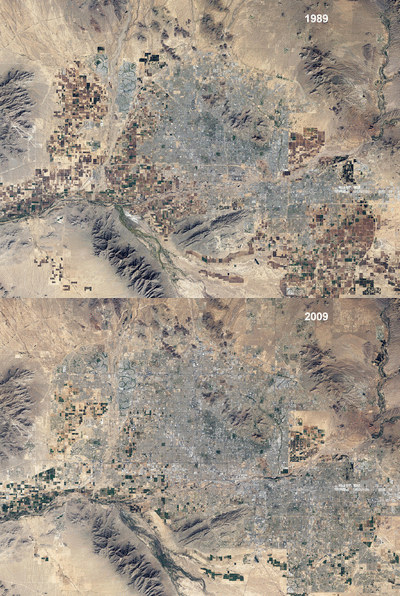
The implications of this growth are noteworthy from an urban planning perspective. While I've heard that US Southwest cities are not growing as fast today (due to a slower real estate market among other reasons), interactive maps like these really demonstrate years of suburban growth when developers took advantage of a relatively stable real estate market, good housing demand and inexpensive (and highly undervalued) water supplies. The sad reality is that such suburbs today (particularly in the US Southwest) are really not practical to live in due to the disadvantages of urban isolation and the growing scarcity of water.
Friday, July 29, 2011
Climate Change Narcissism
Check out Daniel Sarewitz's piece on climate change narcissism. His article suggests that climate survivalism, that is, how individuals protect themselves and live in a world of climate change, ought to focus more on adaptation and not just mitigation.
But beyond the "individual", society will need to collectively adapt to the pressures brought on by climate change. Evidence of communities around the world that have suffered from natural disasters provide even more compelling reason to consider more strict policies such as rigid building codes and drought resistant crops to alleviate the burdens of hurricanes and heat waves respectively. Policies that are brought about by our governments need to recognize the realities of human behaviour. Asking millions of North Americans to cut down on driving is logical but simply unrealistic. Providing smart incentives to use transit, among other things, is one way to help society adapt in a world of higher fuel prices and help mitigate the impact of congestion, for example.
From the article:
"I assume that climate survivalism is not the version of adaptation that most people who are concerned about climate change would advocate. Yet the attention of climate change policy advocates (as well as climate change researchers) has never seriously focused on sensible approaches to adaptation. Until recently, leaders of the mainstream environmental community resisted open discussion about adaptation because they naively thought that they could get the world to stop using fossil fuels, and that any discussion about adaptation would simply give comfort to those who didn’t, or couldn’t, fully buy into their agenda."
More here.
But beyond the "individual", society will need to collectively adapt to the pressures brought on by climate change. Evidence of communities around the world that have suffered from natural disasters provide even more compelling reason to consider more strict policies such as rigid building codes and drought resistant crops to alleviate the burdens of hurricanes and heat waves respectively. Policies that are brought about by our governments need to recognize the realities of human behaviour. Asking millions of North Americans to cut down on driving is logical but simply unrealistic. Providing smart incentives to use transit, among other things, is one way to help society adapt in a world of higher fuel prices and help mitigate the impact of congestion, for example.
From the article:
"I assume that climate survivalism is not the version of adaptation that most people who are concerned about climate change would advocate. Yet the attention of climate change policy advocates (as well as climate change researchers) has never seriously focused on sensible approaches to adaptation. Until recently, leaders of the mainstream environmental community resisted open discussion about adaptation because they naively thought that they could get the world to stop using fossil fuels, and that any discussion about adaptation would simply give comfort to those who didn’t, or couldn’t, fully buy into their agenda."
More here.
Tuesday, July 26, 2011
Bogata's rise in the 1990s
The video above is a story about the City of Bogota, Colombia and how the city transformed in the 1990s. This transformation took place under the leadership of two mayors: Antanas Mockus and his successor, Enrique Penalosa. Mockus was committed to reducing crime, violence, corruption, traffic congestion and fostering an ethic of citizenry and respect in society.
Peñalosa used the momentum of Mockus to bring about drastic changes to the city through urban design; this involved the creation of parks, public spaces, affordable housing, efficient and well maintained public transportation. The youtube video runs for about 60 minutes. I highly recommend it not least for its inspiration, but how two leaders collectively changed a city through building a sense of citizenship and through urban planning.
Monday, July 25, 2011
Why banning light bulbs is bad policy
Check out Virginia Postrel's article on why banning light bulbs is bad policy. In December 2007, the U.S. federal government enacted the Energy Independence and Security Act of 2007, which requires all general-purpose light bulbs that produce 310–2600 lumens of light to be 30% more energy efficient (similar to current halogen lamps) than then-current incandescent bulbs by 2012 to 2014. The efficiency standards will start with 100-watt bulbs in January 2012 and end with 40-watt bulbs in January 2014. More here.
Here are some of here points:
"Banning light bulbs is one of the least efficient ways imaginable to attack those problems. A lamp using power from a clean source is treated the same as a lamp using power from a dirty source. A ban gives electricity producers no incentive to reduce emissions".
"Nor does it allow households to make choices about how best to conserve electricity. A well-designed policy would allow different people to make different tradeoffs among different uses to produce the most happiness (“utility” in econ-speak) for a given amount of power. Maybe I want to burn a lot of incandescent bulbs but dry my clothes outdoors and keep the air conditioner off. Maybe I want to read by warm golden light instead of watching a giant plasma TV".
More here.
Here are some of here points:
"Banning light bulbs is one of the least efficient ways imaginable to attack those problems. A lamp using power from a clean source is treated the same as a lamp using power from a dirty source. A ban gives electricity producers no incentive to reduce emissions".
"Nor does it allow households to make choices about how best to conserve electricity. A well-designed policy would allow different people to make different tradeoffs among different uses to produce the most happiness (“utility” in econ-speak) for a given amount of power. Maybe I want to burn a lot of incandescent bulbs but dry my clothes outdoors and keep the air conditioner off. Maybe I want to read by warm golden light instead of watching a giant plasma TV".
More here.
Friday, July 22, 2011
The irrationality of rationality: 2 cent gas tax increase for transit
There has been on-going debate over the past 4 weeks about the relative merits of a 2 cent increase in the gas tax to help pay for the Evergreen Line, a yet to be built transit line in Metro Vancouver. Here are some facts you should know about courtesy of the popular urban planning blog, Planetizen:
"The two-cents-per-liter tax on gasoline is a new way to fund the delayed Evergreen Line, a $1.4 billion project."
"The fuel tax is part of a proposed funding formula announced Wednesday and designed to generate an additional $70-million per year for transportation authority TransLink, which has an annual budget of about $1.1-billion."
"Along with the fuel tax, the proposal includes potential property-tax increases or – the mayors’ preferred option – a new long-term revenue source that could involve a vehicle levy or some form of “road pricing” such as tolls."
"The proposal follows recent meetings between regional mayors and provincial Transportation Minister Blair Lekstrom, who last month criticized mayors for not coming up with a plan to fund their share of the Evergreen Line."
A couple of other facts courtesy of the CBC:
"According to the Canadian Taxpayers Federation, Metro Vancouver drivers already pay the highest gasoline taxes in Canada, at 33 per cent."
"Construction on the Evergreen Line project was originally expected to start in 2010 and be completed in 2014. But by 2009 only the provincial and federal governments had committed just over $400 million each to cover their share of the cost for the $1.4 billion project." Plans for the line have been stalled for years because Metro Vancouver and TransLink have not come up with $400 million dollars to cover their share of the funding for the project."
I titled this post "the irrationality of rationality" because I have heard lots of complaints recently about the idea of a 2 cent increase in gas tax to fund transit. People are attempting to rationalize the economic futility of using the gas tax because of their selfish thinking and complete reliance on their cars. I have seen/heard these complaints via local radio, comment sections of news articles and from others. Opponents of the 2 cent increase in the gas tax generally argue that they do not use transit so why should they pay for it. They also argue that increasing transit fares are a more sensible approach to generate revenue because those using transit should pay for. Last, some say its just another tax without any palpable benefits.
I think all of the arguments above are slightly irrational. One, while Metro Vancouver residents do pay one of the highest gas taxes in Canada, they receive a lot in return from this through a well functioning and efficient transit system and through good roads across the region. Yes, many people do not use transit and prefer their cars to drive around; but an additional 2 cents that may amount to an extra $10-20 per month in fuel expenses, that can, inter alia, help bring about new transit infrastructure to alleviate traffic congestion and pollutants is certainly a worthwhile compromise. Also, higher gas taxes are meant to pay for road maintenance and expansion too thereby yielding benefits for drivers too.
Increase transit fares instead? Transit in regions like Metro Vancouver is used by all demographics (low income, students, seniors, professionals and more). Lots of research has shown how the poor pay relatively higher transit fares per unit of service than the non-poor. Thus, just from a social equity point of view, increasing fares would likely reduce ridership. And when transit ridership has grown by 50 percent in this region in the past 10 years, this move would be highly idiotic.
"The fuel tax is part of a proposed funding formula announced Wednesday and designed to generate an additional $70-million per year for transportation authority TransLink, which has an annual budget of about $1.1-billion."
"Along with the fuel tax, the proposal includes potential property-tax increases or – the mayors’ preferred option – a new long-term revenue source that could involve a vehicle levy or some form of “road pricing” such as tolls."
"The proposal follows recent meetings between regional mayors and provincial Transportation Minister Blair Lekstrom, who last month criticized mayors for not coming up with a plan to fund their share of the Evergreen Line."
A couple of other facts courtesy of the CBC:
"According to the Canadian Taxpayers Federation, Metro Vancouver drivers already pay the highest gasoline taxes in Canada, at 33 per cent."
"Construction on the Evergreen Line project was originally expected to start in 2010 and be completed in 2014. But by 2009 only the provincial and federal governments had committed just over $400 million each to cover their share of the cost for the $1.4 billion project." Plans for the line have been stalled for years because Metro Vancouver and TransLink have not come up with $400 million dollars to cover their share of the funding for the project."
I titled this post "the irrationality of rationality" because I have heard lots of complaints recently about the idea of a 2 cent increase in gas tax to fund transit. People are attempting to rationalize the economic futility of using the gas tax because of their selfish thinking and complete reliance on their cars. I have seen/heard these complaints via local radio, comment sections of news articles and from others. Opponents of the 2 cent increase in the gas tax generally argue that they do not use transit so why should they pay for it. They also argue that increasing transit fares are a more sensible approach to generate revenue because those using transit should pay for. Last, some say its just another tax without any palpable benefits.
I think all of the arguments above are slightly irrational. One, while Metro Vancouver residents do pay one of the highest gas taxes in Canada, they receive a lot in return from this through a well functioning and efficient transit system and through good roads across the region. Yes, many people do not use transit and prefer their cars to drive around; but an additional 2 cents that may amount to an extra $10-20 per month in fuel expenses, that can, inter alia, help bring about new transit infrastructure to alleviate traffic congestion and pollutants is certainly a worthwhile compromise. Also, higher gas taxes are meant to pay for road maintenance and expansion too thereby yielding benefits for drivers too.
Increase transit fares instead? Transit in regions like Metro Vancouver is used by all demographics (low income, students, seniors, professionals and more). Lots of research has shown how the poor pay relatively higher transit fares per unit of service than the non-poor. Thus, just from a social equity point of view, increasing fares would likely reduce ridership. And when transit ridership has grown by 50 percent in this region in the past 10 years, this move would be highly idiotic.
Wednesday, July 20, 2011
New York Times: Drought: A Creeping Disaster
Check out this article from the NY Times on the devastating effects of drought (in the U.S. and the World) and what can be done about it.
This is yet another article on the importance of adaptation to climate change in the water sector. As part of my PICS internship, I am doing a lot of research on climate change adaptation in the water sector in the Canadian context. I plan on sharing more news articles, presentations and summaries of my research through Enviro Boys. While adaptation to climate change is site-specific (i.e. Holland's flood mitigation techniques may not apply directly to New Orleans) there is, nonetheless, a comprehensive collection of best practices that we can use to be more effective and productive with our efforts.
One thing is for sure, the time to generate knowledge and information about this topic is now so we can start to move forward on it.
This is yet another article on the importance of adaptation to climate change in the water sector. As part of my PICS internship, I am doing a lot of research on climate change adaptation in the water sector in the Canadian context. I plan on sharing more news articles, presentations and summaries of my research through Enviro Boys. While adaptation to climate change is site-specific (i.e. Holland's flood mitigation techniques may not apply directly to New Orleans) there is, nonetheless, a comprehensive collection of best practices that we can use to be more effective and productive with our efforts.
One thing is for sure, the time to generate knowledge and information about this topic is now so we can start to move forward on it.
Sunday, July 17, 2011
The End of Abundance - A Review
I finished reading David Zetland's "End of Abundance: economic solutions to water scarcity" a few weeks ago on the ferry from Victoria to Vancouver, BC. To begin, David provides a comprehensive overview of the many facets and issues that are being discussed today in the world of water. What's most fascinating about this book is how economics, good public policy and institutions (with progressive leaders) can help shift water practices that are inherently inefficient and inequitable to ones that are just and sustainable.
David's core thesis is that the end of abundance (which means increased water scarcity in our world) requires institutions and leaders that are willing to use economic incentives and pricing to radically change the way we use water. His bottom line is that the solutions to our water crisis must be local in nature because what happens in water area is unique to that area.
The book is divided into two parts. Part 1 looks at "personal water choices". This refers to the water we use in our households, on our lawns and for personal use. Part 2 explores "social water choices" which is primarily a discussion of the political and bureaucratic dimensions of water on topics like the environment, infrastructure and climate change, for example. I'll provide a story from part 1 and part 2 that capture the essence of his arguments in these respective sections. Following that, I provide my one critique of the book and a conclusion about why the book is important and why you should read it!
In the first part of the book, David provides us with his insights on what kind of pricing structures we should be using in our cities. He refers to a pricing structure called inclining block rate (IBR). He tells the story of Santa Barbara, California that went through an egregious drought in the 1990s. A number of strategies were utilized in response to this drought including the water agency using rigid IBRs. With the IBR pricing structure, the first block of water delivered to Santa Barbara households was $1.09 (the first block was 375 litres and is essentially enough water to meet basic needs like sanitation and water for cooking). Additional blocks were 200 percent higher at $3.27, $9.81 and $29.43 per unit. The rationale of this pricing structure is simple: as you use more water, you pay much more per unit.
This brought changes in behaviour and aggressive price penalties were fast and significant as gross water consumption dropped 50 percent and median monthly household consumption dropped from 25 to 17 cubic metres per month. When the drought eventually ended, prices were lowered but consumption was still only 60 percent of pre-drought levels. The main message here is that Santa Barbara priced their water based on shortages. The economics is simple, the political will is always the tougher battle which is why many places in North America have not brought about IBR structures yet.
There is so much more to part one including how we can better embrace reclaimed water techniques, how we can re-think our approach to bottled water, the energy-water nexus and how we can create valuable and equitable water markets to allocate water more efficiently. Part 1 also provides numerous graphs that explain his water pricing models in a very accessible and non-esoteric way.
Part 2 is even more intriguing and is hard to capture in one paragraph. Zetland discusses several topics including the importance of good visionary leaders in water management, why building more water infrastructure is not the solution to our problems, water and the environment and the human right to water. All fascinating topics that I won't cover in this post.
I think the compelling message in part 2 is that local water management is perhaps the most useful framework we can use to manage our water and alleviate scarcity. I totally agree with Zetland and argued this in a conference presentation in February. In short, there can be many competing values and interests in a shared watershed. A farmer might be using the water to irrigate his/her crops, a city might be getting a lot of its water supply from it or some other group may be using it for whatever reason. These stakeholders might be fighting with each other claiming that they have historical rights to use their allocated amount of water. How do you reconcile the values of diverse communities on a scale that includes everyone experiencing the costs and benefits?
Part of the answer to the question above is to establish rights in baseline quantities and qualities and then facilitate reallocation of those rights. Consider the example of Michigan, U.S, where there is a law that makes all water users responsible for not impacting a watershed. "Property owners and riparians have a right to use water under or adjacent to their property, but any new use that may cause environmental harm needs to be offset by changes to existing uses. The key to this system is a web-based tool that allows anyone to estimate ecological impacts from a new well. If no impact is predicted, the system approves a permit and the well is registered. If impacts are predicted, then neighbours discuss how to reduce it. In the 25 percent of cases where neighbours cannot agree, a state employee gets involved; they reject only 4 percent of the cases they see" (page 184).
The practice above may sound progressive but it is proving to work in Michigan. It's important because it reconciles the diversity of interests surrounding water and the stakeholders have to think about how they are impacting the environment.
My critique of Zetland's book is his limited discussion of water and climate change adaptation.
David's core thesis is that the end of abundance (which means increased water scarcity in our world) requires institutions and leaders that are willing to use economic incentives and pricing to radically change the way we use water. His bottom line is that the solutions to our water crisis must be local in nature because what happens in water area is unique to that area.
The book is divided into two parts. Part 1 looks at "personal water choices". This refers to the water we use in our households, on our lawns and for personal use. Part 2 explores "social water choices" which is primarily a discussion of the political and bureaucratic dimensions of water on topics like the environment, infrastructure and climate change, for example. I'll provide a story from part 1 and part 2 that capture the essence of his arguments in these respective sections. Following that, I provide my one critique of the book and a conclusion about why the book is important and why you should read it!
In the first part of the book, David provides us with his insights on what kind of pricing structures we should be using in our cities. He refers to a pricing structure called inclining block rate (IBR). He tells the story of Santa Barbara, California that went through an egregious drought in the 1990s. A number of strategies were utilized in response to this drought including the water agency using rigid IBRs. With the IBR pricing structure, the first block of water delivered to Santa Barbara households was $1.09 (the first block was 375 litres and is essentially enough water to meet basic needs like sanitation and water for cooking). Additional blocks were 200 percent higher at $3.27, $9.81 and $29.43 per unit. The rationale of this pricing structure is simple: as you use more water, you pay much more per unit.

This brought changes in behaviour and aggressive price penalties were fast and significant as gross water consumption dropped 50 percent and median monthly household consumption dropped from 25 to 17 cubic metres per month. When the drought eventually ended, prices were lowered but consumption was still only 60 percent of pre-drought levels. The main message here is that Santa Barbara priced their water based on shortages. The economics is simple, the political will is always the tougher battle which is why many places in North America have not brought about IBR structures yet.
There is so much more to part one including how we can better embrace reclaimed water techniques, how we can re-think our approach to bottled water, the energy-water nexus and how we can create valuable and equitable water markets to allocate water more efficiently. Part 1 also provides numerous graphs that explain his water pricing models in a very accessible and non-esoteric way.
Part 2 is even more intriguing and is hard to capture in one paragraph. Zetland discusses several topics including the importance of good visionary leaders in water management, why building more water infrastructure is not the solution to our problems, water and the environment and the human right to water. All fascinating topics that I won't cover in this post.
I think the compelling message in part 2 is that local water management is perhaps the most useful framework we can use to manage our water and alleviate scarcity. I totally agree with Zetland and argued this in a conference presentation in February. In short, there can be many competing values and interests in a shared watershed. A farmer might be using the water to irrigate his/her crops, a city might be getting a lot of its water supply from it or some other group may be using it for whatever reason. These stakeholders might be fighting with each other claiming that they have historical rights to use their allocated amount of water. How do you reconcile the values of diverse communities on a scale that includes everyone experiencing the costs and benefits?
Part of the answer to the question above is to establish rights in baseline quantities and qualities and then facilitate reallocation of those rights. Consider the example of Michigan, U.S, where there is a law that makes all water users responsible for not impacting a watershed. "Property owners and riparians have a right to use water under or adjacent to their property, but any new use that may cause environmental harm needs to be offset by changes to existing uses. The key to this system is a web-based tool that allows anyone to estimate ecological impacts from a new well. If no impact is predicted, the system approves a permit and the well is registered. If impacts are predicted, then neighbours discuss how to reduce it. In the 25 percent of cases where neighbours cannot agree, a state employee gets involved; they reject only 4 percent of the cases they see" (page 184).
The practice above may sound progressive but it is proving to work in Michigan. It's important because it reconciles the diversity of interests surrounding water and the stakeholders have to think about how they are impacting the environment.
My critique of Zetland's book is his limited discussion of water and climate change adaptation.
Tuesday, July 12, 2011
Metro Vancouver Bikeability Index

A team of researchers at UBC recently released the Metro Vancouver bikeability index. The map above shows the availability of bike facilities, bike route density, topography and land use.
"If you make cycling and walking the easier choice, then people will be more likely to choose it because it’s faster to get [somewhere] than sitting in traffic,” said lead researcher Meghan Winters. “Then people will be less likely to choose their cars, they’ll be more likely to engage in physical activity, and that will reduce congestion in the city.”
I have been doing research this summer on active transportation exploring transportation options such as walking and cycling. Both options are becoming more salient forms of sustainable transportation and its refreshing to see a visual representation of such modes in the region. Indeed, the Metro Vancouver walkability index was released in the fall, and the bikeability index just a few weeks ago. Visual representations and maps like these, beyond the benefits of providing more information to residents, also help urban planners determine areas that could use more cycling infrastructure, for example.
Couple of small critiques. 1) I don't think the width of a bike path is measured. I have seen bike paths in Richmond, BC that are very narrow with most of the road space allocated to cars - hence a little less safe and secure.
2) While beyond the scope of the index, it would be neat if there was a qualitative dimension built into it. By qualitative I mean asking cyclists and motorists alike about their perceptions of cycling and perceptions of safety around cycling. For example, I may feel very safe and comfortable cycling in a separated bike lane downtown, however, a motorist may feel incredibly uncomfortable by my presence and less certain of how to interact with me when I leave the separated bike lane. Showing differences in perception of safety, among other things, would be a neat addition, I think.
Overall, this is really fascinating and, according to the Canadian Institute for Health Research:
"The Canadian Institutes of Health Research has provided the team with additional funds so that they can make up bikeability indexes for Victoria, Calgary, Saskatoon, Winnipeg, Toronto, Montreal, Halifax, Charlottetown, Moncton and St. John's by 2012".
Sunday, July 10, 2011
A great example of Bootleggers and Baptists
I finished reading David Zetland's End of Abundance a couple of weeks ago. A review of his book will come shortly. I first wanted to share an instructive example David uses to illustrate the Bootleggers and Baptists problem (also referred to as "Baptists and Bootleggers"). David refers to this term in different parts of his book.
Bootleggers and Baptists defined: a slang term for an unholy alliance that combines moral righteousness with selfish greed to stop a reform that would benefit degenerates (according to Baptists) and/or the competition (according to the Bootleggers). A Baptists and Bootleggers coalition may also support a harmful change; one example is the coalition of environmentalists and corn-processors that supported a requirement that gasoline contain a minimum share of corn ethanol.
The definition above is derived from the glossary of his book. Using the example of U.S. corn ethanol, here is an excerpt from his book:
"The US corn ethanol program offers a useful example of a Baptists and Bootlegger confluence of greed, corruption and moral superiority. Greed can be traced to big agro-processing companies (ADM, Cargill and others) that make money by trading corn and ethanol. Corruption is connection to congressman who want campaign donations (legal bribes) from these companies and farmers benefit from congressionally induced demand, via per gallon subsidies, mandated corn ethanol fuel blends and tariff barriers that block imports of cheaper, sustainable sugarcane ethanol from Brazil.
The moral superiority component comes from the environmentalists who demand that Americans use more renewable fuels and patriots who want energy independence from dodgy foreigners. Their clamor for renewables gave farmers, processors and politicians the cover they needed to start another program designed to transfer money from taxpayers and car drivers to the agricultural and political sectors. The worst irony is that this "green fuel" may have done nothing to reduce C02 emissions.
In this Baptists and Bootleggers alliance, environmentalists are happy to have more renewable fuel. Farmers and agro-businesses are happy to sell more fuel in the gasoline market. Taxpayers lose and drivers get lower-quality fuel. Politicians win twice, since they can claim to protect the environment at the same time as they collect brides from the corn industry. But there's an additional twist: corn ethanol uses a lot of free water, simultaneously increasing scarcity and pollution. Ethanol production would fall if we priced water for scarcity and purity".
Interpret the example above however you would like, I think it is instructive and insightful because it reveals how groups with potentially different opinions, perspectives and values can lobby for the same end goal and think that the outcome has served their mandate. Unfortunately, this may be a case of unintended consequences not least for the volatility it has brought to the price of corn, but worse yet, to the egregious overuse of cheap and in some cases, free water. Corn ethanol does have its problems and I have become more neutral about its merits as an alternative fuel. But the very fact that it does use copious amounts of cheap water for production is worrisome in an era of increased scarcity.
There are many examples where one can apply the Baptists and Bootlegger model. I think it's pretty fascinating in the case of corn-based ethanol and gets you to think about how and why we advocate for policies that seem to be good on the surface, but can be disastrous in reality.
Bootleggers and Baptists defined: a slang term for an unholy alliance that combines moral righteousness with selfish greed to stop a reform that would benefit degenerates (according to Baptists) and/or the competition (according to the Bootleggers). A Baptists and Bootleggers coalition may also support a harmful change; one example is the coalition of environmentalists and corn-processors that supported a requirement that gasoline contain a minimum share of corn ethanol.
The definition above is derived from the glossary of his book. Using the example of U.S. corn ethanol, here is an excerpt from his book:
"The US corn ethanol program offers a useful example of a Baptists and Bootlegger confluence of greed, corruption and moral superiority. Greed can be traced to big agro-processing companies (ADM, Cargill and others) that make money by trading corn and ethanol. Corruption is connection to congressman who want campaign donations (legal bribes) from these companies and farmers benefit from congressionally induced demand, via per gallon subsidies, mandated corn ethanol fuel blends and tariff barriers that block imports of cheaper, sustainable sugarcane ethanol from Brazil.
The moral superiority component comes from the environmentalists who demand that Americans use more renewable fuels and patriots who want energy independence from dodgy foreigners. Their clamor for renewables gave farmers, processors and politicians the cover they needed to start another program designed to transfer money from taxpayers and car drivers to the agricultural and political sectors. The worst irony is that this "green fuel" may have done nothing to reduce C02 emissions.
In this Baptists and Bootleggers alliance, environmentalists are happy to have more renewable fuel. Farmers and agro-businesses are happy to sell more fuel in the gasoline market. Taxpayers lose and drivers get lower-quality fuel. Politicians win twice, since they can claim to protect the environment at the same time as they collect brides from the corn industry. But there's an additional twist: corn ethanol uses a lot of free water, simultaneously increasing scarcity and pollution. Ethanol production would fall if we priced water for scarcity and purity".
Interpret the example above however you would like, I think it is instructive and insightful because it reveals how groups with potentially different opinions, perspectives and values can lobby for the same end goal and think that the outcome has served their mandate. Unfortunately, this may be a case of unintended consequences not least for the volatility it has brought to the price of corn, but worse yet, to the egregious overuse of cheap and in some cases, free water. Corn ethanol does have its problems and I have become more neutral about its merits as an alternative fuel. But the very fact that it does use copious amounts of cheap water for production is worrisome in an era of increased scarcity.
There are many examples where one can apply the Baptists and Bootlegger model. I think it's pretty fascinating in the case of corn-based ethanol and gets you to think about how and why we advocate for policies that seem to be good on the surface, but can be disastrous in reality.
Friday, July 8, 2011
A scathing critique of Glaeser's article on the locovore's dilemma
Further to Darlene's well-thought out and well-written response to Edward Glaeser's article, Colin Cureton, a graduate student in Food and Energy Policy at the University of Minnesota’s Humphrey School of Public Affairs, offers a critical response on how urban farms do not displace people, decrease density, or increase emissions as much as people think or as much as Glaeser suggests.
Here is an excerpt from his post:
"The biggest assumption is the simplistic (and false) choice between urban land for people and urban land for food. While land is a scarce resource, most urban ag is thriving on what was or otherwise would be vacant urban land. The amount of vacant urban land is vast in cities across the country. For example, the New York City’s Department of City Planning figures show that 6% of NYC is considered vacant. In Detroit, this figure is an astonishing 25-30% (anyone wonder why a revolutionary urban food system is emerging there?). Chicago has 70,000-80,000 vacant lots. This list goes on.
Also, much of urban ag is practiced in spaces that does not disrupt nor would it disrupt urban development. Think boulevards, side yards, public parks, rooftops, and so on. These are the spaces where urban ag thrives. As an urban agriculturalist, all four of my farms are on previously vacant or underutilized land. Two are vacant lots, one is at a church, and one is in a public park. Are my urban farms displacing anyone?"
You can read the full post here.
Here is an excerpt from his post:
"The biggest assumption is the simplistic (and false) choice between urban land for people and urban land for food. While land is a scarce resource, most urban ag is thriving on what was or otherwise would be vacant urban land. The amount of vacant urban land is vast in cities across the country. For example, the New York City’s Department of City Planning figures show that 6% of NYC is considered vacant. In Detroit, this figure is an astonishing 25-30% (anyone wonder why a revolutionary urban food system is emerging there?). Chicago has 70,000-80,000 vacant lots. This list goes on.
Also, much of urban ag is practiced in spaces that does not disrupt nor would it disrupt urban development. Think boulevards, side yards, public parks, rooftops, and so on. These are the spaces where urban ag thrives. As an urban agriculturalist, all four of my farms are on previously vacant or underutilized land. Two are vacant lots, one is at a church, and one is in a public park. Are my urban farms displacing anyone?"
You can read the full post here.
Sunday, July 3, 2011
Guest Entry: Beyond the locovore's dilemma, urban farming for the 21st century
A couple of weeks ago, I read an OpEd article by Edward Glaeser titled "The locovore's dilemma". Glaeser is one of my favourite urban scholars and we have blogged about his ideas a number of times on this blog. However, I didn't agree with many of his points in his OpEd. I passed along the article to my friend, Darlene Seto, to gather her thoughts about the article. She wrote a response to it, which you can view below.
Beyond the locovore's dilemma, urban farming for the 21st century
By: Darlene Seto
As a general admirer of Edward Glaeser’s work, I was most dismayed to see his recent June 16th OpEd for The Boston Globe, where he proclaimed, most erringly, that urban farms do more harm than good to the environment. I disagree.
Glaeser’s principal case against urban farming lies in the carbon output linked to such farms; he equates increasing urban farmland with an automatic reduction in living density, thereby increasing metropolitan sprawl. Yet his homogeneous use of ‘cropland’ fails to differentiate between the more intensive cultivation of vegetables, as more commonly found in urban areas, and the sprawling land involved in the production of commodities like corn, the crop which he uses to cite as a resource intensive no-no for urban agriculture. But not all farming is equal – and Glaeser’s assertions about land density might look a lot different were he to parse out those vast monocultures from his analysis, and especially were he to include the entire carbon life of much industrial corn, which then includes the methane emissions of feedlot cattle and petrochemical plastics.
Glaeser’s main failing, however, is not being able to see beyond the current agricultural paradigm. What agriculture looks like now – in a rural setting - is assumed to be what agriculture is in an urban one. Urban farms, however, are not large crop monocultures plopped down in the middle of a busy and well-utilized urban space.
Here in Vancouver, British Columbia, where I am writing from, a number of urban farms make their existence using vacant land or under-utilized land – spaces such as parking lots, individuals’ backyards (or frontyards!) and similar space. Food is grown in these smaller pieces of land, sometimes solely in hundreds of planters or boxes. By piecing together the yards of cooperative landowners around the city, these entrepreneurial farmers are using the urban context to re-imagine traditional conceptions of agriculture, creating new and vital landscapes in our neighbourhoods. And given the administrative and institutional challenges in which most urban farmers already face in dense urban areas, urban farming hardly imperils the urban densification or the commercial use of prime urban real estate, but rather puts other space into productive use.
Finally, while Glaeser does fleetingly mention some of the other benefits of urban agriculture – such as its educational value to children – such instances do not seem to hold any effective value in his argument. The benefits of having localized food initiatives such as urban farms, however, reach far beyond mere carbon mileage – and indeed are much more important and difficult to quantify. Glaeser’s greenhouse gas focus does not look at the broader environmental impacts of urban food (understanding that the environment is the area in which we live, work and play; another point I would contest in Glaeser’s piece). Increasing food assets in a city through things such as urban farming not only reduces food insecurity and better health outcomes, but promotes greater resiliency in an era of increasing climactic uncertainty, supports local economic activity, and contributes to community development and capacity building.
Take note: If anything, I would agree that the most important benefits to localized food systems are not at all in carbon savings from transportation. But it is through OpEds such as the one to which I am responding, that create an erroneous understanding of the potential for urban agriculture. This is a time where most cities should be attempting to retain all the green space and food assets that they can get. We should be working to understand and support the committed individuals and organizations working in this sector.
Darlene Seto is a graduate student at the Institute for Resources, Environment and Sustainability at the University of British Columbia, Canada. A keen student of environment policy and governance, her current graduate work revolves around diversity and engagement in alternative food systems.
Beyond the locovore's dilemma, urban farming for the 21st century
By: Darlene Seto
As a general admirer of Edward Glaeser’s work, I was most dismayed to see his recent June 16th OpEd for The Boston Globe, where he proclaimed, most erringly, that urban farms do more harm than good to the environment. I disagree.
Glaeser’s principal case against urban farming lies in the carbon output linked to such farms; he equates increasing urban farmland with an automatic reduction in living density, thereby increasing metropolitan sprawl. Yet his homogeneous use of ‘cropland’ fails to differentiate between the more intensive cultivation of vegetables, as more commonly found in urban areas, and the sprawling land involved in the production of commodities like corn, the crop which he uses to cite as a resource intensive no-no for urban agriculture. But not all farming is equal – and Glaeser’s assertions about land density might look a lot different were he to parse out those vast monocultures from his analysis, and especially were he to include the entire carbon life of much industrial corn, which then includes the methane emissions of feedlot cattle and petrochemical plastics.
Glaeser’s main failing, however, is not being able to see beyond the current agricultural paradigm. What agriculture looks like now – in a rural setting - is assumed to be what agriculture is in an urban one. Urban farms, however, are not large crop monocultures plopped down in the middle of a busy and well-utilized urban space.
Here in Vancouver, British Columbia, where I am writing from, a number of urban farms make their existence using vacant land or under-utilized land – spaces such as parking lots, individuals’ backyards (or frontyards!) and similar space. Food is grown in these smaller pieces of land, sometimes solely in hundreds of planters or boxes. By piecing together the yards of cooperative landowners around the city, these entrepreneurial farmers are using the urban context to re-imagine traditional conceptions of agriculture, creating new and vital landscapes in our neighbourhoods. And given the administrative and institutional challenges in which most urban farmers already face in dense urban areas, urban farming hardly imperils the urban densification or the commercial use of prime urban real estate, but rather puts other space into productive use.
Finally, while Glaeser does fleetingly mention some of the other benefits of urban agriculture – such as its educational value to children – such instances do not seem to hold any effective value in his argument. The benefits of having localized food initiatives such as urban farms, however, reach far beyond mere carbon mileage – and indeed are much more important and difficult to quantify. Glaeser’s greenhouse gas focus does not look at the broader environmental impacts of urban food (understanding that the environment is the area in which we live, work and play; another point I would contest in Glaeser’s piece). Increasing food assets in a city through things such as urban farming not only reduces food insecurity and better health outcomes, but promotes greater resiliency in an era of increasing climactic uncertainty, supports local economic activity, and contributes to community development and capacity building.
Take note: If anything, I would agree that the most important benefits to localized food systems are not at all in carbon savings from transportation. But it is through OpEds such as the one to which I am responding, that create an erroneous understanding of the potential for urban agriculture. This is a time where most cities should be attempting to retain all the green space and food assets that they can get. We should be working to understand and support the committed individuals and organizations working in this sector.
Darlene Seto is a graduate student at the Institute for Resources, Environment and Sustainability at the University of British Columbia, Canada. A keen student of environment policy and governance, her current graduate work revolves around diversity and engagement in alternative food systems.
Saturday, July 2, 2011
The Beijing-Shanghai High Speed Rail is now operating
I have been following China's High Speed Rail (HSR) plans for quite some time now. It's been particularly fascinating tracking the development of the Beijing-Shanghai line which will link China’s two largest cities in just under 5 hours. Scheduled trains will make stops along the way in Tianjin, Jinan and Nanjing. It cost $33 billion and the trains can travel between 250-300 km/h over the 1,318 km of track between the two cities.
Despite the ongoing critiques of HSR in China (we have documented them before on this blog, you can view them here and here), this is an impressive achievement which will provide more transportation options for China's growing citizenry. Adam Mayer who blogs at "China Urban Development Blog" says:
"Linking China’s government/cultural center with its commercial/financial hub is a milestone on the path towards creating a connected nation. Airlines will certainly be hurt by the line, but because China’s air traffic is already at capacity, the train should help ease the strain on Beijing and Shanghai’s airports".
Now that the line is open, expect a diversity of discussion on Enviro Boys surrounding its environmental, planning, economic, social and political implications.
Read more here.
Despite the ongoing critiques of HSR in China (we have documented them before on this blog, you can view them here and here), this is an impressive achievement which will provide more transportation options for China's growing citizenry. Adam Mayer who blogs at "China Urban Development Blog" says:
"Linking China’s government/cultural center with its commercial/financial hub is a milestone on the path towards creating a connected nation. Airlines will certainly be hurt by the line, but because China’s air traffic is already at capacity, the train should help ease the strain on Beijing and Shanghai’s airports".
Now that the line is open, expect a diversity of discussion on Enviro Boys surrounding its environmental, planning, economic, social and political implications.
Read more here.
Tuesday, June 28, 2011
Planning insights from Zurich
 Image credit: Fotolia.com
 Elizabeth Rosenthal from the NY Times writes about how European cities such as Zurich are creating environments openly hostile to cars.
"Cities including Vienna to Munich and Copenhagen have closed vast swaths of streets to car traffic. Barcelona and Paris have had car lanes eroded by popular bike-sharing programs. Drivers in London and Stockholm pay hefty congestion charges just for entering the heart of the city. And over the past two years, dozens of German cities have joined a national network of “environmental zones” where only cars with low carbon dioxide emissions may enter".
This certainly contrasts what we've been seeing in North America. While some North American cities have started to add more pedestrian friendly environments (New York City, Vancouver and San Francisco, for example), we still have a ways to go to make our cities more focused on providing livable spaces for people and not simple cars.
"Europe’s cities generally have stronger incentives to act. Built for the most part before the advent of cars, their narrow roads are poor at handling heavy traffic. Public transportation is generally better in Europe than in the United States, and gas often costs over $8 a gallon, contributing to driving costs that are two to three times greater per mile than in the United States, Dr. Lee Schipper said.
"Around Löwenplatz, one of Zurich’s busiest squares, cars are now banned on many blocks. Where permitted, their speed is limited to a snail’s pace so that crosswalks and crossing signs can be removed entirely, giving people on foot the right to cross anywhere they like at any time".
Read more here.
Monday, June 27, 2011
the air conditioning costs in war
Thank you Marginal Revolution for this fact of the day:
"The amount the U.S. military spends annually on air conditioning in Iraq and Afghanistan: $20.2 billion. That's more than NASA's budget. It's more than BP has paid so far for damage during the Gulf oil spill. It's what the G-8 has pledged to help foster new democracies in Egypt and Tunisia".
With that money, the U.S. could invest in renewable energy projects, spare a few dollars for state/municipal infrastructure upgrades (namely transportation, water and wastewater) and do wonders in environmental education or even money for research and development into more energy efficient air conditioners that can help the country adapt to climate change!
Full story here.
"The amount the U.S. military spends annually on air conditioning in Iraq and Afghanistan: $20.2 billion. That's more than NASA's budget. It's more than BP has paid so far for damage during the Gulf oil spill. It's what the G-8 has pledged to help foster new democracies in Egypt and Tunisia".
With that money, the U.S. could invest in renewable energy projects, spare a few dollars for state/municipal infrastructure upgrades (namely transportation, water and wastewater) and do wonders in environmental education or even money for research and development into more energy efficient air conditioners that can help the country adapt to climate change!
Full story here.
Friday, June 24, 2011
Water's connection to climate change adaptation
This summer I have been working as an intern with the Adaptation to Climate Change Team (ACT) based out of Simon Fraser University's Public Policy School.
"ACT is a five-year series of six-month sessions on top-of-mind climate change issues that brings leading experts from around the world together with industry, community and government decision-makers to explore the risks and generate recommendations for sustainable adaptation".
Among many of the climate change topic areas (biodiversity, energy, extreme weather), I have had the fortune of working on the water session. This particular session focuses on water governance and water policy in Canada and how our governments (municipal, provincial and federal) can start working toward policy that is based on adaptation to climate change. Certain places have been more progressive than others - my job is to investigate why and how such critical lessons can be applied across the country.
What does adaptation mean, exactly? Well, in the climate change world, there are two really popular words that are thrown around; these include "mitigation" and "adaptation". Both words became quite popular when British economist Nicholas Stern released his 700 page report on the economics of climate change in October 2006.
In short, Stern argued that we can mitigate greenhouse gas emissions through policies that support the development of a range of low-carbon and high-efficiency technologies. Further, we could use economic instruments such as carbon pricing, taxes and cap-and-trade to alleviate emissions. Adaptation by contrast (which has been less popular but is now emerging) is an approach where institutions can invest in technologies, systems and ideas that help us prepare for the impacts of climate change. These adaptation solutions are diverse but can be as simple as more efficient air conditioners that alleviate the impacts of heat waves, or floatable homes that, in the event of a flood, do not sink or lose their structural integrity. For those who are interested in the economics of climate change adaptation, please read Matt Kahn's Climatopolis.
Enviro Boys has written about adaptation in the past and will continue to do in the future given the salience of climate change. But from a water perspective, and based on what I am learning through my work, adaptation strategies such as water conservation or natural flood control tactics, while having higher upfront investment costs, the benefits and future returns on lessening the impacts of droughts, floods or even heat waves can be immense. In addition, getting people to think about the impacts of climate change can foster a collective and community oriented approach where groups think of creative solutions and where businesses and entrepreneurs start to innovate in response to the demand created.
More to come on how governments in Canada are thinking about this and what the opportunities are from a water policy and governance perspective.
"ACT is a five-year series of six-month sessions on top-of-mind climate change issues that brings leading experts from around the world together with industry, community and government decision-makers to explore the risks and generate recommendations for sustainable adaptation".
Among many of the climate change topic areas (biodiversity, energy, extreme weather), I have had the fortune of working on the water session. This particular session focuses on water governance and water policy in Canada and how our governments (municipal, provincial and federal) can start working toward policy that is based on adaptation to climate change. Certain places have been more progressive than others - my job is to investigate why and how such critical lessons can be applied across the country.
What does adaptation mean, exactly? Well, in the climate change world, there are two really popular words that are thrown around; these include "mitigation" and "adaptation". Both words became quite popular when British economist Nicholas Stern released his 700 page report on the economics of climate change in October 2006.
In short, Stern argued that we can mitigate greenhouse gas emissions through policies that support the development of a range of low-carbon and high-efficiency technologies. Further, we could use economic instruments such as carbon pricing, taxes and cap-and-trade to alleviate emissions. Adaptation by contrast (which has been less popular but is now emerging) is an approach where institutions can invest in technologies, systems and ideas that help us prepare for the impacts of climate change. These adaptation solutions are diverse but can be as simple as more efficient air conditioners that alleviate the impacts of heat waves, or floatable homes that, in the event of a flood, do not sink or lose their structural integrity. For those who are interested in the economics of climate change adaptation, please read Matt Kahn's Climatopolis.
Enviro Boys has written about adaptation in the past and will continue to do in the future given the salience of climate change. But from a water perspective, and based on what I am learning through my work, adaptation strategies such as water conservation or natural flood control tactics, while having higher upfront investment costs, the benefits and future returns on lessening the impacts of droughts, floods or even heat waves can be immense. In addition, getting people to think about the impacts of climate change can foster a collective and community oriented approach where groups think of creative solutions and where businesses and entrepreneurs start to innovate in response to the demand created.
More to come on how governments in Canada are thinking about this and what the opportunities are from a water policy and governance perspective.
Monday, June 13, 2011
David Zetland's new book: The End of Abundance

I have ordered my copy and look forward to reading it.
Our blog has been lucky to benefit from David Zetland and his blog Aguanomics over the past two years. David wrote a guest post for us a year ago and has continued to provide academic and blogging tips to me personally. He has been incredibly insightful on all things water (especially water policy and the economics of water). He kindly offered some tips and suggestions for a conference presentation I made in February of this year along with a research project on groundwater management in Andhra Pradesh.
David has been great and his writing has certainly helped shape my perspective on water policy, planning, governance and management.
For more information about his book, see here. Book review on "The End of Abundance" forthcoming.
Saturday, June 11, 2011
Bike Share System in Hangzhou, China
Following up on Chris' post on the theme of bicycles, I thought I would provide this video (thank you to my friend, DS, for sharing it with me) about a very successful public bike share system in Hangzhou, China that is paving the way for green transportation.
The video above provides all the details, anecdotes and statistics about the system so I'll leave the video to satisfy your curiosity. However, from a planning and development perspective, there are a couple of things worth mentioning.
One, bike share programs are especially useful as an inter-model transit strategy meaning that citizens might rent a bike to travel to a transit station where they could then park the bike at the bike share parking facility located at the transit station, hop on transit and walk to their final destination. The bike share parking stations are meant to be close to other transit modes to help people effectively transition when making a journey. Further, they are also located near residential complexes and busy streets. Bikes in general are wonderful for commuting but bike share programs help alleviate fears about bicycle theft and allow people to integrate them effectively into their traveling.
The Hangzhou story is also promising considering the great fall of cycling China over the past 20 years. Indeed, according to some sources, "just ten years ago there were 500 million cyclists in China. The bike was emperor of the roads. It was the only way to go and the fastest way to get there. But whereas two thirds of families traveled by bike in the 90's, it is only 20% today. Bike ownership in cities has plummeted by 25% in the past five years".
There are researchers in my graduate program who are particularly interested in reviving bicycling in China. You can view their abstract here which focuses on Beijing. This is a significant problem in China as cycling, a once dominant mode of transportation, is being pushed aside by the car which brings with it a series of factors including convenience, social/economic status, flexibility and more.
It's reassuring to know that some places in China such as Hangzhou and Guangzhou are moving forward with popular and affordable transportation programs to improve the livability and sustainability of their cities.
Thursday, June 9, 2011
Riding Out of the Bike Lane? Watch Out for the 5-0
Bike lanes are great. But just because it's there, doesn't mean you have to ride in it. Especially when stuff is in the way. Or so I thought...
Monday, June 6, 2011
An Oil Sands Pipeline and Obama's Decision...
One of North America's largest and most lucrative petroleum pipeline projects is awaiting the decision from the USA's commander-in-chief. As outlined by the Globe & Mail, TransCanada Corp's Keystone XL pipeline would extend from oil sands-rich Alberta to the gulf coast of Texas, a hub of the American oil industry. Opponents charge that the project will only increase GHG emissions, put entire ecosystems and water sources at risk, and put another significant damper on an already struggling yet budding renewable energy industry.
The developers are ready to go and with little protest coming from governments north of the border, the project is only awaiting the key approvals from various US authorities. The State Department is expected to release its report over the next couple of months, but the growing consensus is that the report will be supportive of the project.
And so, those of the environmentalist ilk will have to hope that their last line of defence will come through in the clutch: Obama. The Department of Energy and the Environmental Protection Agency have grounds to appeal any State Department decision to the president himself, ultimately leaving Obama to approve the proposal, reject it or even slow it down by requiring further study. This has many environmentalists feeling very optimistic. But what they do not know is which Obama will come to the table. Will it be the 2008 campaigning Obama that promised to create a green economy, refuse imports of 'dirty oil' and even considered reopening NAFTA? Or will they get the more centrist Obama that, primarily under political duress, has had to steer many of his policies to the right in order to keep everyone happy?
 |
| Image: Pipelines International |
And so, those of the environmentalist ilk will have to hope that their last line of defence will come through in the clutch: Obama. The Department of Energy and the Environmental Protection Agency have grounds to appeal any State Department decision to the president himself, ultimately leaving Obama to approve the proposal, reject it or even slow it down by requiring further study. This has many environmentalists feeling very optimistic. But what they do not know is which Obama will come to the table. Will it be the 2008 campaigning Obama that promised to create a green economy, refuse imports of 'dirty oil' and even considered reopening NAFTA? Or will they get the more centrist Obama that, primarily under political duress, has had to steer many of his policies to the right in order to keep everyone happy?
Friday, June 3, 2011
Technology and Forest Conservation
I just read a fascinating article from the Science and Technology section of The Economist. The essence of the article is about a new lidar monitoring technology (The Economist is calling it a Lidar-tector) which is a light detection and ranging system that works by broadcasting electromagnetic waves towards a target and then building up a picture from the reflection. This technology is now being used for forest conservation purposes to determine the carbon content of trees. How does it work?:
"In the case of lidar, the waves are in the form of an infra-red laser beam. And in the case of the forests of south-western Nepal, the target is the trees. During a forest survey, an aircraft-borne lidar sweeps a beam that fires about 70,000 pulses a second over the canopy. A sensor on the aircraft records the time it takes to receive the backscattering of pulses, and that is used to compute distances to the forest canopy and to the soil beneath".
Further:
"The result, when processed through the computers of Arbonaut, a Finnish natural-resource-management company, is a three-dimensional image of the forest that can be correlated with, and calibrated by, the efforts of the chaps with the tape measures. And that, in turn, can be used to estimate the amount of carbon stored in the plot examined, and extrapolated to calculate the carbon stored in larger areas of forest that have been scanned by lidar, but not measured with tapes."
In the world of carbon sequestration projects, there is a lot of mendacity and mistrust when it comes to reporting numbers. In particular, policymakers and scientists are keen to know the carbon content of various forests to determine which ones are more worthy of preservation than others. While this may sound absurd, it is useful information for carbon trading scheme projects (which I do not completely agree with and will blog about shortly). Additionally, it provides further impetus to contain these forests and allow them to sequester carbon. In so doing, countries like Nepal can:
"In the case of lidar, the waves are in the form of an infra-red laser beam. And in the case of the forests of south-western Nepal, the target is the trees. During a forest survey, an aircraft-borne lidar sweeps a beam that fires about 70,000 pulses a second over the canopy. A sensor on the aircraft records the time it takes to receive the backscattering of pulses, and that is used to compute distances to the forest canopy and to the soil beneath".
Further:
"The result, when processed through the computers of Arbonaut, a Finnish natural-resource-management company, is a three-dimensional image of the forest that can be correlated with, and calibrated by, the efforts of the chaps with the tape measures. And that, in turn, can be used to estimate the amount of carbon stored in the plot examined, and extrapolated to calculate the carbon stored in larger areas of forest that have been scanned by lidar, but not measured with tapes."
In the world of carbon sequestration projects, there is a lot of mendacity and mistrust when it comes to reporting numbers. In particular, policymakers and scientists are keen to know the carbon content of various forests to determine which ones are more worthy of preservation than others. While this may sound absurd, it is useful information for carbon trading scheme projects (which I do not completely agree with and will blog about shortly). Additionally, it provides further impetus to contain these forests and allow them to sequester carbon. In so doing, countries like Nepal can:
Saturday, May 28, 2011
The problem of water leakage
Water leakage is a significant problem in the developing and developed world alike. When water is pumped into the system, being transported from a water treatment plant to your home, a percentage of it is lost due to cracked or corroded service pipes or aging distribution pipes. In the City of Lagos, Nigeria, a significant amount of the water pumped into the distribution system is lost to leaks, theft or non-payment. There are debates about how much water is lost, but ostensibly, it is as much as 85%. Other water supply systems face similar challenges particularly when it comes to leaks. When water systems leak, not only is water wasted and lost, but energy is wasted because it takes energy to move water in and around our cities.
Tokyo, by contrast, has one of the most efficient water systems in the world. Through efficient approaches of detecting and repairing leaks, the city has reduced the amount of water wasted in the past ten years from 150 million cubic meters of water to 68 million cubic meters of water.
From a technological perspective, Tokyo uses a computerized system that calculates and gathers whole information on leakages by computer such as the causes, details of each repair work, the cost for repairs. Such progress on water leak reduction can be seen as a climate change adaptation strategy. Climate change brings with it a number of uncertainties around water supply. In general, it is expected that as climate change unfolds, there will be more demand for water and hence more pressure on water infrastructure systems. With Tokyo's pro-active approach to water management such as repairing water leaks annually, their water infrastructure is already becoming more efficient and will be more resilient to climate change impacts in the future.
Read more here.
Tokyo, by contrast, has one of the most efficient water systems in the world. Through efficient approaches of detecting and repairing leaks, the city has reduced the amount of water wasted in the past ten years from 150 million cubic meters of water to 68 million cubic meters of water.
From a technological perspective, Tokyo uses a computerized system that calculates and gathers whole information on leakages by computer such as the causes, details of each repair work, the cost for repairs. Such progress on water leak reduction can be seen as a climate change adaptation strategy. Climate change brings with it a number of uncertainties around water supply. In general, it is expected that as climate change unfolds, there will be more demand for water and hence more pressure on water infrastructure systems. With Tokyo's pro-active approach to water management such as repairing water leaks annually, their water infrastructure is already becoming more efficient and will be more resilient to climate change impacts in the future.
Read more here.
Saturday, May 21, 2011
The Food Crisis: 18 different perpectives
The Report on Business magazine, published by the Globe and Mail, features an article with a number of statements from experts responding to the question of "how do we feed seven billion people—and counting?" 18 experts (alas, all men and not a single woman) in the area of agricultural sciences, food systems, economics and population/demography provide their opinions on different strategies/directions we can pursue to alleviate the food crisis. There are a number of ideas -- some more compelling and realistic than others -- that can mobilize change and action in the policies we implement with regards to the costs of food, international trade, crop diversity, taxation, better engaging with farmers and more.
The one commentary that resonated with me was Finn Poschmann's column on killing ethanol subsidies. Finn writes:
"Ethanol, we think, has been a measurable shock to the system in the last half of the recent decade. In the 1990s, U.S. farmers had about 75 million acres in different kinds of wheat. By the end of the decade, that was starting to collapse. By 2010, the area was down to under 54 million acres in wheat. So you’ve taken something like 20 million acres of production out of wheat. Where has it gone? Lentils, barley and other things that are popular. But also to corn: In the U.S. market in the 1990s, you were typically cruising at 75 to 80 million acres planted in corn. After 2007, you were over 85 to 90 million acres".
Corn based ethanol is a highly contentious topic that I try to avoid engaging in. However, on a practical level, it is problematic because the subsidization of corn growth for ethanol production limits the supply of corn being used for food consumption as more and more gas stations across the U.S. offer it in the form of blended fuel (E85). This pushes up the price of corn and becomes incredibly problematic for places or markets that are dependent on relatively affordable corn prices (i.e. Mexico and its tortilla food market) thereby becoming more economically burdensome for corn consumers.
There are a whole range of bio-fuel options that exist around the world. While I am not advocating for every single one, in principle, it would be wise to consider fuels (e.g. cellulosic fuel) that do not drastically affect or alter the prices of crops.
You can read the 18 different perspectives here.
The one commentary that resonated with me was Finn Poschmann's column on killing ethanol subsidies. Finn writes:
"Ethanol, we think, has been a measurable shock to the system in the last half of the recent decade. In the 1990s, U.S. farmers had about 75 million acres in different kinds of wheat. By the end of the decade, that was starting to collapse. By 2010, the area was down to under 54 million acres in wheat. So you’ve taken something like 20 million acres of production out of wheat. Where has it gone? Lentils, barley and other things that are popular. But also to corn: In the U.S. market in the 1990s, you were typically cruising at 75 to 80 million acres planted in corn. After 2007, you were over 85 to 90 million acres".
Corn based ethanol is a highly contentious topic that I try to avoid engaging in. However, on a practical level, it is problematic because the subsidization of corn growth for ethanol production limits the supply of corn being used for food consumption as more and more gas stations across the U.S. offer it in the form of blended fuel (E85). This pushes up the price of corn and becomes incredibly problematic for places or markets that are dependent on relatively affordable corn prices (i.e. Mexico and its tortilla food market) thereby becoming more economically burdensome for corn consumers.
There are a whole range of bio-fuel options that exist around the world. While I am not advocating for every single one, in principle, it would be wise to consider fuels (e.g. cellulosic fuel) that do not drastically affect or alter the prices of crops.
You can read the 18 different perspectives here.
Friday, May 20, 2011
Follow us on Twitter
Dear esteemed readers and followers,
We now have a twitter account. Given the ubiquity, popularity and widespread interest in twitter and blogging these days, we figured that a Twitter account would be cool.
Check us out here:
http://twitter.com/#!/EnviroBoys
We now have a twitter account. Given the ubiquity, popularity and widespread interest in twitter and blogging these days, we figured that a Twitter account would be cool.
Check us out here:
http://twitter.com/#!/EnviroBoys
Tuesday, May 17, 2011
Electric Trolley Buses in Winnipeg

Image credit: http://bc.transport-action.ca/images/TL_2007_NFI_E60LF_2533.jpg
A recent visit to Vancouver had me riding public transit nearly every day. Much of Vancouver's bus system is actually an electric trolley bus system, where normal looking buses are powered by overhead wires delivering electricity. Tim, somewhat of a growing expert in these things, told me this has a lot to do with the abundance of cheap and 'green' electricity available to Vancouver from British Columbia's massive hydroelectric resources. Which got me thinking: could this work in Winnipeg?
Winnipeg is by far the largest centre in Manitoba, a province that generates nearly every kilowatt from hydroelectric resources. Like in B.C., a government monopoly, Manitoba Hydro, owns and operates the electricity system, keeping prices low and even generating more electricity than is needed in the province. It is a low-emissions and plentiful resource. Nearly all the public transit in the city is made up of buses and receives moderately popular ridership, particularly in those parts of the population -- a significant number in Winnipeg -- with lower incomes. And as oil and gas prices continue to climb, why not take advantage of the plentiful hydro resource?
Some of it might be explained by looking at Winnipeg's public transit history. Like many cities in North America, its public transit system emerged at the end of the 19th century primarily made up of horse-drawn carriages. Spurred on by the loss of its horse fleet to a fire and the inevitable progress of technology, the city began incorporating electric streetcars (trolleys) into the system, a network that would look somewhat similar to the trolley bus system described earlier. This would eventually be scrapped in the 1960s when cost overruns and competition gave way to taxis, cars and bus service, which Winnipeg has largely relied on ever since. The infrastructure of overhead wires was removed and little remains of the old trolley system.
Winnipeg has benefited from the evolution of other cities' transit systems. Throughout the 1980s, Winnipeg snagged 50 diesel-powered buses from Calgary and Edmonton as the cities expanded their light rail systems. More recently, the city has upgraded its fleet and flirted with the expansion to diesel-electric hybrid buses. With an already large and upgraded fleet, it would seem unwise to invest immediately into an electric trolley bus system.
History aside, how viable might a system like this even be in Winnipeg? The city is painfully cold in the winters and receives considerable snowfall. The former is not as much of a problem, but snowfall has a tendency to knock off the connection between the buses and the wires above. More importantly, heavy snowfall might force buses to reroute and detours can be exceptionally long when you're dependent on an overhead wire. Electric trolley buses, too, are known as particularly advantageous in hilly cities -- like Vancouver and San Francisco -- because of the high torque in electric motors, but in a city which's highest point is a landfill, this isn't quite as much of an issue. And it ain't cheap to install a complex infrastructure of overhead cables.
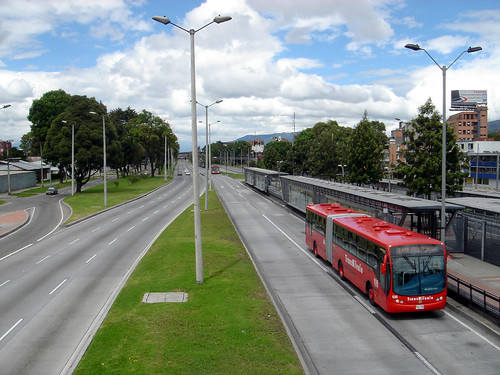
The city's most recent transit developments also help to explain the situation. In an effort to significantly expand and modernize its transit system, the city has begun construction of a Bus Rapid Transit (BRT) system, connecting major corridors throughout the city. BRT systems usually have roads exclusively used by buses for high speed service, frequent service and when having to join regular traffic, transit priority signals and diamond lanes give them a boost. Anyone familiar with Ottawa or Miami's public transit would have an idea as to how this works. It is an expensive ordeal, and in a city whose budget is not outrageously affluent -- a light rail proposal fell by the wayside because of cost -- any new infrastructure, regardless of future savings, could be a real pain in the ass.
With the information above, it is sensible why the electric trolley bus system hasn't taken off in Winnipeg. But with Manitoba's electricity resources at hand, there must be ways to incorporate it into the public transit system. Sure, a full fledged system around the city might be unnecessary, costly and problematic, but the installation of trolley bus systems would make sense on straightforward and popular routes, like the express routes across the city and especially the new BRT routes. The new buses travelling those roads may very well be diesel-electric hybrids, but a simple network of cables overtop these straightforward transitways could pay off in spades in the future.
Monday, May 9, 2011
A Green Mortgage
Looking at buying a home? Even the banks can see the benefits of going green and are happy to reward you for it.
In March of 2011, the Bank of Montreal (BMO) began offering a mortgage plan that provides a relatively low lending rate to homeowners whose homes are 'green'. Provided your home meets the necessary criteria -- primarily having ENERGY STAR rated products and several other high efficiency units -- you can receive a lending rate several points lower than the typical mortgage. For example, the current rate on a low five year fixed mortgage from BMO is 4.14%, while the green mortgage comes in at 3.89%, which could save homeowners thousands of dollars over the five year period.
BMO isn't the only Canadian bank in on this. TD also has a similar discounted rate, while RBC and CIBC offer rebates from certain home inspections and energy upgrades.
It's nice to see the private sector starting to pick up some of the slack left behind by the federal government -- ahem, the Harper Government. After years as a success under Liberal and Conservative governments, the ecoEnergy home retrofit program (formerly EnerGuide) was discontinued in March, 2011. The programs had provided Canadian home and business owners with significant rebates for energy-related upgrades, upwards of $10,000 when paired with matching provincial rebates. Given the Conservative environmental platform, its vow to cut the deficit and its new majority government, it seems highly unlikely that any similar program will return anytime soon.
Home retrofits are some of the most economical changes people can make to decrease their environmental impact on the world. Things like weather stripping, insulation and new furnaces can often pay for themselves in energy savings in less than five years. Unfortunately, the high upfront cost can prohibit a lot of homeowners from making such investments, so every little bit helps.
Of course, given the current state of the Canadian economy and the hit the mortgage market took in the last few years, it has become increasingly difficult to get your hands on a mortgage. And given the strict criteria for the plan, this will likely benefit the affluent before the poor. But hey, you have to start somewhere.
In March of 2011, the Bank of Montreal (BMO) began offering a mortgage plan that provides a relatively low lending rate to homeowners whose homes are 'green'. Provided your home meets the necessary criteria -- primarily having ENERGY STAR rated products and several other high efficiency units -- you can receive a lending rate several points lower than the typical mortgage. For example, the current rate on a low five year fixed mortgage from BMO is 4.14%, while the green mortgage comes in at 3.89%, which could save homeowners thousands of dollars over the five year period.
BMO isn't the only Canadian bank in on this. TD also has a similar discounted rate, while RBC and CIBC offer rebates from certain home inspections and energy upgrades.
It's nice to see the private sector starting to pick up some of the slack left behind by the federal government -- ahem, the Harper Government. After years as a success under Liberal and Conservative governments, the ecoEnergy home retrofit program (formerly EnerGuide) was discontinued in March, 2011. The programs had provided Canadian home and business owners with significant rebates for energy-related upgrades, upwards of $10,000 when paired with matching provincial rebates. Given the Conservative environmental platform, its vow to cut the deficit and its new majority government, it seems highly unlikely that any similar program will return anytime soon.
Home retrofits are some of the most economical changes people can make to decrease their environmental impact on the world. Things like weather stripping, insulation and new furnaces can often pay for themselves in energy savings in less than five years. Unfortunately, the high upfront cost can prohibit a lot of homeowners from making such investments, so every little bit helps.
Of course, given the current state of the Canadian economy and the hit the mortgage market took in the last few years, it has become increasingly difficult to get your hands on a mortgage. And given the strict criteria for the plan, this will likely benefit the affluent before the poor. But hey, you have to start somewhere.
Subscribe to:
Posts (Atom)