A year ago, I blogged about a famous book called "SuperFreakonomics" by Steven Levitt and Stephen Dubner (read my review here). One chapter in their book titled "What Do Al Gore and Mount Pinatubo Have in Common?" is all about solutions to climate change. In this chapter, Levitt and Dubner specifically embrace geo-engineering solutions which are highly controversial in climate change circles. One of the wild and far fetched geo-engineering ideas reported, evidently thought of by Intellectual Ventures, is the garden hose to the sky:
"A team of British researchers called SPICE (Stratospheric Particle Injection for Climate Engineering) is trying to pump particles of water into the atmosphere as a test run before moving onto sulfates and aerosols that would reflect sunlight away from earth, mimicking the aftereffect of a massive volcanic eruption. SPICE is building the garden hose at an undisclosed location, with £1.6 million in U.K. government funding and the backing of the Royal Society".
Essentially a long garden hose from the Earth would pump sulfur dioxide into the stratosphere to allow for a cooling effect.
Sound a little nuts to you? This is one of many geo-engineering ideas out there. Amid the ambivalence about how to mitigate GHGs and adapt to climate change, geo-engineering nerds and fanatics are proposing solutions that, while controversial on the surface, may have some merit if we explore our curiosities and gamble with risks. I am skeptical of geo-engineering myself but am interested nonetheless.
More about this here.
Showing posts with label Engineering. Show all posts
Showing posts with label Engineering. Show all posts
Monday, September 5, 2011


Thursday, August 25, 2011
$20 million for water research in Southern Ontario
A couple of days ago, the University of Toronto announced that the Southern Ontario Water Consortium (composed of many diverse groups and individuals including U of T researchers) will be receiving $19.58 million from the federal government. FedDev Ontario, an agency created in 2009 as part of Canada’s Economic Action Plan, was the agency that informed U of T of the grant.
"The funding will allow the Southern Ontario Water Consortium to build an integrated system for the development, testing and demonstration of new market-driven water technologies and services, primarily along the Grand River and adjacent watersheds".
This is important because the money will, among other things, help U of T researchers develop technologies to treat and improve water quality. Enviro Boys has blogged about water quality before, discussing the emerging contaminants of concern including pharmaceuticals, personal care products (deodorant, soap, shampoo, perfume etc.) and illicit drugs which have and continue to worry many public health experts.
With the $20 million grant, Professor Andrews and his team at U of T will be to further develop advanced oxidation technologies to treat the aforementioned compounds. Improving water quality and enhancing dis-infecting technologies, are critical for water systems and for ensuring that the water we drink is safe. Their research is applied driven; the results will be shared with municipalities in Ontario and the province with the intention of improving current standards and targets for water quality. You can find out more about this through viewing the video below. This news really excites me (as a water nerd) but should excite everyone who appreciates the great water we enjoy in Southern Ontario.
Interview with Professor Robert Andrews, U of T from U of T Engineering on Vimeo.
"The funding will allow the Southern Ontario Water Consortium to build an integrated system for the development, testing and demonstration of new market-driven water technologies and services, primarily along the Grand River and adjacent watersheds".
This is important because the money will, among other things, help U of T researchers develop technologies to treat and improve water quality. Enviro Boys has blogged about water quality before, discussing the emerging contaminants of concern including pharmaceuticals, personal care products (deodorant, soap, shampoo, perfume etc.) and illicit drugs which have and continue to worry many public health experts.
With the $20 million grant, Professor Andrews and his team at U of T will be to further develop advanced oxidation technologies to treat the aforementioned compounds. Improving water quality and enhancing dis-infecting technologies, are critical for water systems and for ensuring that the water we drink is safe. Their research is applied driven; the results will be shared with municipalities in Ontario and the province with the intention of improving current standards and targets for water quality. You can find out more about this through viewing the video below. This news really excites me (as a water nerd) but should excite everyone who appreciates the great water we enjoy in Southern Ontario.
Interview with Professor Robert Andrews, U of T from U of T Engineering on Vimeo.
Friday, August 12, 2011
Short video on NYC's water supply system
The YouTube video above provides a short (but comprehensive) overview of NYC's water supply system; where it comes from, how it's distributed, how a majority of the water is unfiltered and what steps PlaNYC is taking to protect its water supply from contamination. Despite NYC's water abundance, it's important to keep in mind that conservation initiatives (public education and water metering) should be critical components of its planning process and vision.
It would great to see other videos on other cities' water supply systems such as the one above. I would personally like to see one of Vancouver and Toronto. Short videos like these can go a long way in building awareness of a city's water system and the programs, risks and policies that should be known by residents.
Saturday, May 28, 2011
The problem of water leakage
Water leakage is a significant problem in the developing and developed world alike. When water is pumped into the system, being transported from a water treatment plant to your home, a percentage of it is lost due to cracked or corroded service pipes or aging distribution pipes. In the City of Lagos, Nigeria, a significant amount of the water pumped into the distribution system is lost to leaks, theft or non-payment. There are debates about how much water is lost, but ostensibly, it is as much as 85%. Other water supply systems face similar challenges particularly when it comes to leaks. When water systems leak, not only is water wasted and lost, but energy is wasted because it takes energy to move water in and around our cities.
Tokyo, by contrast, has one of the most efficient water systems in the world. Through efficient approaches of detecting and repairing leaks, the city has reduced the amount of water wasted in the past ten years from 150 million cubic meters of water to 68 million cubic meters of water.
From a technological perspective, Tokyo uses a computerized system that calculates and gathers whole information on leakages by computer such as the causes, details of each repair work, the cost for repairs. Such progress on water leak reduction can be seen as a climate change adaptation strategy. Climate change brings with it a number of uncertainties around water supply. In general, it is expected that as climate change unfolds, there will be more demand for water and hence more pressure on water infrastructure systems. With Tokyo's pro-active approach to water management such as repairing water leaks annually, their water infrastructure is already becoming more efficient and will be more resilient to climate change impacts in the future.
Read more here.
Tokyo, by contrast, has one of the most efficient water systems in the world. Through efficient approaches of detecting and repairing leaks, the city has reduced the amount of water wasted in the past ten years from 150 million cubic meters of water to 68 million cubic meters of water.
From a technological perspective, Tokyo uses a computerized system that calculates and gathers whole information on leakages by computer such as the causes, details of each repair work, the cost for repairs. Such progress on water leak reduction can be seen as a climate change adaptation strategy. Climate change brings with it a number of uncertainties around water supply. In general, it is expected that as climate change unfolds, there will be more demand for water and hence more pressure on water infrastructure systems. With Tokyo's pro-active approach to water management such as repairing water leaks annually, their water infrastructure is already becoming more efficient and will be more resilient to climate change impacts in the future.
Read more here.
Monday, January 3, 2011
Guest Entry: Climate Change and the Construction Industry
By: Trevor Shah
We frequently hear about the negative impacts of climate change, but not often do we talk about the potential positive impacts and the opportunities that can stem from it. I wanted to take the chance to write about an industry that stands to benefit from increased global temperatures: the North American construction industry.
But before I begin explaining why this industry will benefit from higher global temperatures, please note that I will be using the A2 scenario from the Special Report on Emissions Scenarios (SRES). This conservative scenario projects an increase in global temperatures by about two degrees Celsius. Evidently, this temperature rise will contribute to many environmental changes which will greatly affect the construction industry.
To begin, there will be a rise in home and corporate building retrofits which will generate additional business for the construction industry. This is primarily due to rising electricity and natural gas prices in North America. Total electricity demand is projected to increase by 30 percent in 2035 (from 2008 levels). Accompanying this growth in demand is a 39 percent rise in electricity prices from the current average price. In addition, the price of natural gas in the U.S. and Canada is expected to double as demand intensifies and lower-cost resources are depleted. If the United States and Canadian governments decide to introduce a carbon tax system, the price of natural gas will rise even further. This is because natural gas produces 117,000 pounds of carbon dioxide per billion British Thermal Units (BTU) of energy.
Due to rising energy prices, housing and building retrofits will generate higher savings and shorter payback periods. Furthermore, building retrofits will grow even more profoundly if Canadian and American governments continue to offer incentives such as energy retrofit programs. The U.S. Government will be offering $452 million for the Property Assessed Clean Energy (PACE program) which will allocate funds for energy efficiency retrofits. The United States government also recently introduced the Federal Housing Administration (FHA) PowerSaver Loan Program which provides Americans with up to $25,000 in low-cost loans from the U.S. Department of Housing and Urban Development (HUD). These programs will lead to considerable growth in home retrofits resulting in additional business for the construction industry.
Second, the United States will continue to experience increasing weather extremes due to climate change: heat waves and heavy downpours are very likely to increase in frequency and intensity. Substantial areas of North America are likely to have more frequent droughts of greater severity, hurricanes, heat waves, rainfall intensity and cold season storms are likely to become more frequent with stronger winds. Combined, these weather extremes will cause a surge in property damage.
In addition, regions with rivers and lakes will need to be protected from floods as the amplified intensity of rainfall and storms continues to rise. The associated clean-up and repair work will generate considerable business for the North American construction industry. This is what Matt Kahn discusses at length in his book Climatopolis. That is, forward looking entrepreneurs --such as those found in the construction industry -- can reap huge profits if people start to think more seriously about the value of adapting to climate change. People will soon realize the need to make their homes more climate change resilient and this will allow the construction industry and other forward looking entrepreneurs to innovate and make profits.
The demand for more resilient building materials, greater protection buffers around our homes and even the floating home idea proposed by Tom Mayne, will not only help urbanites adapt to climate change risks (floods, hurriances etc) but bring about new innovation, smart design and creativity from construction companies, product designers and more.
There will certainly be negative consequences of rising global temperatures on the North American construction industry. Firstly, the cost of construction materials are likely to increase due to higher demand, greater transportation costs, depletion of natural resources and future carbon taxes. Secondly, rises in global temperature may create unsafe working conditions due to extreme heat and the frequency of heat waves (say if you live in cities like LA or Phoenix). Lastly, melting of the permafrost will reduce the bearing capacity of the soil causing settlement and structural damage. However, these negative impacts are offset by the significant benefits.
I don’t mean to paint a negative or daunting future for North America. Instead, I wanted to talk about some of the opportunities that climate change can bring to industries like construction and forward looking people who care about the future and environmental sustainability.
Trevor Shah is a third-year commerce student at Queen’s University in Kingston, Ontario. He is currently on an international student exchange in Bangkok, Thailand.
We frequently hear about the negative impacts of climate change, but not often do we talk about the potential positive impacts and the opportunities that can stem from it. I wanted to take the chance to write about an industry that stands to benefit from increased global temperatures: the North American construction industry.
But before I begin explaining why this industry will benefit from higher global temperatures, please note that I will be using the A2 scenario from the Special Report on Emissions Scenarios (SRES). This conservative scenario projects an increase in global temperatures by about two degrees Celsius. Evidently, this temperature rise will contribute to many environmental changes which will greatly affect the construction industry.
To begin, there will be a rise in home and corporate building retrofits which will generate additional business for the construction industry. This is primarily due to rising electricity and natural gas prices in North America. Total electricity demand is projected to increase by 30 percent in 2035 (from 2008 levels). Accompanying this growth in demand is a 39 percent rise in electricity prices from the current average price. In addition, the price of natural gas in the U.S. and Canada is expected to double as demand intensifies and lower-cost resources are depleted. If the United States and Canadian governments decide to introduce a carbon tax system, the price of natural gas will rise even further. This is because natural gas produces 117,000 pounds of carbon dioxide per billion British Thermal Units (BTU) of energy.
Due to rising energy prices, housing and building retrofits will generate higher savings and shorter payback periods. Furthermore, building retrofits will grow even more profoundly if Canadian and American governments continue to offer incentives such as energy retrofit programs. The U.S. Government will be offering $452 million for the Property Assessed Clean Energy (PACE program) which will allocate funds for energy efficiency retrofits. The United States government also recently introduced the Federal Housing Administration (FHA) PowerSaver Loan Program which provides Americans with up to $25,000 in low-cost loans from the U.S. Department of Housing and Urban Development (HUD). These programs will lead to considerable growth in home retrofits resulting in additional business for the construction industry.
Second, the United States will continue to experience increasing weather extremes due to climate change: heat waves and heavy downpours are very likely to increase in frequency and intensity. Substantial areas of North America are likely to have more frequent droughts of greater severity, hurricanes, heat waves, rainfall intensity and cold season storms are likely to become more frequent with stronger winds. Combined, these weather extremes will cause a surge in property damage.
In addition, regions with rivers and lakes will need to be protected from floods as the amplified intensity of rainfall and storms continues to rise. The associated clean-up and repair work will generate considerable business for the North American construction industry. This is what Matt Kahn discusses at length in his book Climatopolis. That is, forward looking entrepreneurs --such as those found in the construction industry -- can reap huge profits if people start to think more seriously about the value of adapting to climate change. People will soon realize the need to make their homes more climate change resilient and this will allow the construction industry and other forward looking entrepreneurs to innovate and make profits.
The demand for more resilient building materials, greater protection buffers around our homes and even the floating home idea proposed by Tom Mayne, will not only help urbanites adapt to climate change risks (floods, hurriances etc) but bring about new innovation, smart design and creativity from construction companies, product designers and more.
There will certainly be negative consequences of rising global temperatures on the North American construction industry. Firstly, the cost of construction materials are likely to increase due to higher demand, greater transportation costs, depletion of natural resources and future carbon taxes. Secondly, rises in global temperature may create unsafe working conditions due to extreme heat and the frequency of heat waves (say if you live in cities like LA or Phoenix). Lastly, melting of the permafrost will reduce the bearing capacity of the soil causing settlement and structural damage. However, these negative impacts are offset by the significant benefits.
I don’t mean to paint a negative or daunting future for North America. Instead, I wanted to talk about some of the opportunities that climate change can bring to industries like construction and forward looking people who care about the future and environmental sustainability.
Trevor Shah is a third-year commerce student at Queen’s University in Kingston, Ontario. He is currently on an international student exchange in Bangkok, Thailand.
Tuesday, September 14, 2010
China's straddling bus
A couple of weeks ago, Chris (and people around the world) reported on China's nine day traffic jam. The traffic jam was on the Beijing-Tibet expressway. Beijing itself has had many challenges with traffic congestion due to poor urban planning and transit policies that favor the automobile over public transport. When I was in Shanghai, I noticed the impressive transit system and was told by locals that it is well used. Beijing's public transit system is less impressive I'm told.
As Chris mentioned, congestion zone charges, highways tolls and carbon taxes could help ease traffic and pollution in cities like Beijing. Alas, these sorts of policy tools would probably not be well received by the motorists.
The straddling bus has been proposed by Chinese civil engineers. It would help save road space and could carry up to 1400 passengers. I think there are two really unique aspects of this transit mode (if is does come into operation). 1) The bus stations will have supercapacitors which would re-charge the bus with energy so it could make trips continuously. 2) It could carry over 1000 passengers. You do the math to figure out how many cars that could take off the road over a one year period and the drastic reductions in carbon emissions that would accompany this process.
Powered by electricity and capable of carrying over 1000 passengers, it sounds like a promising project for China's top tier cities like Beijing. Can't subways do the same thing? They sure can, but they are really expensive ($100 million per kilometre of construction) and they take years to construct.
Can the straddling bus help improve urban transit? We'll have to see what happens. 186 kilometres have been planned out in Beijing's Mentougou District.
Monday, August 30, 2010
India's infrastructure challenges
A recent article from the NY Times titled "A High-tech Titan Plagued by Potholes" discusses India's dire need of civil engineers to fulfill its long-term infrastructure goals. Software engineering and IT have taken off in India - they are far more profitable industries (better salaries) than civil or structural engineering.
"Young Indians’ preference for software over steel and concrete poses an economic conundrum for India. Its much-envied information technology industry generates tens of thousands of relatively well-paying jobs every year. But that lure also continues the exodus of people qualified to build the infrastructure it desperately needs to improve living conditions for the rest of its one billion people — and to bolster the sort of industries that require good highways and railroads more than high-speed Internet links to the West."
Both China and India are world's fastest growing economies. China however, unlike India, is rapidly advancing its infrastructure projects; high speed rail, hydro-electric dams, wastewater treatment plants etc. India has a long way to go especially in terms of bringing about infrastructure (like public transportation) that could boost its tourism industry and help improve living conditions for the country's poorest.
Along with the desire for civil engineering, urban planning will also be critical for India in the coming decades. From an environmental perspective, infrastructure improvements -- like those being done in China -- will bring about numerous environmental benefits including improved health and sanitation, a reduction in national carbon emissions and an improvement in air pollution in the urban areas.
What should India do? Any thoughts?
"Young Indians’ preference for software over steel and concrete poses an economic conundrum for India. Its much-envied information technology industry generates tens of thousands of relatively well-paying jobs every year. But that lure also continues the exodus of people qualified to build the infrastructure it desperately needs to improve living conditions for the rest of its one billion people — and to bolster the sort of industries that require good highways and railroads more than high-speed Internet links to the West."
Both China and India are world's fastest growing economies. China however, unlike India, is rapidly advancing its infrastructure projects; high speed rail, hydro-electric dams, wastewater treatment plants etc. India has a long way to go especially in terms of bringing about infrastructure (like public transportation) that could boost its tourism industry and help improve living conditions for the country's poorest.
Along with the desire for civil engineering, urban planning will also be critical for India in the coming decades. From an environmental perspective, infrastructure improvements -- like those being done in China -- will bring about numerous environmental benefits including improved health and sanitation, a reduction in national carbon emissions and an improvement in air pollution in the urban areas.
What should India do? Any thoughts?
Saturday, July 31, 2010
Desalination: The Aussie Way
It has been a while since we’ve discussed desalination. Desalination is a process that uses reverse osmosis to convert salt water into fresh drinking water. Our last desalination post featured San Diego and its long-term ambitions to expand desalination due to water shortages and the rising costs of importing water from northern California.
Australia has been desalinating water since 2006, when Perth opened the nation’s first desalination plant. In one of the country’s biggest infrastructure projects in history, Australia’s five largest cities are spending $13.2 billion on desalination plants. Such enthusiasm for aggressive expansion has been motivated by intense droughts across the country. The executive director of the Water Services Association of Australia described the billions of dollars as “the cost of adapting to climate change”. Droughts have been intensified by climate change and desalination will make a significant contribution to the country’s water supply and hopefully for contingency situations when droughts come again in the future.
There are critics of course. One of the main arguments against such an expansion is that Australia’s population is not growing as fast as the past government projected. Called “Big Australia”, the previous government’s projected that the population would rise to 36 million in 2050, from 22 million now.
The focus of attention appears to be on Queensland, the nation’s fastest growing region. Queensland suffered an intense drought from 2000 to 2009. A desalination plant in this area supplies 6 percent of the region’s water needs and has the capacity to deliver 20 percent. The drought did lead to other incentives such as subsidizing the purchase of home water tanks to capture rainwater. A number of dams were built, along with wastewater recycling facilities and pipes. Thus, Queensland has reacted to water shortages mainly through what we call “hard-path approaches” which I have argued in previous posts (and in my honours thesis) is not a holistic approach to water management.
With Queensland’s jubilation for desalination construction, other cities like Sydney, Melbourne and Adelaide have followed suit. I must stress that the power needed to remove salt from seawater accounts for up to 50% of the cost of desalination, and Australia relies on coal, a major emitter of greenhouse gases, to generate most of its electricity. To make smart progress on desalination and to avoid stiff opposition from tough critics, I think Australia must do two things:
1) Develop a system whereby excess water produced from major desalination plants is sold to municipalities without such desalination plants (there are many drought prone regions that could benefit from having a contingency water supply that desalination could provide). The costs must be transparent and distributed equally and at a low cost to those cities. Indeed, desalination projects need to slow down and the government must focus on fair distribution with an adequate amount of “contingency water” stored in reservoirs for imminent droughts.
2) Seeing as desalination will be the solution for Australia’s future water supply, and the fact that desalination is powered mostly through coal, the Australian government must focus on expanding renewable energy projects such as solar energy. Given that Brisbane (the capital of Queensland) receives over 3000 hours of sunshine every year, the region’s desalination plant would benefit from renewable sources like solar to ease pressure on coal and reduce aggregate CO2 emissions.
Key message: Australia will become (if it isn’t already) the world’s biggest user of desalination. With climate change uncertainty and the frequency of droughts, it must focus on conserving water for contingency situations. It does not have to expand desalination plants but instead focus more on practical and sustainable goals like powering them through renewable energy and expanding water conservation education in elementary and secondary schools.
Australia has been desalinating water since 2006, when Perth opened the nation’s first desalination plant. In one of the country’s biggest infrastructure projects in history, Australia’s five largest cities are spending $13.2 billion on desalination plants. Such enthusiasm for aggressive expansion has been motivated by intense droughts across the country. The executive director of the Water Services Association of Australia described the billions of dollars as “the cost of adapting to climate change”. Droughts have been intensified by climate change and desalination will make a significant contribution to the country’s water supply and hopefully for contingency situations when droughts come again in the future.
There are critics of course. One of the main arguments against such an expansion is that Australia’s population is not growing as fast as the past government projected. Called “Big Australia”, the previous government’s projected that the population would rise to 36 million in 2050, from 22 million now.
The focus of attention appears to be on Queensland, the nation’s fastest growing region. Queensland suffered an intense drought from 2000 to 2009. A desalination plant in this area supplies 6 percent of the region’s water needs and has the capacity to deliver 20 percent. The drought did lead to other incentives such as subsidizing the purchase of home water tanks to capture rainwater. A number of dams were built, along with wastewater recycling facilities and pipes. Thus, Queensland has reacted to water shortages mainly through what we call “hard-path approaches” which I have argued in previous posts (and in my honours thesis) is not a holistic approach to water management.
With Queensland’s jubilation for desalination construction, other cities like Sydney, Melbourne and Adelaide have followed suit. I must stress that the power needed to remove salt from seawater accounts for up to 50% of the cost of desalination, and Australia relies on coal, a major emitter of greenhouse gases, to generate most of its electricity. To make smart progress on desalination and to avoid stiff opposition from tough critics, I think Australia must do two things:
1) Develop a system whereby excess water produced from major desalination plants is sold to municipalities without such desalination plants (there are many drought prone regions that could benefit from having a contingency water supply that desalination could provide). The costs must be transparent and distributed equally and at a low cost to those cities. Indeed, desalination projects need to slow down and the government must focus on fair distribution with an adequate amount of “contingency water” stored in reservoirs for imminent droughts.
2) Seeing as desalination will be the solution for Australia’s future water supply, and the fact that desalination is powered mostly through coal, the Australian government must focus on expanding renewable energy projects such as solar energy. Given that Brisbane (the capital of Queensland) receives over 3000 hours of sunshine every year, the region’s desalination plant would benefit from renewable sources like solar to ease pressure on coal and reduce aggregate CO2 emissions.
Key message: Australia will become (if it isn’t already) the world’s biggest user of desalination. With climate change uncertainty and the frequency of droughts, it must focus on conserving water for contingency situations. It does not have to expand desalination plants but instead focus more on practical and sustainable goals like powering them through renewable energy and expanding water conservation education in elementary and secondary schools.
Thursday, July 15, 2010
Driving Behaviour in Hong Kong
"Time is money"
A statement that is very appropriate for Hong Kong and manifested in the City's driving behaviour. Drivers come first, pedestrians, second. Speed is equated with money even at the expense of consuming more (unnecessary) amounts of fuel.
Driving behaviour is quite fascinating in Hong Kong. Drivers (especially on Hong Kong Island) will speed and accelerate regardless of the traffic congestion. Indeed, I have noticed many cars quickly accelerating and precipitously stamping on the brake amid traffic jams. Smooth acceleration and gradual braking has been a rare site. Cars cruising along at a constant speed is also quite rare.
From an environmental and efficiency stand point, such a practice is not smart. It ruins your fuel consumption (more fuel used) because more kinetic energy is dissipated as heat and thus lost. Therefore, it requires more energy (fuel) to re-accelerate because of the lost momentum that you would have had from gradually moving forward. A excellent explanation of this can be found here. Smooth acceleration and gradual braking does not use as much fuel and is less pressure intensive on the car's engine.
Drivers might have a perception that rapid acceleration and sudden braking might get them to their destination faster and such behaviour might be driven by economic motivations, however, mechanical engineers have shown that it is worse for the car’s fuel economy and ultimately for the environment as aggregate carbon emissions inevitably increase.
Key message: Is such driving behaviour counter-productive? Maybe. But if drivers feel that they are moving faster and more efficiently toward their destination, then switching to more gradual acceleration may prove unpopular.
A statement that is very appropriate for Hong Kong and manifested in the City's driving behaviour. Drivers come first, pedestrians, second. Speed is equated with money even at the expense of consuming more (unnecessary) amounts of fuel.
Driving behaviour is quite fascinating in Hong Kong. Drivers (especially on Hong Kong Island) will speed and accelerate regardless of the traffic congestion. Indeed, I have noticed many cars quickly accelerating and precipitously stamping on the brake amid traffic jams. Smooth acceleration and gradual braking has been a rare site. Cars cruising along at a constant speed is also quite rare.
From an environmental and efficiency stand point, such a practice is not smart. It ruins your fuel consumption (more fuel used) because more kinetic energy is dissipated as heat and thus lost. Therefore, it requires more energy (fuel) to re-accelerate because of the lost momentum that you would have had from gradually moving forward. A excellent explanation of this can be found here. Smooth acceleration and gradual braking does not use as much fuel and is less pressure intensive on the car's engine.
Drivers might have a perception that rapid acceleration and sudden braking might get them to their destination faster and such behaviour might be driven by economic motivations, however, mechanical engineers have shown that it is worse for the car’s fuel economy and ultimately for the environment as aggregate carbon emissions inevitably increase.
Key message: Is such driving behaviour counter-productive? Maybe. But if drivers feel that they are moving faster and more efficiently toward their destination, then switching to more gradual acceleration may prove unpopular.
Tuesday, July 13, 2010
Water in China: Part II
Water quality in China is in need of desperate revitalization. For such a large developing (arguably now developed) country that has made immense economic progress over the past 20 years, it is no surprise that water quality has been a victim of such economic development. As discussed in part 1, the priorities of economic growth in China have superseded the priorities of environmental protection and ecological balance. Like part 1, all of the information in this post is derived from Peter Gleick's "China and Water" publication.
As reported by Peter Gleick, there is not a lot of information or data available on China’s water quality. However, China’s State Environmental Protection Agency (SEPA), the World Health Organization (WHO) and the Organization for Economic Cooperation and Development (OECD) have published some data on China’s water quality and have made it available to the public. The data and resources reveal that many of China’s rivers are grossly polluted by human and industrial wastes. An uncounted number of aquatic species have been driven to extinction. An estimated 20,000 chemical factories, half of which are along the Yangtze River (China’s longest river) are dumping uncontrolled or marginally controlled pollutants into China’s rivers.
In 2006, nearly half of China’s major cities did not meet state drinking water quality standards. China’s 10th 5-year plan (2001-2006) mandated the construction of thousands of new wastewater treatment plants, yet a 2006 survey by SEPA revealed that half of the new plants actually built were operating improperly or not at all. In 2005, China’s experienced 1,400 environmental pollution accidents of which half involved water pollution. Water quality has been deteriorating in main rivers including the Songhua, Hai He, and Huai He rivers.
On a positive note, drinking tap water in Beijing has been declared “safe” under the country’s new national drinking water standards for 106 contaminants in spite of some local complaints about its taste. Unfortunately, the OECD has reported that hundreds of millions of Chinese are drinking water contaminated with inorganic pollutants such as arsenic and excessive fluoride including toxins from untreated factory wastewater. Some concerned farmers, living in contaminated regions grow grain with poor water quality, sell that grain and purchase grain from other parts of China they believe have safe water.
Make no mistake about it, untreated wastewater is so problematic affecting every facet of life including social, economic and personal development. Approximately 4.4 billion tons of untreated or partially treated wastewater are dumped into the Huai He River annually.
Now over to the positive and promising. So, we know that wastewater treatment is indeed a critical indicator of public health, environmental and economic progress. Even countries like the U.S. have had issues treating certain contaminants to improve water quality. Wastewater progress must be concomitant with the country’s other development indicators as it plays an indispensable role in ameliorating social and personal well-being.
Fortunately, the government has recognized this challenge and has pledged to commit more capital and labour towards the construction of more wastewater and water treatment plants. The country is also looking at private companies from abroad to assist with wastewater financing and construction.
“More traditional water-supply and treatment infrastructure is also being built rapidly, including water and wastewater treatment plants. Officials announced plans to build ten sewage disposal plants in northwest China’s Shaanxi province, along the Weihe River, the largest tributary of the Yellow River. Another 30 plants are to be built by 2010”.
In one agreement, French Water Company Veolia has set up a joint French-Chinese venture to build a series of water projects, including urban and industrial wastewater treatment plants, desalination facilities, water-treatment equipment, and water-management services in the northern city of Teda. This is just one example, other joint ventures will become more commonplace as the Chinese turn to foreign technical expertise to assist with such essential water projects to improve water quality. What is now needed is a clear institutional and legal framework committed to reducing industrial waste and using a more sustainable approach to water management.
While massive water companies like Veolia and Suez have earned notorious reputations –namely because of water privatization—they will nonetheless have an important role to play in countries like China for increasing public health standards and taking China into a more prosperous water future.
The final part of the series will feature discussion around the economics of water in China along with the importance of public participation in water projects.
As reported by Peter Gleick, there is not a lot of information or data available on China’s water quality. However, China’s State Environmental Protection Agency (SEPA), the World Health Organization (WHO) and the Organization for Economic Cooperation and Development (OECD) have published some data on China’s water quality and have made it available to the public. The data and resources reveal that many of China’s rivers are grossly polluted by human and industrial wastes. An uncounted number of aquatic species have been driven to extinction. An estimated 20,000 chemical factories, half of which are along the Yangtze River (China’s longest river) are dumping uncontrolled or marginally controlled pollutants into China’s rivers.
In 2006, nearly half of China’s major cities did not meet state drinking water quality standards. China’s 10th 5-year plan (2001-2006) mandated the construction of thousands of new wastewater treatment plants, yet a 2006 survey by SEPA revealed that half of the new plants actually built were operating improperly or not at all. In 2005, China’s experienced 1,400 environmental pollution accidents of which half involved water pollution. Water quality has been deteriorating in main rivers including the Songhua, Hai He, and Huai He rivers.
On a positive note, drinking tap water in Beijing has been declared “safe” under the country’s new national drinking water standards for 106 contaminants in spite of some local complaints about its taste. Unfortunately, the OECD has reported that hundreds of millions of Chinese are drinking water contaminated with inorganic pollutants such as arsenic and excessive fluoride including toxins from untreated factory wastewater. Some concerned farmers, living in contaminated regions grow grain with poor water quality, sell that grain and purchase grain from other parts of China they believe have safe water.
Make no mistake about it, untreated wastewater is so problematic affecting every facet of life including social, economic and personal development. Approximately 4.4 billion tons of untreated or partially treated wastewater are dumped into the Huai He River annually.
Now over to the positive and promising. So, we know that wastewater treatment is indeed a critical indicator of public health, environmental and economic progress. Even countries like the U.S. have had issues treating certain contaminants to improve water quality. Wastewater progress must be concomitant with the country’s other development indicators as it plays an indispensable role in ameliorating social and personal well-being.
Fortunately, the government has recognized this challenge and has pledged to commit more capital and labour towards the construction of more wastewater and water treatment plants. The country is also looking at private companies from abroad to assist with wastewater financing and construction.
“More traditional water-supply and treatment infrastructure is also being built rapidly, including water and wastewater treatment plants. Officials announced plans to build ten sewage disposal plants in northwest China’s Shaanxi province, along the Weihe River, the largest tributary of the Yellow River. Another 30 plants are to be built by 2010”.
In one agreement, French Water Company Veolia has set up a joint French-Chinese venture to build a series of water projects, including urban and industrial wastewater treatment plants, desalination facilities, water-treatment equipment, and water-management services in the northern city of Teda. This is just one example, other joint ventures will become more commonplace as the Chinese turn to foreign technical expertise to assist with such essential water projects to improve water quality. What is now needed is a clear institutional and legal framework committed to reducing industrial waste and using a more sustainable approach to water management.
While massive water companies like Veolia and Suez have earned notorious reputations –namely because of water privatization—they will nonetheless have an important role to play in countries like China for increasing public health standards and taking China into a more prosperous water future.
The final part of the series will feature discussion around the economics of water in China along with the importance of public participation in water projects.
Wednesday, June 9, 2010
An "Economy vs. Environment" Debate

I was reading an article from the New York Times titled "Muddy Road Molds Debate on the Future of Guyana". The article reminded me of that classic debate between the economy and the environment. While this particular example is far more complicated, it illustrates how a country (Guyana) has the opportunity to pave a 300-mile road that connects the capital (Georgetown) to Letham, a boomtown on the border with Brazil.
Investors from Brazil are ecstatic about this because it would allow them to search for a deepwater port near Georgetown, giving northern Brazil a "modern artery to export its goods to the Caribbean and North America".
For Guyana, the project presents an opportunity and a threat. Could the road help provide Guyana with an identity, especially an economic identity? This small country of 753,000 is the poorest in South America, with per capita income lower than Bolivia. The road would help Guyana reap significant benefits from trade and take the country more aggressively forward into the global economy.
On the other hand, Guyana could take the more ecologically sustainable path to its economic development. Indeed, the President, Bharrat Jagdeo (who visited Trent University in October) has demonstrated great leadership on forest protection policies and other environmental initiatives.
Environmentalists are deeply concerned about the potential road. Paving it could damage the forest, disrupt and displace river otters, arapaima fish and jaguars. It is projected that two million acres of rain forest could be affected if the road is paved.
Road proponents have acknowledged that the project could bring about upheaval. But they also see how it could ease Guyana's poverty. But, who's going to pay for it? The Prime Minister of Guyana, Sam Hinds, supports the project, as long as Guyana could find $350 million to finance it. There is no indication as to how much the Brazilian government will pay for the project. Their return on investment would be quite adequate considering their expanded trade routes. While the road would be stretched across the country of Guyana, it would be completely inequitable for this poor nation to finance the project at 100%.
Citizens have come out and expressed their deep concerns. Justin de Freitas, 35, who worked as a porter along the road said "that road is going to end our way of life".
There are others as well (including Indigenous) who could be affected by such a project.
To build or not to build? A looming question with seemingly clear costs and benefits. Does the country risk sacrificing its native species, local ecosystems and forested areas for a paved road that will ostensibly bring economic progress? Does it jeopardize its image as a global leader in forest protection policies? These are just some of the tough battles that Guyana now faces with concomitant pressure from the rising economic power that is Brazil.
Key message: These projects are incredibly complex. Squandering an economic opportunity for environmental protection is always a tough one to swallow. A country like Guyana has ambitions to utilize more renewable energy and continue to protect its pristine forests. However, tough decisions lie ahead about economic opportunities that can potentially bring about more benefits to the country's citizenry and alleviate national poverty.
Thursday, April 22, 2010
Sustainable Transportation and Singapore:
A couple of weeks ago, I completed a term paper for my Philosophy of Geography class. I did research on Transport Geography (a sub-discipline in Geography) and found many groundbreaking transportation ideas from the literature. This post will feature one segment of my paper which explored Singapore and the successes it has had in achieving a sustainable transportation system. Good transportation systems will be key for the 21st century, especially for climate change mitigation.
This is a pretty lengthy post. For anyone wishing to read more about transport geography, you can access my paper here.
A general trend in Asian countries like India and China is that increased wealth means more production and subsequent purchasing of automobiles. This process is problematic from a socio-economic status perspective as more vehicles are being purchased and used by the wealthy which exposes the poor to even more emissions and pollutants, or as one scholar puts it: “mobility for some will be at the expense of immobility and disease of others”. It is difficult for the government to discourage automobility when mobility is perceived to be better and public transit might be unpopular because it is uncomfortable, dirty, inconvenient and less enjoyable.
The critical challenge is to balance motorization with public transit. Singapore has been successful with such an endeavour through bringing about a sustainable transportation system. Their system fosters mobility because it allows users to choose their mode of transportation subject to a range of well-coordinated policies to control car population and usage, and at the same time to provide high quality public transport facilities.
Roads have received substantial public investment; from 1986 to 1996 the road surface area increased 27%. Between 1996 and 2000 $3 billion was invested to construct a 300 km highway and from 2001-2005, another $570 million was used to further road expansions. Public investment in the public transit network has occurred simultaneously through the mass rapid transit (MRT) and the Light Rapid Transit (LRT) networks.
Promoting motorization and public transit has involved a set of innovative management policies to achieve a sustainable transport system. The first is a vehicle quota system (VQS) which combines state planning and market mechanisms to allocate vehicles to users and so manage the vehicle population. This management tool is effective in controlling the vehicle population in Singapore as it limits car ownership. Ownership of a vehicle requires a certificate of entitlement and the quota system is based on categories of vehicles differentiated by engine size. The VQS has reduced the annual growth rate of vehicles to three percent because citizens feel inclined to have more control over their transportation choices either through walking, busing, cycling etc.
The other innovative policy is road pricing. The country uses electronic road pricing (ERP) which is a sophisticated combination of radio-frequency, optical-detection, imaging and smart-card technologies. ERP is a method of intelligent transportation systems (ITS) which has gained popularity in places such as North America, Europe and South-East Asian nations like Singapore. These technologies have been championed by civil engineers but have required input from transport geographers and planners in terms of situating them in transportation networks. Pricing roads is a really effective approach to discouraging automobility.
With ERP, the share of private cars over total commuters declined from 48% to 29%. Public transportation has received many benefits from the ERP scheme. Indeed, buses have become faster, more efficient and have seen ridership rates go up. Singapore was the first city in the world to implement an electronic road toll collection system for purposes of congestion pricing.
Mobility has been advanced in Singapore because policies have promoted public transit. Policies have made the quality, frequency and diversity of the public transit system and its services a viable alternative to the car for a wide array of the population. One progressive and emerging idea is to install intelligent traffic lights to detect approaching buses so the lights turn green automatically, this will also come with more bus lanes. This is meant to increase efficiency and mobility as a bus carries more passengers than an automobile.
Low fares in Singapore’s rapid transit system ensure that anyone can access public transport. Low-income commuters are assisted by the “many helping hands” approach, with the government, local communities and the public transport operators all extending their help in various ways such as government income redistribution schemes and transport vouchers. The rapid bus transit system provides low fares in general and continuously seeks input from the public about quality of service, price level, waiting and walking time in a trip. Last, road pricing has been effective because it controls usage of cars i.e. making automobility less attractive because it is more expensive and rapid bus transit more popular because it is cheaper and highly efficient.
Key message: Singapore provides a model for an excellent transportation system. While many cities and countries have their own unique geography, economy and public policies- there is always ample room to revamp transportation systems insofar as the political will is in place.
This is a pretty lengthy post. For anyone wishing to read more about transport geography, you can access my paper here.
A general trend in Asian countries like India and China is that increased wealth means more production and subsequent purchasing of automobiles. This process is problematic from a socio-economic status perspective as more vehicles are being purchased and used by the wealthy which exposes the poor to even more emissions and pollutants, or as one scholar puts it: “mobility for some will be at the expense of immobility and disease of others”. It is difficult for the government to discourage automobility when mobility is perceived to be better and public transit might be unpopular because it is uncomfortable, dirty, inconvenient and less enjoyable.
The critical challenge is to balance motorization with public transit. Singapore has been successful with such an endeavour through bringing about a sustainable transportation system. Their system fosters mobility because it allows users to choose their mode of transportation subject to a range of well-coordinated policies to control car population and usage, and at the same time to provide high quality public transport facilities.
Roads have received substantial public investment; from 1986 to 1996 the road surface area increased 27%. Between 1996 and 2000 $3 billion was invested to construct a 300 km highway and from 2001-2005, another $570 million was used to further road expansions. Public investment in the public transit network has occurred simultaneously through the mass rapid transit (MRT) and the Light Rapid Transit (LRT) networks.
Promoting motorization and public transit has involved a set of innovative management policies to achieve a sustainable transport system. The first is a vehicle quota system (VQS) which combines state planning and market mechanisms to allocate vehicles to users and so manage the vehicle population. This management tool is effective in controlling the vehicle population in Singapore as it limits car ownership. Ownership of a vehicle requires a certificate of entitlement and the quota system is based on categories of vehicles differentiated by engine size. The VQS has reduced the annual growth rate of vehicles to three percent because citizens feel inclined to have more control over their transportation choices either through walking, busing, cycling etc.
The other innovative policy is road pricing. The country uses electronic road pricing (ERP) which is a sophisticated combination of radio-frequency, optical-detection, imaging and smart-card technologies. ERP is a method of intelligent transportation systems (ITS) which has gained popularity in places such as North America, Europe and South-East Asian nations like Singapore. These technologies have been championed by civil engineers but have required input from transport geographers and planners in terms of situating them in transportation networks. Pricing roads is a really effective approach to discouraging automobility.
With ERP, the share of private cars over total commuters declined from 48% to 29%. Public transportation has received many benefits from the ERP scheme. Indeed, buses have become faster, more efficient and have seen ridership rates go up. Singapore was the first city in the world to implement an electronic road toll collection system for purposes of congestion pricing.
Mobility has been advanced in Singapore because policies have promoted public transit. Policies have made the quality, frequency and diversity of the public transit system and its services a viable alternative to the car for a wide array of the population. One progressive and emerging idea is to install intelligent traffic lights to detect approaching buses so the lights turn green automatically, this will also come with more bus lanes. This is meant to increase efficiency and mobility as a bus carries more passengers than an automobile.
Low fares in Singapore’s rapid transit system ensure that anyone can access public transport. Low-income commuters are assisted by the “many helping hands” approach, with the government, local communities and the public transport operators all extending their help in various ways such as government income redistribution schemes and transport vouchers. The rapid bus transit system provides low fares in general and continuously seeks input from the public about quality of service, price level, waiting and walking time in a trip. Last, road pricing has been effective because it controls usage of cars i.e. making automobility less attractive because it is more expensive and rapid bus transit more popular because it is cheaper and highly efficient.
Key message: Singapore provides a model for an excellent transportation system. While many cities and countries have their own unique geography, economy and public policies- there is always ample room to revamp transportation systems insofar as the political will is in place.
Sunday, April 11, 2010
Innovation and Progress in wastewater treatment...
One of the findings from the results section of my thesis was about emerging contaminants of concern in wastewater treatment plants. Things such as pharmaceuticals, personal care products (deodorant, soap, shampoo, perfume etc.) and illicit drugs are starting to be studied and worry many public health experts. After we use these products, we flush them down the toilet, down our sinks and even our bathtubs. Then they travel to wastewater treatment plants which presently (in Canada) do not have the technology/capacity to treat these products. The person I interviewed explained how more research is required on this topic along with good public education to inform the public about which products are harmful to our water supply.
This is a major concern but lots of innovative research is underway. A group of four Chemical Engineering students from Ryerson University have discovered a potential solution to the rising levels of pharmaceuticals ending up in the water supply. Hospitals and long-term care facilities are increasingly using more pharmaceuticals and we still do not completely understand their effects on our water systems. The group from Ryerson designed an advanced wastewater treatment system which would “remove 90 per cent of pharmaceuticals and endocrine-disrupting compounds (EDCs) using commercially available technology”.
Why is this even a concern? In Canada, the government doesn’t enforce the removal of pharmaceutical drugs and EDCs, including Bisphenol A, from wastewater. As a result, municipalities don’t currently pursue removal, since it would cost a lot of money. However, if municipalities were to invest in systems that could treat and remove such chemicals, there could be significant savings in health care costs. Eventually, those chemicals enter the environment and the drinking water supply which could have so many negative effects on human health and biological function.
While there haven’t been any studies done to determine the long-term effects of these pharmaceuticals and EDCs on humans, concerns have nevertheless been raised. For example, some studies have "found that pharmaceuticals and EDCs have been implicated in such conditions as polycystic ovarian syndrome and hypospadias (a birth defect involving the male urethra)".
Without going into too much engineering technicalities (because I don’t completely understand every detail myself, here is how the group’s system works:
“The students’ proposed innovative design uses two processes in combination, both using commercially available technology. First, wastewater is subjected to membrane biological reactors. This activity increases the amount of bacteria already present in the treatment process and makes them “hungrier.” From there, sewage goes through an advanced oxidization process. Typically used to treat drinking water, this process works in the same way as an antioxidant does in the body: it destroys harmful toxins. But whereas most wastewater treatment plants use chlorine as a disinfectant the students proposed using ultraviolet light (UV) and hydrogen peroxide for the purposes of advanced oxidation and disinfection. Normally, UV light would be unable to penetrate murky wastewater, but after undergoing the membrane biological reactor, liquid waste in the students’ simulated wastewater treatment plants would be clear enough to permit the use of UV light. Afterwards, the students concluded, the wastewater would be clean enough to go straight into lakes and rivers”.
Key message: To see this kind of innovative research from undergrad students is incredible. As more research is being done on this critical topic, it is equally important to look at public education. Cities could use this opportunity to put together a list of pharmaceutical and personal care products that have negative effects on urban waterways. This list can take the form of a pamphlet or guide which can be distributed to the public. This is simply a precautionary measure but would go far in terms of raising awareness and education.
***The group’s project, Treating Pharmaceuticals and Endocrine Disruptors at the Source: An Advanced Wastewater Treatment Plant Design, placed 1st for Social Awareness and received an honourable mention for their innovative design of an advanced wastewater treatment plant at the 2010 Ontario Engineering Competition in Waterloo, Ontario***
This is a major concern but lots of innovative research is underway. A group of four Chemical Engineering students from Ryerson University have discovered a potential solution to the rising levels of pharmaceuticals ending up in the water supply. Hospitals and long-term care facilities are increasingly using more pharmaceuticals and we still do not completely understand their effects on our water systems. The group from Ryerson designed an advanced wastewater treatment system which would “remove 90 per cent of pharmaceuticals and endocrine-disrupting compounds (EDCs) using commercially available technology”.
Why is this even a concern? In Canada, the government doesn’t enforce the removal of pharmaceutical drugs and EDCs, including Bisphenol A, from wastewater. As a result, municipalities don’t currently pursue removal, since it would cost a lot of money. However, if municipalities were to invest in systems that could treat and remove such chemicals, there could be significant savings in health care costs. Eventually, those chemicals enter the environment and the drinking water supply which could have so many negative effects on human health and biological function.
While there haven’t been any studies done to determine the long-term effects of these pharmaceuticals and EDCs on humans, concerns have nevertheless been raised. For example, some studies have "found that pharmaceuticals and EDCs have been implicated in such conditions as polycystic ovarian syndrome and hypospadias (a birth defect involving the male urethra)".
Without going into too much engineering technicalities (because I don’t completely understand every detail myself, here is how the group’s system works:
“The students’ proposed innovative design uses two processes in combination, both using commercially available technology. First, wastewater is subjected to membrane biological reactors. This activity increases the amount of bacteria already present in the treatment process and makes them “hungrier.” From there, sewage goes through an advanced oxidization process. Typically used to treat drinking water, this process works in the same way as an antioxidant does in the body: it destroys harmful toxins. But whereas most wastewater treatment plants use chlorine as a disinfectant the students proposed using ultraviolet light (UV) and hydrogen peroxide for the purposes of advanced oxidation and disinfection. Normally, UV light would be unable to penetrate murky wastewater, but after undergoing the membrane biological reactor, liquid waste in the students’ simulated wastewater treatment plants would be clear enough to permit the use of UV light. Afterwards, the students concluded, the wastewater would be clean enough to go straight into lakes and rivers”.
Key message: To see this kind of innovative research from undergrad students is incredible. As more research is being done on this critical topic, it is equally important to look at public education. Cities could use this opportunity to put together a list of pharmaceutical and personal care products that have negative effects on urban waterways. This list can take the form of a pamphlet or guide which can be distributed to the public. This is simply a precautionary measure but would go far in terms of raising awareness and education.
***The group’s project, Treating Pharmaceuticals and Endocrine Disruptors at the Source: An Advanced Wastewater Treatment Plant Design, placed 1st for Social Awareness and received an honourable mention for their innovative design of an advanced wastewater treatment plant at the 2010 Ontario Engineering Competition in Waterloo, Ontario***
Wednesday, March 10, 2010
A cleaner, cheaper, more useful type of clean coal...

Bollocks, you'd probably say (and I would hope in an English accent). Well, there's a company in the United States that is hoping to prove you wrong. Based off the naturally occurring process corals use to make their bones, some very innovative entrepreneurs at Calera have developed a method to take carbon emissions from gas and coal-fired plants and mixing it with ocean water to create calcium carbonate. Calcium carbonate -- the substance making up coral bones -- can be turned into cement or used as aggregate in construction projects.
There are plenty of small innovative firms out there with cool ideas like this, but Calera could very well make a significant impact. It has already attracted attention from Thomas Friedman, author of The World is Flat and columnist for the New York Times, and more importantly, significant investment from a major engineering firm confident enough to build several Calera plants.
There are hopes that this process will actually lead to a "clean coal" future, something that is heavily criticized by many because of the extraordinary expense and excruciatingly slow development of mainstream carbon capture and storage (CCS) technologies. By capturing the carbon emissions from coal and gas plants, it essentially makes them carbon emissions-free. Moreover, the carbon is stored in useful products like cement, as opposed to being pumped in large quantities underground.
A wonderful bonus that comes out of this process is relatively clean water. The salt water used loses about 80% of the properties that make it unsafe to drink, which happens to make it much easier to convert to fresh water using desalination as less energy is required to filter the water.
Considering how much coal is being used to power the world's electricity systems, this process, if actually scalable in an economic fashion, could change the whole playing field. The company is touting the potential of this technology in China and India, which are developing coal plants at a rate of nearly one a day. And since major construction projects and fresh water crises are bound to define much of each country's upcoming future, the technology is especially attractive.
But even if all the potential of this technology does come to fruition, it won't be perfect. Coal is a finite resource. Coal plants, even without carbon emissions, still have significant impacts on our lives. They emit dangerously high levels of toxic chemicals into the air -- even with scrubber technologies -- causing severe health complications. And coal mining is among the most environmentally devastating processes known to our history. I mean, how many other industries can say that they blow the tops off mountains to get what they want?
The trouble is, coal is going to be used excessively whether we like it or not.
No energy technology is perfect, but the Calera technology could at least make a significant dent as we try to lower carbon emissions. It's amazing what we can learn from nature. One hopes we don't kill too much of it off as we do.
Wednesday, October 28, 2009
Water pipes leak a lot but there is a way to minimize this...
Leaking water systems waste a lot of water. Take any city in the world that has an extensive water supply system, chances are their infrastructure, pipes and water mains leak on a daily basis. This results in numerous inefficiencies including lost water, lost energy (energy is required to pump and pressurize water through pipes) and municipal capital.
Fixing these leaks have proven to be a nuisance and extremely costly. So, a lot of cities will simply resort to the easiest solution: reduce the water pressure to reduce water leakage. The World Bank estimates that 88 billion litres of treated water is lost from leaking urban pipelines every day.
Fortunately, thanks to the ingenuity of an Israeli company called “Curapipe”, there is now a system that aims to seal leaks cheaply with only a small disruption to the water supply.
Check out how it works at the economist here.
Fixing these leaks have proven to be a nuisance and extremely costly. So, a lot of cities will simply resort to the easiest solution: reduce the water pressure to reduce water leakage. The World Bank estimates that 88 billion litres of treated water is lost from leaking urban pipelines every day.
Fortunately, thanks to the ingenuity of an Israeli company called “Curapipe”, there is now a system that aims to seal leaks cheaply with only a small disruption to the water supply.
Check out how it works at the economist here.
Thursday, September 3, 2009
Deep lake water cooling: an urban solution
Have you ever heard of deep lake water cooling? I just learned about it today. In an effort to minimize energy intensive air conditioning in the city of Toronto, the city is now turning to its lake water to obtain really cold water to cool its office and commercial buildings.
Back in 2003, energy company Enwave was asked from the city government to innovate an environmentally friendly solution that can help take some pressure off of the electricity system. Air conditioning from office buildings can be incredibly profligate in the summer months and highly energy intensive. The innovation is based off of a district cooling system which draws from deep cold water (83 meters) in Lake Ontario. This is efficiency and water optimization to its finest. The deep lake water flows into Toronto’s water system at 4 degrees Celsius. It is sent through heat exchangers before entering the city's drinking water supply, and energy is transferred between two systems- the city's and Enwave's.
The city obtains a portion of the water for drinking (once it is treated), and Enwave gets a portion as well. Enwave transfers the cold temperature from the city water to its chilled water system. So all in all, you have two systems drawing from the same source and ultimately there are two uses - Enwave's and the city's which are maintained through heat exchangers that facilitate the transfer of energy.
This naturally cold water provides an alternative to the conventional air conditioning that is produced by coal-fired power plants. It is really intelligent infrastructure because it reduces the total electricity used in air conditioning systems by over 85 percent. Moreover, it also serves as a pollution abatement technique minimizing pernicious chemicals and emissions like CFCs and carbon dioxide (somewhere in the range of 40,000 tons a year). This innovation will undoubtedly help alleviate some serious urban pollution issues we have been facing of late- namely smog and acid rain.
Key message: Smart infrastructural changes are indispensable for the future of cities.
For more info about this technology, click here.
Back in 2003, energy company Enwave was asked from the city government to innovate an environmentally friendly solution that can help take some pressure off of the electricity system. Air conditioning from office buildings can be incredibly profligate in the summer months and highly energy intensive. The innovation is based off of a district cooling system which draws from deep cold water (83 meters) in Lake Ontario. This is efficiency and water optimization to its finest. The deep lake water flows into Toronto’s water system at 4 degrees Celsius. It is sent through heat exchangers before entering the city's drinking water supply, and energy is transferred between two systems- the city's and Enwave's.
The city obtains a portion of the water for drinking (once it is treated), and Enwave gets a portion as well. Enwave transfers the cold temperature from the city water to its chilled water system. So all in all, you have two systems drawing from the same source and ultimately there are two uses - Enwave's and the city's which are maintained through heat exchangers that facilitate the transfer of energy.
This naturally cold water provides an alternative to the conventional air conditioning that is produced by coal-fired power plants. It is really intelligent infrastructure because it reduces the total electricity used in air conditioning systems by over 85 percent. Moreover, it also serves as a pollution abatement technique minimizing pernicious chemicals and emissions like CFCs and carbon dioxide (somewhere in the range of 40,000 tons a year). This innovation will undoubtedly help alleviate some serious urban pollution issues we have been facing of late- namely smog and acid rain.
Key message: Smart infrastructural changes are indispensable for the future of cities.
For more info about this technology, click here.
Sunday, August 30, 2009
Mexico City: The Great Water User…
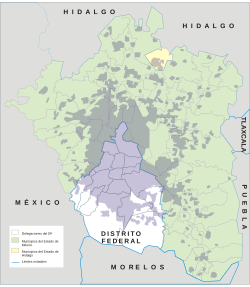 Mexico City is facing an egregious civil engineering problem. The culprit: a depleting groundwater aquifer. People around the world have been hearing about these so called sinking cities; Venice, Mexico City and Los Angeles to a lesser extent. From a geophysical standpoint, these sinking cities are sinking because its residents pump copious amounts of water from its underground aquifer. This is done primarily through wells and happens usually because of a phenomenon called “absolute dominion” which is when residents can essentially pump as much water as they like because the state allows them to.
When you over pump an aquifer or in Mexico City’s case, have 8 million plus people drawing heavily from it… its hydro capacity becomes jeopardized. It is estimated that Mexico City has sunk as much as 30 feet over the course of the 20th century.
When the city was planned by engineers and architects, they did not forecast or predict such rapid population growth. A fast growing population ultimately exhausted its natural springs causing the subsoil of the land to degrade very quickly. Indeed, this land subsidence has consequently led to serious financial problems for the city causing hundreds of millions of dollars in damage to buildings and structures.
Sewer lines and subway tunnels have required serious revitalization after being damaged by a collapsing aquifer. Civil and Structural engineers have begun putting up scaffolding and more compact structural materials to protect important buildings like the National Cathedral.
This particular conundrum is by no means an easy one to solve. 70 percent of the water used in the metropolitan area comes from the main aquifer. People are thirsty and are living in a climate that has an average yearly temperature of 30 degrees Celsius. It is hot and the ubiquity of pollution and smog are only exacerbating matters.
In the early 2000s, the New York Times summed up Mexico City’s water issue very well: “The water difficulties have become a vicious circle: as the city grows, more water is pumped from the aquifer. As more is pumped, the city sinks further. The sinkage ruptures more underground water pipes, sending fresh water gushing into the sewers, aggravating the shortage, requiring more water to be pumped from the aquifer, and so on.”
Having an inadequate water distribution system is incredibly troublesome. About a third of every gallon of fresh water pumped into the system leaks out- over a year that is enough water to supply the city of Toronto!
From an optimistic lens, change is coming to the forefront. The city is building vast pipelines to bring water from rivers outside of the metropolis- this is good water demand management albeit expensive. And rain water harvesting is becoming more salient. So when it rains… people are trying to collect that water, self-purify it and then treat it, and then drink it. The city should also explore an infrastructure leak index to locate, quantify and repair the leakage within its water distribution system.
There are a plethora of issues surrounding Mexico City. But as this blog has identified in the past, there are numerous solutions for managing water including education about water efficient technologies to more equitable water allocation decisions to conservation.
Key message: Mexico City must start looking and learning from California’s water solutions, a state that has a massive population and a dwindling water supply. For more information on this topic see here:
Subscribe to:
Posts (Atom)