We all know that traffic congestion is a mounting problem for the Greater Toronto Area. Alas, the traffic woes are not confined to the GTA but extend to the Hamilton Area as well. This region is known as the Greater Toronto Hamilton Area (GTHA).
While we are generally aware that traffic congestion is getting worse -- exacerbated by population growth and a poor response in transit supply to demand -- do we really know the true costs of congestion in our urban areas? A recent article citing U of T Professor Eric Miller, offers a number of statistics and facts about the traffic congestion problem that any resident of the GTHA should know about:
"The average commute time in the Greater Toronto and Hamilton Area will jump by a third in 20 years without a major injection into transit, according to expert calculations."
This amounts to: "an extra 27 minutes a day, 2.25 hours more a week, 4.6 full days a year, that local commuters will spend in their cars battling congestion as the region adds an expected 2.6 million people".
"Studies have shown that GTHA congestion costs an estimated $6 billion in unrealized GDP each year. Gridlock also results in 26,000 fewer jobs created in the region".
I blogged about this topic a number of months ago discussing the importance of transit alternatives like high-speed rail to help alleviate traffic congestion on highway 401.
The article offers much more. A natural alternative is to expand transit services. Fortunately, Metrolinx, has a $50-billion, 25-year "Big Move" plan which will involve a conglomeration of 100 projects ranging from bike lanes to 1,150 kilometres of new transit lines. Eric Miller, who continues to caution that traffic congestion is a huge impediment to economic growth, thinks the Big Move is an “excellent start” but it won’t be the entire answer. The GTHA is competing with the world’s biggest metro areas — places like New York, London, Shanghai — which have very sophisticated transit systems.
To read the full story, see here.
Showing posts with label Transportation. Show all posts
Showing posts with label Transportation. Show all posts
Wednesday, December 14, 2011


Saturday, October 22, 2011
A Green Leader we miss: David Miller
Despite the critiques of David Miller's mayorship of Toronto, he is and will certainly be remembered as a leader in the environmental and sustainability realm. This Globe and Mail articles features Miller's thoughts about Transit City and how transit is critical to any successful city like Toronto. I wrote about an idea I had to Transit City's financial issues back in May 2010. You can view that post here.
The article from the Globe also provides an update about what Miller is doing these days. He continues to practice his green ethos through a new position as Future of Cities Global Fellow at the Polytechnic Institute of New York University, a post he landed after chairing the C40 group of mayors. He is also going to teach a course to senior engineers and graduate planning students (at NYU) that will use an existing derelict site as a case study in rebuilding cities.
Good on you, David. If only Toronto's current mayor was half as sensible, Toronto would be able to renew its hitherto impressive environmental record, thanks largely to Miller's leadership.
The article from the Globe also provides an update about what Miller is doing these days. He continues to practice his green ethos through a new position as Future of Cities Global Fellow at the Polytechnic Institute of New York University, a post he landed after chairing the C40 group of mayors. He is also going to teach a course to senior engineers and graduate planning students (at NYU) that will use an existing derelict site as a case study in rebuilding cities.
Good on you, David. If only Toronto's current mayor was half as sensible, Toronto would be able to renew its hitherto impressive environmental record, thanks largely to Miller's leadership.
Thursday, October 13, 2011
The Business Case for Public Transit
Chris and I have blogged a fair bit about transportation issues through Enviro Boys. However, rarely have we discussed the business case for public transit and the multiplier effect it creates such as benefits for individual businesses, attracting creative and talented people to a city, moving millions of people everyday and really being the lifeblood of a vibrant and economically productive city.
My friend, Lewis Kelly, wrote a brilliant article for Alberta Venture on making the business case for public transit. His article is mostly focused on the new Light Rail Transit lines in Calgary and Edmonton. Here is an excerpt from his article:
"Regardless of their fiscal efficiency, rail lines tend to get built because of their political expediency – and the reasons for that are the same reasons that make building new train lines do wonders for business. People like riding trains and living in cities with extended rail networks. There’s an expectation among prospective employees that any world-class city will offer a certain level of cultural sophistication, diversity and a well-run rail network. “It really comes down to incubating and becoming a draw for talent,” says Brunnen at the Calgary chamber. “When we invest in these major public-transit infrastructure projects, we become more desirable for new investment – because we become more desirable as an international destination of talent.”
He also quotes two professors I think highly of, Professor Eric Miller at U of T and Professor Murtaza Haider at Ryerson U.
I think planners, environmentalists and other transit advocates should spend more time discussing the economic and business benefits of transit. After all, when glancing at the numbers, it is clear that investments in public transit can yield benefits far superior to simply investing in roads and highways. Ultimately, transit systems improve mobility and accessibility for our cities which in turn, create environmental and social benefits. And when transit is clearly linked to economic productivity (and being good for individual businesses) it is hard to argue against it. The more advocacy from different sectors and groups in society, the better!
My friend, Lewis Kelly, wrote a brilliant article for Alberta Venture on making the business case for public transit. His article is mostly focused on the new Light Rail Transit lines in Calgary and Edmonton. Here is an excerpt from his article:
"Regardless of their fiscal efficiency, rail lines tend to get built because of their political expediency – and the reasons for that are the same reasons that make building new train lines do wonders for business. People like riding trains and living in cities with extended rail networks. There’s an expectation among prospective employees that any world-class city will offer a certain level of cultural sophistication, diversity and a well-run rail network. “It really comes down to incubating and becoming a draw for talent,” says Brunnen at the Calgary chamber. “When we invest in these major public-transit infrastructure projects, we become more desirable for new investment – because we become more desirable as an international destination of talent.”
He also quotes two professors I think highly of, Professor Eric Miller at U of T and Professor Murtaza Haider at Ryerson U.
I think planners, environmentalists and other transit advocates should spend more time discussing the economic and business benefits of transit. After all, when glancing at the numbers, it is clear that investments in public transit can yield benefits far superior to simply investing in roads and highways. Ultimately, transit systems improve mobility and accessibility for our cities which in turn, create environmental and social benefits. And when transit is clearly linked to economic productivity (and being good for individual businesses) it is hard to argue against it. The more advocacy from different sectors and groups in society, the better!
Wednesday, October 5, 2011
Roads vs. transit in the U.S.
The Infrastructurist provides a thoughtful discussion of federal funding for roads versus funding for transit in the United States.
"Take Obama’s latest proposed jobs bill, which includes $27 billion for immediate spending on highways and bridges, and around $9 billion for rail. Clearly, that’s a huge tilt. What about changing that ratio of fund distribution, on the basis that nearly every large city is currently working to introduce transit? In other words, what if we gave $27 billion to transit, and $9 billion to roads?"
The conclusion of the post:
"Given all of this context, where should the federal dollars go (assuming that any ever get distributed)? The answer, according to transit experts, may lie in a compromise — adjusting our standards for design, say, so a bridge reconstruction must include accommodation for a future rail line. And making transit decisions with a discerning eye. “Transit lines should expand in response to land use – not just because of the desire to expand,” Eddy says. “And on the highway side, what needs to be wrestled to the ground is the idea that you must always get in a car to get where you want to go — and that your car is the best way to get there.”
The bottomline is that cities in the U.S. and all over North America are growing and demanding better transit service. Transit has grown tremedously in popularity across North America's biggest cities since the 1980s. In Vancouver, transit ridership has grown 50% over the past 10 years while the population has only grown by 15%. Reasons for this increase in demand are numerous but principally revolve around gains in efficiency, service and comfort level. Beyond federal funding though, transit systems need to be financially sustainable in order to provide good service. David Levinson's offers us some ideas on how transit systems can be financed sustainbly.
"Take Obama’s latest proposed jobs bill, which includes $27 billion for immediate spending on highways and bridges, and around $9 billion for rail. Clearly, that’s a huge tilt. What about changing that ratio of fund distribution, on the basis that nearly every large city is currently working to introduce transit? In other words, what if we gave $27 billion to transit, and $9 billion to roads?"
The conclusion of the post:
"Given all of this context, where should the federal dollars go (assuming that any ever get distributed)? The answer, according to transit experts, may lie in a compromise — adjusting our standards for design, say, so a bridge reconstruction must include accommodation for a future rail line. And making transit decisions with a discerning eye. “Transit lines should expand in response to land use – not just because of the desire to expand,” Eddy says. “And on the highway side, what needs to be wrestled to the ground is the idea that you must always get in a car to get where you want to go — and that your car is the best way to get there.”
The bottomline is that cities in the U.S. and all over North America are growing and demanding better transit service. Transit has grown tremedously in popularity across North America's biggest cities since the 1980s. In Vancouver, transit ridership has grown 50% over the past 10 years while the population has only grown by 15%. Reasons for this increase in demand are numerous but principally revolve around gains in efficiency, service and comfort level. Beyond federal funding though, transit systems need to be financially sustainable in order to provide good service. David Levinson's offers us some ideas on how transit systems can be financed sustainbly.
Thursday, September 15, 2011
A great article on financially sustainable mass transit systems
David Levinson is Professor of Transportation Engineering at the University of Minnesota. He blogs at The Transportationist. Check out his post on some ideas on how to achieve financially sustainable mass transit systems. Many cities around the world recognize that transit is an indispensable component of greening their cities. Transit brings a number of benefits with the obvious environmental gains being shown through decreased carbon emissions per capita in the transportation sector.
The real challenge being faced by transit agencies around the world is financing their systems. They have to overcome a lot of inefficiencies that are embedded in the system (often created by local governments). Levinson has some good ideas. Here is the start of his post:
"Mass transit systems in the United States are collectively losing money hand over fist. Yet many individual routes (including bus routes) earn enough to pay their own operating (and even capital costs). But like bad mortgages contaminating the good, money-losing transit routes are bogging down the system."
More here.
The real challenge being faced by transit agencies around the world is financing their systems. They have to overcome a lot of inefficiencies that are embedded in the system (often created by local governments). Levinson has some good ideas. Here is the start of his post:
"Mass transit systems in the United States are collectively losing money hand over fist. Yet many individual routes (including bus routes) earn enough to pay their own operating (and even capital costs). But like bad mortgages contaminating the good, money-losing transit routes are bogging down the system."
More here.
Monday, September 12, 2011
The transit funding discussion continues in Metro Vancouver
A recent article in the Globe and Mail titled "Transit advocates launch campaign for property-tax hike" adds to the hitherto highly mixed discussion regarding funding for TransLink, the regional transportation authority for Metro Vancouver.
The article makes reference to a group in Vancouver called the Sustainable Transportation Coalition:
"An influential group of planners, architects, and environmentalists is launching a campaign this week to persuade hesitant Metro Vancouver mayors to commit to property-tax increases in order to kick-start a plan for massive transit expansion."
The group favours a hike in property taxes to pay for transit, but they have also echoed support for using revenues from the carbon tax and road pricing as well. Here is some information about the funding plan that is going to be voted on within the next month among the 22 mayors in Metro Vancouver:
"The plan, which is a supplement to TransLink’s basic operating budget, would raise $700-million over 10 years. That would provide TransLink’s share for the long-delayed Evergreen Line in the northeast. It would also provide another $300-million for other major improvements, including a bus on King George in Surrey, a Highway 1 express bus for Langley commuters, and an extra SeaBus for the North Shore".
Whichever funding alternatives gets the green light, this will be a momentous decision for transit in Metro Vancouver for the future.
The article makes reference to a group in Vancouver called the Sustainable Transportation Coalition:
"An influential group of planners, architects, and environmentalists is launching a campaign this week to persuade hesitant Metro Vancouver mayors to commit to property-tax increases in order to kick-start a plan for massive transit expansion."
The group favours a hike in property taxes to pay for transit, but they have also echoed support for using revenues from the carbon tax and road pricing as well. Here is some information about the funding plan that is going to be voted on within the next month among the 22 mayors in Metro Vancouver:
"The plan, which is a supplement to TransLink’s basic operating budget, would raise $700-million over 10 years. That would provide TransLink’s share for the long-delayed Evergreen Line in the northeast. It would also provide another $300-million for other major improvements, including a bus on King George in Surrey, a Highway 1 express bus for Langley commuters, and an extra SeaBus for the North Shore".
Whichever funding alternatives gets the green light, this will be a momentous decision for transit in Metro Vancouver for the future.
Wednesday, August 31, 2011
A less enthusiastic take on HSR in China
Image Credit: The Globe and Mail (August 12, 2011)
We have blogged about high speed rail (HSR) several times before, particularly focusing on China (see here and here). Amid my research this past year and constant enthusiasm for HSR in China, my own perspective on it has changed dramatically over the past few months. I was skeptical about its rapid progress to begin with, but the July 23rd crash only furthered my worries and general skepticism.

As shown in the map above, China leads the world in kilometres of HSR. The environmental motivations for this nation wide network are admirable, but given the citizens' demand for more low-cost transportation, along with a security of reaching destinations in a safe manner, HSR provides a case of tremendous uncertainty.
You can read this article for a more complete picture outlining genuine concerns of HSR in China. Take note: I am not against HSR in China. I think the country is on the right track in terms of sustainable transportation. However, rushing such projects with complete government control to ostensibly show off the nation's great technological rise is a bit idiotic, and when crashed do occur, this not only instills fear in the nation's citizens, but casts doubt from people all over the world.
We have blogged about high speed rail (HSR) several times before, particularly focusing on China (see here and here). Amid my research this past year and constant enthusiasm for HSR in China, my own perspective on it has changed dramatically over the past few months. I was skeptical about its rapid progress to begin with, but the July 23rd crash only furthered my worries and general skepticism.

As shown in the map above, China leads the world in kilometres of HSR. The environmental motivations for this nation wide network are admirable, but given the citizens' demand for more low-cost transportation, along with a security of reaching destinations in a safe manner, HSR provides a case of tremendous uncertainty.
You can read this article for a more complete picture outlining genuine concerns of HSR in China. Take note: I am not against HSR in China. I think the country is on the right track in terms of sustainable transportation. However, rushing such projects with complete government control to ostensibly show off the nation's great technological rise is a bit idiotic, and when crashed do occur, this not only instills fear in the nation's citizens, but casts doubt from people all over the world.
Wednesday, August 24, 2011
Friday, July 22, 2011
The irrationality of rationality: 2 cent gas tax increase for transit
There has been on-going debate over the past 4 weeks about the relative merits of a 2 cent increase in the gas tax to help pay for the Evergreen Line, a yet to be built transit line in Metro Vancouver. Here are some facts you should know about courtesy of the popular urban planning blog, Planetizen:
"The two-cents-per-liter tax on gasoline is a new way to fund the delayed Evergreen Line, a $1.4 billion project."
"The fuel tax is part of a proposed funding formula announced Wednesday and designed to generate an additional $70-million per year for transportation authority TransLink, which has an annual budget of about $1.1-billion."
"Along with the fuel tax, the proposal includes potential property-tax increases or – the mayors’ preferred option – a new long-term revenue source that could involve a vehicle levy or some form of “road pricing” such as tolls."
"The proposal follows recent meetings between regional mayors and provincial Transportation Minister Blair Lekstrom, who last month criticized mayors for not coming up with a plan to fund their share of the Evergreen Line."
A couple of other facts courtesy of the CBC:
"According to the Canadian Taxpayers Federation, Metro Vancouver drivers already pay the highest gasoline taxes in Canada, at 33 per cent."
"Construction on the Evergreen Line project was originally expected to start in 2010 and be completed in 2014. But by 2009 only the provincial and federal governments had committed just over $400 million each to cover their share of the cost for the $1.4 billion project." Plans for the line have been stalled for years because Metro Vancouver and TransLink have not come up with $400 million dollars to cover their share of the funding for the project."
I titled this post "the irrationality of rationality" because I have heard lots of complaints recently about the idea of a 2 cent increase in gas tax to fund transit. People are attempting to rationalize the economic futility of using the gas tax because of their selfish thinking and complete reliance on their cars. I have seen/heard these complaints via local radio, comment sections of news articles and from others. Opponents of the 2 cent increase in the gas tax generally argue that they do not use transit so why should they pay for it. They also argue that increasing transit fares are a more sensible approach to generate revenue because those using transit should pay for. Last, some say its just another tax without any palpable benefits.
I think all of the arguments above are slightly irrational. One, while Metro Vancouver residents do pay one of the highest gas taxes in Canada, they receive a lot in return from this through a well functioning and efficient transit system and through good roads across the region. Yes, many people do not use transit and prefer their cars to drive around; but an additional 2 cents that may amount to an extra $10-20 per month in fuel expenses, that can, inter alia, help bring about new transit infrastructure to alleviate traffic congestion and pollutants is certainly a worthwhile compromise. Also, higher gas taxes are meant to pay for road maintenance and expansion too thereby yielding benefits for drivers too.
Increase transit fares instead? Transit in regions like Metro Vancouver is used by all demographics (low income, students, seniors, professionals and more). Lots of research has shown how the poor pay relatively higher transit fares per unit of service than the non-poor. Thus, just from a social equity point of view, increasing fares would likely reduce ridership. And when transit ridership has grown by 50 percent in this region in the past 10 years, this move would be highly idiotic.
"The fuel tax is part of a proposed funding formula announced Wednesday and designed to generate an additional $70-million per year for transportation authority TransLink, which has an annual budget of about $1.1-billion."
"Along with the fuel tax, the proposal includes potential property-tax increases or – the mayors’ preferred option – a new long-term revenue source that could involve a vehicle levy or some form of “road pricing” such as tolls."
"The proposal follows recent meetings between regional mayors and provincial Transportation Minister Blair Lekstrom, who last month criticized mayors for not coming up with a plan to fund their share of the Evergreen Line."
A couple of other facts courtesy of the CBC:
"According to the Canadian Taxpayers Federation, Metro Vancouver drivers already pay the highest gasoline taxes in Canada, at 33 per cent."
"Construction on the Evergreen Line project was originally expected to start in 2010 and be completed in 2014. But by 2009 only the provincial and federal governments had committed just over $400 million each to cover their share of the cost for the $1.4 billion project." Plans for the line have been stalled for years because Metro Vancouver and TransLink have not come up with $400 million dollars to cover their share of the funding for the project."
I titled this post "the irrationality of rationality" because I have heard lots of complaints recently about the idea of a 2 cent increase in gas tax to fund transit. People are attempting to rationalize the economic futility of using the gas tax because of their selfish thinking and complete reliance on their cars. I have seen/heard these complaints via local radio, comment sections of news articles and from others. Opponents of the 2 cent increase in the gas tax generally argue that they do not use transit so why should they pay for it. They also argue that increasing transit fares are a more sensible approach to generate revenue because those using transit should pay for. Last, some say its just another tax without any palpable benefits.
I think all of the arguments above are slightly irrational. One, while Metro Vancouver residents do pay one of the highest gas taxes in Canada, they receive a lot in return from this through a well functioning and efficient transit system and through good roads across the region. Yes, many people do not use transit and prefer their cars to drive around; but an additional 2 cents that may amount to an extra $10-20 per month in fuel expenses, that can, inter alia, help bring about new transit infrastructure to alleviate traffic congestion and pollutants is certainly a worthwhile compromise. Also, higher gas taxes are meant to pay for road maintenance and expansion too thereby yielding benefits for drivers too.
Increase transit fares instead? Transit in regions like Metro Vancouver is used by all demographics (low income, students, seniors, professionals and more). Lots of research has shown how the poor pay relatively higher transit fares per unit of service than the non-poor. Thus, just from a social equity point of view, increasing fares would likely reduce ridership. And when transit ridership has grown by 50 percent in this region in the past 10 years, this move would be highly idiotic.
Saturday, July 2, 2011
The Beijing-Shanghai High Speed Rail is now operating
I have been following China's High Speed Rail (HSR) plans for quite some time now. It's been particularly fascinating tracking the development of the Beijing-Shanghai line which will link China’s two largest cities in just under 5 hours. Scheduled trains will make stops along the way in Tianjin, Jinan and Nanjing. It cost $33 billion and the trains can travel between 250-300 km/h over the 1,318 km of track between the two cities.
Despite the ongoing critiques of HSR in China (we have documented them before on this blog, you can view them here and here), this is an impressive achievement which will provide more transportation options for China's growing citizenry. Adam Mayer who blogs at "China Urban Development Blog" says:
"Linking China’s government/cultural center with its commercial/financial hub is a milestone on the path towards creating a connected nation. Airlines will certainly be hurt by the line, but because China’s air traffic is already at capacity, the train should help ease the strain on Beijing and Shanghai’s airports".
Now that the line is open, expect a diversity of discussion on Enviro Boys surrounding its environmental, planning, economic, social and political implications.
Read more here.
Despite the ongoing critiques of HSR in China (we have documented them before on this blog, you can view them here and here), this is an impressive achievement which will provide more transportation options for China's growing citizenry. Adam Mayer who blogs at "China Urban Development Blog" says:
"Linking China’s government/cultural center with its commercial/financial hub is a milestone on the path towards creating a connected nation. Airlines will certainly be hurt by the line, but because China’s air traffic is already at capacity, the train should help ease the strain on Beijing and Shanghai’s airports".
Now that the line is open, expect a diversity of discussion on Enviro Boys surrounding its environmental, planning, economic, social and political implications.
Read more here.
Tuesday, May 17, 2011
Electric Trolley Buses in Winnipeg

Image credit: http://bc.transport-action.ca/images/TL_2007_NFI_E60LF_2533.jpg
A recent visit to Vancouver had me riding public transit nearly every day. Much of Vancouver's bus system is actually an electric trolley bus system, where normal looking buses are powered by overhead wires delivering electricity. Tim, somewhat of a growing expert in these things, told me this has a lot to do with the abundance of cheap and 'green' electricity available to Vancouver from British Columbia's massive hydroelectric resources. Which got me thinking: could this work in Winnipeg?
Winnipeg is by far the largest centre in Manitoba, a province that generates nearly every kilowatt from hydroelectric resources. Like in B.C., a government monopoly, Manitoba Hydro, owns and operates the electricity system, keeping prices low and even generating more electricity than is needed in the province. It is a low-emissions and plentiful resource. Nearly all the public transit in the city is made up of buses and receives moderately popular ridership, particularly in those parts of the population -- a significant number in Winnipeg -- with lower incomes. And as oil and gas prices continue to climb, why not take advantage of the plentiful hydro resource?
Some of it might be explained by looking at Winnipeg's public transit history. Like many cities in North America, its public transit system emerged at the end of the 19th century primarily made up of horse-drawn carriages. Spurred on by the loss of its horse fleet to a fire and the inevitable progress of technology, the city began incorporating electric streetcars (trolleys) into the system, a network that would look somewhat similar to the trolley bus system described earlier. This would eventually be scrapped in the 1960s when cost overruns and competition gave way to taxis, cars and bus service, which Winnipeg has largely relied on ever since. The infrastructure of overhead wires was removed and little remains of the old trolley system.
Winnipeg has benefited from the evolution of other cities' transit systems. Throughout the 1980s, Winnipeg snagged 50 diesel-powered buses from Calgary and Edmonton as the cities expanded their light rail systems. More recently, the city has upgraded its fleet and flirted with the expansion to diesel-electric hybrid buses. With an already large and upgraded fleet, it would seem unwise to invest immediately into an electric trolley bus system.
History aside, how viable might a system like this even be in Winnipeg? The city is painfully cold in the winters and receives considerable snowfall. The former is not as much of a problem, but snowfall has a tendency to knock off the connection between the buses and the wires above. More importantly, heavy snowfall might force buses to reroute and detours can be exceptionally long when you're dependent on an overhead wire. Electric trolley buses, too, are known as particularly advantageous in hilly cities -- like Vancouver and San Francisco -- because of the high torque in electric motors, but in a city which's highest point is a landfill, this isn't quite as much of an issue. And it ain't cheap to install a complex infrastructure of overhead cables.
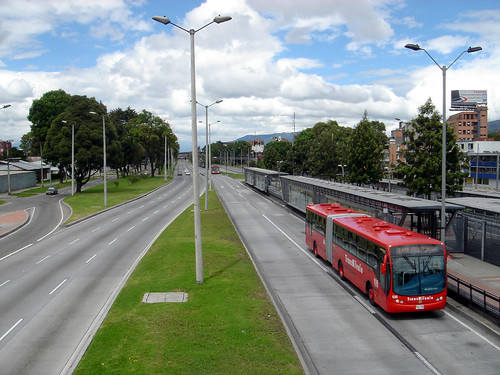
The city's most recent transit developments also help to explain the situation. In an effort to significantly expand and modernize its transit system, the city has begun construction of a Bus Rapid Transit (BRT) system, connecting major corridors throughout the city. BRT systems usually have roads exclusively used by buses for high speed service, frequent service and when having to join regular traffic, transit priority signals and diamond lanes give them a boost. Anyone familiar with Ottawa or Miami's public transit would have an idea as to how this works. It is an expensive ordeal, and in a city whose budget is not outrageously affluent -- a light rail proposal fell by the wayside because of cost -- any new infrastructure, regardless of future savings, could be a real pain in the ass.
With the information above, it is sensible why the electric trolley bus system hasn't taken off in Winnipeg. But with Manitoba's electricity resources at hand, there must be ways to incorporate it into the public transit system. Sure, a full fledged system around the city might be unnecessary, costly and problematic, but the installation of trolley bus systems would make sense on straightforward and popular routes, like the express routes across the city and especially the new BRT routes. The new buses travelling those roads may very well be diesel-electric hybrids, but a simple network of cables overtop these straightforward transitways could pay off in spades in the future.
Saturday, January 22, 2011
Jamie Lerner and Curitiba
In the video above, Jamie Lerner, a former mayor of Curitiba, Brazil, shares his thought about how we can achieve a sustainable city. Enviro Boys has blogged about Curitiba in the past highlighting the city's success with its bus rapid transit (BRT) system. Through innovative urban planning the city has become a much more compact urban form. The BRT system was initiated in 1974 and at the time had 25,000 passengers per day. With Jamie Lerner's leadership and continuous influence on the city, there are now close to 2 million passengers using it every day.
For years children have been learning how to separate their garbage and have taken the initiative to teach their parents. As a result, a significant percentage of the city' waste is separated.
Check out the video to learn more.
Saturday, January 15, 2011
Climate Change and Transportation
In this video, Michael D. Meyer, a professor of Civil and Environmental Engineering at the Georgia Institute of Technology, delivers a lecture at the University of Kansas about the link between climate change and transportation. In essence, he discusses how transportation contributes to climate change and the opportunities we have to mitigate its impact and better adapt our transportation systems to become more resilient to floods, earthquakes, hurricanes, tornadoes etc. The video is long but very educational and informative.
The focus of his talk in on the United States. Nonetheless, he still presents a number of ideas and opportunities that apply to Canada and other jurisdictions. In the U.S., transportation is 28% of national GHG emissions. In Canada, it's about the same. Within the transportation sector, highway vehicles (passenger cars and trucks) account for 82% of the GHG emissions.
He also talks about how various states are now writing aggressive climate change plans to address how they will reduce their emissions on the transportation front. Some are very ambitious indeed.
The most interesting part of his lecture to me was his discussion of adapting to climate change from a transportation perspective. Floods, earthquakes and hurricanes can bring about serious damage to our municipal and provincial infrastructure. To learn about how transport engineers and planners are dealing with this, and the various opportunities for improvement, check out the video. The Alaska Department of Transportation is now re-designing their highways because the foundation of their roads are sinking due to permafrost.
Monday, January 10, 2011
Beijing's new subway lines
Just last week Beijing opened up five new subway lines and 108 kilometres of new track. The new subway lines cost $9.4 billion to build and were not supposed to be completed until 2012. The Chinese however, have an impressive track record for completing large scale urban infrastructure projects ahead of schedule.
From the Toronto Star:
“We intend to bring on more new track every year for the next five years,” says Jia Peng, chief spokesman for the transit corporation. “We have the technology, we have the funds; the only thing we don't have much of is time — and time is crucial.
These new subway lines will undoubtedly ease traffic congestion both inside and outside of the urban core. Both congestion and pollution (air and noise) in Beijing have hitherto been an egregious problem with multiple social costs for the populace.
"Last year more than 2,000 new cars flooded into Beijing's streets and highways each day, for a total of nearly 800,000 new vehicles in 2010."
From the Toronto Star:
“We intend to bring on more new track every year for the next five years,” says Jia Peng, chief spokesman for the transit corporation. “We have the technology, we have the funds; the only thing we don't have much of is time — and time is crucial.
These new subway lines will undoubtedly ease traffic congestion both inside and outside of the urban core. Both congestion and pollution (air and noise) in Beijing have hitherto been an egregious problem with multiple social costs for the populace.
"Last year more than 2,000 new cars flooded into Beijing's streets and highways each day, for a total of nearly 800,000 new vehicles in 2010."
"Desperate to curb congestion in the city, the government announced it will restrict new car sales in Beijing this year to just 20,000 per month, holding a monthly public lottery for the privilege of buying one. Annual sales in the capital in 2011 will be capped at 240,000."
Sounds bold and progressive but is certainly doable in China.
The point of the Toronto Star article was to compare Beijing's remarkable progress in public transit expansion with Toronto's abysmally slow progress with new subways, light-right etc. While I commend the Beijing Mass Transit Railway Operation Corp with its success thus far, it operates in a jurisdiction that has much less stringent planning and environmental processes. Indeed, environmental impact assessments for such urban infrastructure projects in Canada can take months if not years.
In Canada, the public input alone is invaluable but incredibly time-consuming. Interest groups, community associations, business organizations, system users and concerned citizens might have reservations or suggestions about the transportation project. They are all important stakeholders and our elected officials must respond to them. It is therefore unfair do compare the two cities simply based on their planning processes.
In Toronto, for example, the urban transportation planning process might establish a vision of what a community wants to be and how the transportation systems fits into this vision. As you can imagine, in Toronto, with such a diversity of people, needs and interests, this process can take eons to complete thus delaying the building of the project be it subway or light-rail.
But, the urgency around public transportation in Beijing -- notwithstanding the limited planning and public involvement -- still showcases the commitment of the Beijing government to reduce traffic congestion and bring about a healthier and more efficient metropolis.
As the article writes, in Beijing "The government is planner, builder and arbiter all in one."
Read the full version of the Toronto Star article here.
Friday, December 31, 2010
HSR in Canada?
A recent article from CTV news titled "Trainwreck: Canada's high-speed rail failure" provides a detailed summary of the current debate surrounding high speed rail in Canada. Here is a quick refresher on the benefits of HSR (courtesy of the article):
Many HSR proponents do not advocate for a national HSR line in Canada. That would be too expensive and impractical considering the geography and low population density of this country. The two corridors in Canada that would be suitable for an HSR line include Calgary-Edmonton and the Quebec-Windsor corridor, where half of Canada's population lives.
Jeff Casello, a prof of transportation planning and engineering at U of Waterloo, says "the capacity of Toronto's Lester B. Pearson Airport and Highway 401 is maxed out, making high-speed rail an attractive alternative. I think there's very strong consideration on the (Quebec-Windsor corridor) considering the limits on Pearson and its ability to handle any more traffic and the unwillingness to invest in widening the 401. There's realization that there needs to be some redundancy in our transportation network, so we can't rely on a single mode to satisfy all our transportation needs".
Read more here.
- They're fast. Japanese and French high-speed trains have both reached mind-boggling speeds of over 575 km/h. The Chinese, who are quickly becoming a leader in high-speed rail, had a recent test of a passenger train that hit 486 km/h on a soon-to-be-opened link between Shanghai and Beijing.
- Dedicated high-speed rail lines are ridiculously efficient -- at least in Japan. Officials there point out that trains are punctual down-to-the-minute, even with 300 million riders a year.
- They're safe. There has not been a single fatality in either the Japanese or French system. An average of seven Canadians die in road accidents every day.
- Environmentally, there is no better way to move a large amount of people, unless someone builds a really, big bike.
- Major economic benefits. Study after study says high-speed rail creates significant numbers of permanent jobs and massive residual benefits. An Alberta government report suggested a Calgary-Edmonton high-speed line could be worth $33 billion to the economy.
- Canada has the home-grown expertise in a company such as Bombardier.
Many HSR proponents do not advocate for a national HSR line in Canada. That would be too expensive and impractical considering the geography and low population density of this country. The two corridors in Canada that would be suitable for an HSR line include Calgary-Edmonton and the Quebec-Windsor corridor, where half of Canada's population lives.
Jeff Casello, a prof of transportation planning and engineering at U of Waterloo, says "the capacity of Toronto's Lester B. Pearson Airport and Highway 401 is maxed out, making high-speed rail an attractive alternative. I think there's very strong consideration on the (Quebec-Windsor corridor) considering the limits on Pearson and its ability to handle any more traffic and the unwillingness to invest in widening the 401. There's realization that there needs to be some redundancy in our transportation network, so we can't rely on a single mode to satisfy all our transportation needs".
Read more here.
Tuesday, December 21, 2010
Guest Entry: How can HSR gain speed and momentum in North America?
 By: Leonard Machler
Infrastructure inflation has caught up with us, and we are starting to get used to billion dollar projects being thrown around with the casualness that we used to reserve for bus stops and phone booths. And even though high speed rail (HSR) may cost less than expanding airport and freeway capacity – with the added benefit that it provides a transportation alternative that is more environmentally friendly and that is meant to stimulate development in dense, walkable downtowns, the cost of HSR still represents a significant chunk of change.
The California High Speed rail system is estimated – at a minimum – to cost around $40 billion dollars; upgrading the Northeast Corridor of the United States for 300 km/h operation has been pegged at $117 billion. To compare, this figure is about the same as the total economic output of the Ukraine last year. Even if high speed rail in the US was not a political hot potato, it would be hard for any government to scrounge up that kind of cash. To compensate, governments, such as the Obama administration, contribute toward the project incrementally by providing “small” funding commitments.
This year, roughly $1.4 billion (including $624 million that had been allocated to Wisconsin, but turned down by a newly-elected Republican governor) was earmarked for the California High Speed Rail (HSR) project. In 2009, $2.3 billion was allocated to the California HSR program. At this rate, it will take over 20 years to fund the project in full, so the California HSR authority has proposed building a segment of the line between the two Central Valley cities of Fresno and Hanford. While not so small that they can’t be found on a map, connecting these two towns with a high speed rail line hardly has the cachet as a link between San Francisco and Los Angeles. Predictably, critics have derided this first segment as a line between nowhere and nowhere.
On the one hand, they are off base: the segment has to be built eventually, so why not now? Moreover, the short line would serve as a handy test track to evaluate the performance of high speed trains before they see regular service. On the other hand, the fact that it will be used as a test track for nearly a decade before regular service begins is a political high-wire act because almost nobody other than industry insiders will see the public benefits (i.e. trains that people can actually ride on) for this project. For the average voter, the line will not just be a train from nowhere to nowhere, it will be a line from nowhere to nowhere with no trains on it. Did it have to be this way? Are we doomed to wait an eternity until enough cash trickles in so that we can build a line people can actually use?
Most European countries have a different attitude. They would use the partial funding to build a short high speed line – similar to the Hanford-Fresno demonstration line – and then run the remainder of the service on conventional track. This way the public gets high speed rail service from day one and, over time, services and speeds improve as an increasing amount of high speed track comes on line.
This was how I remember the evolution of high speed rail in Germany. When I first used the system as a kid in the early 90s, only a handful of sections – usually meant to bypass especially slow or built up areas – were actually genuine high speed rail lines. Most other times, the ICE train would plod along the old rail line, bypassing freights and slower passenger trains at a comparatively “slow” 160 km/h. As the years went by, the ICE would spend less of its time dodging freight trains on the old tracks and more of its time speeding through the German countryside in its own dedicated high speed line.
It’s time for California and other North American jurisdictions to try a similar approach. The high speed line in the Central Valley should be built for demonstration purposes, as is the plan, but conventional trains should be allowed to use it – at least until the full HSR line is built out. Granted, track conditions in Germany – even on old, conventional lines – are better than pretty much anything that exists in North America today and are also electrified for higher speed too. California could use the earmark from the next two years to upgrade the existing track between San Francisco and Los Angeles* to support at least some quasi high speed service using conventional passenger trains, while taking advantage of the short high speed segment in the Central Valley.
Running conventional trains at higher speeds along incrementally longer stretches of high speed rail is not as sexy as a bullet train whisking passengers along a fully built-out line, but at least it has the chance of seeing the light of day sometime this decade. More importantly, it provides taxpayers with the impression that the line is immediately useful. As they say, it’s not perfect, but at least it’s a start.
Leonard Machler is a PhD student in the School of Community and Regional Planning at UBC. He is a transportation enthusiast and is a strong advocate for more sustainable and accessible urban transportation systems.
*For a rail map comparing trips statistics (airplane, HSR and car) between San Francisco and Los Angeles, click here.*

Sunday, December 12, 2010
City Planning: Melbourne and Toronto
I was reading an article in the Globe and Mail yesterday that discussed contemporary city planning issues in Melbourne, Australia and Toronto, Canada. The article, structured in a question and answer format, featured two urban experts discussing what their cities have done and what their cities need to do on the urban planning front. Robert Adams, director of city design for Melbourne is a huge proponent of pedestrian traffic and bike lanes (Don Cherry would call him a pinko). Mr. Adams vehemently lobbied to make public transit in Melbourne free before 7 am and cars were banned from the city's busiest street. A really progressive and visionary leader who has made Melbourne the third most livable city in the world, according to The Economist.
The urban expert interviewed from Toronto is Gary Wright, the current chief planner for the City of Toronto. In my undergrad, Gary spoke as a guest lecturer in one of my geography courses (summary of that lecture found here). Gary is very proud of what the Dundas Square has become (under his leadership) in terms of a public open space in which people can appreciate and gather together to enjoy the city's culture, night life and artistic events. This is what some would call experiential consumption whereby citizens and tourists can experience and enjoy the culture and vitality of the city through public spaces and not through shopping and material consumption.
He also commented on the planning of the forthcoming Pan Am Games in Toronto in 2015. He says that the athletes' village is going to require close collaboration with developers to ensure that everything goes well. The city's waterfront reinvention plan is underway and will have many implications for waterfront development in the coming years. In sum, he supports greater involvement of the developers because of their knowledge and expertise. Last and unsurprisingly, he is a big advocate for better transit in Toronto. Transit is a very salient issue these days but in a time of financial uncertainty, and with a new mayor, we'll have to wait and see how things play out on the transit agenda.
The rest of this post will focus on the great city planning work of Robert Adams and what other cities could learn from him. To begin, as a design enthusiast and supporter for greater pedestrian traffic, Adams recognized the importance of widening sidewalks. Trees were planted along the widened sidewalks which eventually led to a proliferation of sidewalk cafes.
From the Globe: "Adams closed Melbourne's main thoroughfare, Bourke Street, to cars before 7 p.m., transforming it into wide lanes for pedestrians, bikes, streetcars and buses. More than 35,000 pedestrians now walk the street each day, up from 12,000 ten years ago and businesses have returned as well."
Adams says we need more residential development around existing transit lines (something Hong Kong has mastered). He also thinks that municipal plans are too technical and thus non-transparent to the public. Plans need to have more visual components to show people how their communities are going to change in the coming years due to urban development and population growth. Finally, Adams, as a designer and planner, is really effective and engaging and leveraging public sentiment. One example from the article is a time when he announced his desire to pull down a freeway standing between the city centre and the Yarra River. Many thought this was not possible. He slowly developed green spaces around the freeway and Melbourne's citizens, quite some time later, saw the benefits of this and demanded that the road be pulled down.
City planning can drastically transform our cities into healthier, more transit friendly and enjoyable places. Both Adams and Wright have done remarkable things for their respective cities. Planning is inherently a political process with multiple stakeholders and multiple perspectives. This mix of interests is healthy but challenging for the planner who must consult and facilitate disparate and contested views.
Finally, Melbourne and Toronto are unique in that they have historic streetcar systems. Personally, I have come to appreciate streetcars not only because they have contributed to Toronto's identity, but also because they effectively complement other transit forms such as subways, buses and walking. For you transportation nerds out there, I would encourage you to read a paper by Currie and Shalaby on the successes and challenges in modernizing streetcar systems in Melbourne and Toronto. For the paper, click here.
The urban expert interviewed from Toronto is Gary Wright, the current chief planner for the City of Toronto. In my undergrad, Gary spoke as a guest lecturer in one of my geography courses (summary of that lecture found here). Gary is very proud of what the Dundas Square has become (under his leadership) in terms of a public open space in which people can appreciate and gather together to enjoy the city's culture, night life and artistic events. This is what some would call experiential consumption whereby citizens and tourists can experience and enjoy the culture and vitality of the city through public spaces and not through shopping and material consumption.
He also commented on the planning of the forthcoming Pan Am Games in Toronto in 2015. He says that the athletes' village is going to require close collaboration with developers to ensure that everything goes well. The city's waterfront reinvention plan is underway and will have many implications for waterfront development in the coming years. In sum, he supports greater involvement of the developers because of their knowledge and expertise. Last and unsurprisingly, he is a big advocate for better transit in Toronto. Transit is a very salient issue these days but in a time of financial uncertainty, and with a new mayor, we'll have to wait and see how things play out on the transit agenda.
The rest of this post will focus on the great city planning work of Robert Adams and what other cities could learn from him. To begin, as a design enthusiast and supporter for greater pedestrian traffic, Adams recognized the importance of widening sidewalks. Trees were planted along the widened sidewalks which eventually led to a proliferation of sidewalk cafes.
From the Globe: "Adams closed Melbourne's main thoroughfare, Bourke Street, to cars before 7 p.m., transforming it into wide lanes for pedestrians, bikes, streetcars and buses. More than 35,000 pedestrians now walk the street each day, up from 12,000 ten years ago and businesses have returned as well."
Adams says we need more residential development around existing transit lines (something Hong Kong has mastered). He also thinks that municipal plans are too technical and thus non-transparent to the public. Plans need to have more visual components to show people how their communities are going to change in the coming years due to urban development and population growth. Finally, Adams, as a designer and planner, is really effective and engaging and leveraging public sentiment. One example from the article is a time when he announced his desire to pull down a freeway standing between the city centre and the Yarra River. Many thought this was not possible. He slowly developed green spaces around the freeway and Melbourne's citizens, quite some time later, saw the benefits of this and demanded that the road be pulled down.
City planning can drastically transform our cities into healthier, more transit friendly and enjoyable places. Both Adams and Wright have done remarkable things for their respective cities. Planning is inherently a political process with multiple stakeholders and multiple perspectives. This mix of interests is healthy but challenging for the planner who must consult and facilitate disparate and contested views.
Finally, Melbourne and Toronto are unique in that they have historic streetcar systems. Personally, I have come to appreciate streetcars not only because they have contributed to Toronto's identity, but also because they effectively complement other transit forms such as subways, buses and walking. For you transportation nerds out there, I would encourage you to read a paper by Currie and Shalaby on the successes and challenges in modernizing streetcar systems in Melbourne and Toronto. For the paper, click here.
Monday, December 6, 2010
Problems with HSR in China...
A number of months ago, I wrote about China's high speed rail (HSR) construction. China has the world's longest high-speed rail network with 6,920 kilometres and will expand to 13,000 kilometers within the next three years.
I also wrote about the many benefits of China's HSR growth. HSR will help stabilize the country's greenhouse gas emissions in its transportation sector. It will (over the long-term) decrease demand for airlines services, it will advance China's transportation network, foster a greener ethic in its citizenry etc.
BUT, recent news from the Chinese Academy of Sciences suggests that such HSR expansion is happening too quickly and might be too expensive for the nation long-term, if demand is lacking.
"The Chinese Academy of Sciences (CAS) reported to the State Council recently, urging the large-scale high-speed railway construction projects in China to be re-evaluated. The CAS worries that China may not be able to afford such a large-scale construction of high-speed rail, and such a large scale high-speed rail network may not be practical".
"Some local media have reported recently that the recently enabled Wuhan - Guangzhou high-speed rail is currently running an average daily attendance of less than half capacity, while the newly opened Shanghai-Hangzhou high-speed rail attendance is even lower. The main reason for the high-speed rail low attendance is that fares are too high; the high-speed railway ticket prices are usually double or higher than normal train fares". Read more here.
I have and continue to argue that HSR ticket prices must be competitive with airfare tickets. The success, popularity and future ridership of HSR will largely be dependent on how affordable it is for China's citizenry. HSR construction is indeed really expensive. However, if one of the goals is to have an extensive high speed train system with very high rates of use, then prices must be affordable to all income groups. With decent rates of ridership, the benefits will pay off long-term and the Ministry of Railways can recover the costs of construction.
I do hope that China continues to expand its HSR corridors. The Beijing-Shanghai line is supposed to open next year. I imagine it is going to have decent ridership and significantly reduce the amount of GHG emissions due to less demand for airlines. But, the issue of cost is something the Chinese Ministry of Railways must better address in this critical time for the nation.
I also wrote about the many benefits of China's HSR growth. HSR will help stabilize the country's greenhouse gas emissions in its transportation sector. It will (over the long-term) decrease demand for airlines services, it will advance China's transportation network, foster a greener ethic in its citizenry etc.
BUT, recent news from the Chinese Academy of Sciences suggests that such HSR expansion is happening too quickly and might be too expensive for the nation long-term, if demand is lacking.
"The Chinese Academy of Sciences (CAS) reported to the State Council recently, urging the large-scale high-speed railway construction projects in China to be re-evaluated. The CAS worries that China may not be able to afford such a large-scale construction of high-speed rail, and such a large scale high-speed rail network may not be practical".
"Some local media have reported recently that the recently enabled Wuhan - Guangzhou high-speed rail is currently running an average daily attendance of less than half capacity, while the newly opened Shanghai-Hangzhou high-speed rail attendance is even lower. The main reason for the high-speed rail low attendance is that fares are too high; the high-speed railway ticket prices are usually double or higher than normal train fares". Read more here.
I have and continue to argue that HSR ticket prices must be competitive with airfare tickets. The success, popularity and future ridership of HSR will largely be dependent on how affordable it is for China's citizenry. HSR construction is indeed really expensive. However, if one of the goals is to have an extensive high speed train system with very high rates of use, then prices must be affordable to all income groups. With decent rates of ridership, the benefits will pay off long-term and the Ministry of Railways can recover the costs of construction.
I do hope that China continues to expand its HSR corridors. The Beijing-Shanghai line is supposed to open next year. I imagine it is going to have decent ridership and significantly reduce the amount of GHG emissions due to less demand for airlines. But, the issue of cost is something the Chinese Ministry of Railways must better address in this critical time for the nation.
Thursday, December 2, 2010
Metro Vancouver Walkability Index
The physical activity of walking is becoming a central part of discussion today in fields such as public health and transportation research. It is a very topical theme in general as cities prides themselves on being "walkable". Indeed, a report on the world's top ten most walkable cities was just released. In June, Chris blogged about urban walkability and a software called Walk Score. Walkability, believe it or not, is becoming very popular because it has economic, social, health and environmental implications.
A team of UBC researchers recently wrote a report titled "Neighbourhood Design, Travel, and Health in Metro Vancouver". The research was led by a professor in my program named Dr. Larry Frank.
Professor Frank and his team developed the Metro Vancouver Walkability Index (VWI) to measure neighbourhood urban form characteristics in Metro Vancouver. The report summarizes results from local studies that have applied the VWI to explore associations between neighbourhood design and travel behaviour, physical activity, obesity, and air pollution exposure.
The walkability index specifically measures residential density, commercial density, land use mix and street connectivity. Without getting caught up in this jargon, the key point is that neighbourhoods that are well serviced by public transit, are in close proximity to amenities (grocery stores, schools, community centres, shopping areas, entertainment), and are close to major street intersections are all conducive for walking.
Generally, compact and mixed use neighbourhoods allow for shorter trips (that can be done by walking or cycling) to access local amenities and services. If amenities are a 10 minute walk from someone's house, cycling and walking become much more desirable options and the physical health benefits of this are enormous.
 Image credit: The South Fraser Blog
The map above shows the walkability of Metro Vancouver. It's fairly evident that the City of Vancouver is more walkable than Surrey, or Richmond. There are many reasons why this might be, but I can tell you that Vancouver has higher density than the aforementioned cities and is also better serviced by public transit.
Why is this important? Measuring walkability has implications for public health policy and transportation. Larry Frank's study looks at the relationship between walking and active transportation i.e. adults living in the top 25% most walkable neighbourhoods drive approximately 58% less than those in more auto-oriented (less walkable) areas. They are probably more physically active as a result.
The report also looks at neighbourhood walkability and air pollution exposure. Nitric oxide (NO) levels are highest in urban areas of high residential density and on arterial roads where more vehicles in a smaller area result in higher concentrations of this pollutant. What does this mean for the walkers who are exposed to air pollution?
It is a really dynamic and informative study. I would encourage you to read it if you have some time on your hands. While the focus is on Metro Vancouver, it is critical to understand why walkability is important in our cities so that we can do smarter planning for active transportation and a healthier society.
Check out the report here.
A team of UBC researchers recently wrote a report titled "Neighbourhood Design, Travel, and Health in Metro Vancouver". The research was led by a professor in my program named Dr. Larry Frank.
Professor Frank and his team developed the Metro Vancouver Walkability Index (VWI) to measure neighbourhood urban form characteristics in Metro Vancouver. The report summarizes results from local studies that have applied the VWI to explore associations between neighbourhood design and travel behaviour, physical activity, obesity, and air pollution exposure.
The walkability index specifically measures residential density, commercial density, land use mix and street connectivity. Without getting caught up in this jargon, the key point is that neighbourhoods that are well serviced by public transit, are in close proximity to amenities (grocery stores, schools, community centres, shopping areas, entertainment), and are close to major street intersections are all conducive for walking.
Generally, compact and mixed use neighbourhoods allow for shorter trips (that can be done by walking or cycling) to access local amenities and services. If amenities are a 10 minute walk from someone's house, cycling and walking become much more desirable options and the physical health benefits of this are enormous.
Image credit: The South Fraser BlogThe map above shows the walkability of Metro Vancouver. It's fairly evident that the City of Vancouver is more walkable than Surrey, or Richmond. There are many reasons why this might be, but I can tell you that Vancouver has higher density than the aforementioned cities and is also better serviced by public transit.
Why is this important? Measuring walkability has implications for public health policy and transportation. Larry Frank's study looks at the relationship between walking and active transportation i.e. adults living in the top 25% most walkable neighbourhoods drive approximately 58% less than those in more auto-oriented (less walkable) areas. They are probably more physically active as a result.
The report also looks at neighbourhood walkability and air pollution exposure. Nitric oxide (NO) levels are highest in urban areas of high residential density and on arterial roads where more vehicles in a smaller area result in higher concentrations of this pollutant. What does this mean for the walkers who are exposed to air pollution?
It is a really dynamic and informative study. I would encourage you to read it if you have some time on your hands. While the focus is on Metro Vancouver, it is critical to understand why walkability is important in our cities so that we can do smarter planning for active transportation and a healthier society.
Check out the report here.
Sunday, November 14, 2010
Is telecommuting on the rise?
Ever heard of telecommuting? It's just a fancy way of describing how people perform their office tasks and duties at home instead of commuting to work. With the rise of information technology and communications technology, more and more employees (in the United States) are doing jobs that used to require being in the office from their own homes. For those living in the suburbs, telecommuting is great because it saves them their 1-2 hour commute to work everyday.
The New Geography blog provides an overview of telecommuting in the US along with data comparing telecommuting rates to transit commuters over the past nine years. Specifically, the article provides data to show increases in telecommuting and transit in American cities from 2000 to 2009. It's a really informative article but I wonder if the analysis controls for unemployment over time. Unemployment in the US has increased in the past three years which can directly affect the number of trips a person makes to work. Anyway, that's just a methodological side note.
From the article:
"In 2009, 1.7 million more employees worked at home than in 2000. This represents a 31% increase in market share, from 3.3 percent to 4.3 percent of all employment. Transit also rose, from 4.6% to 5.0%, an increase of 9%".
"In five metropolitan areas, the increase was between 70% and 80% (Richmond, Tampa-St. Petersburg, Raleigh, Jacksonville and Orlando). Only five metropolitan areas experienced market share increases less than 20% (New Orleans, Salt Lake City, Rochester, Buffalo and Oklahoma City). Nonetheless, the rate of increase in the work at home market share exceeded that of transit in 49 of the 52 major metropolitan areas. Transit's increase was greater only in Washington, Seattle and Nashville".
Why are more people telecommuting these days? One major reason is the rise in oil prices. Commuting for 2 hours everyday is not only expensive in terms of fuel consumption, but can be exhausting to an already stressed and over-worked employee. While there are drawbacks of telecommuting (working at home means decreased face-to-face interaction among employees, isolation of employee from workplace can lead to negative or unproductive activities, distractions etc) it is becoming a more interesting and researched topic in the transportation and planning areas. Traffic congestion in many North American cities is egregious; this has only exacerbated commuting times and air pollution -telecommuting is seen as a partial solution to this.
Telecommuting has even more potential to grow in North American cities. I am not too sure how common it is in Vancouver or Toronto, but I think it will become more popular as industries recognize the energy use reductions and cost-effectiveness of this phenomenon. Telecommuting might serve as interim process of adapting to climate change and the rising costs of oil. Indeed, it may justify the expansion of the commercial, financial and information technology sectors to open offices in the suburbs to provide jobs closer to where people are living. But, increasingly, more and more people are moving out of the suburbs back to the inner cities (I don't have data to support this particular claim, but the data is out there). If telecommuting does not bring about more industries in the suburbs, it can still result in reductions of hundreds of thousands of carbon dioxide emissions due to the number of cars taken of the road. This can alleviate harmful pollutants and improve the quality of our air.
Key Message: Telecommuting is on the rise in the U.S. (and potentially in Canada too). It can reduce the number of cars on our highways and thereby reduce per capita energy consumption and traffic congestion -both of which are sustainable. However, it can also lead to decreased social capital (if you think about it) as we advance into a more cyberspace world communicating via blackberries and computers instead of face-to-face.
The New Geography blog provides an overview of telecommuting in the US along with data comparing telecommuting rates to transit commuters over the past nine years. Specifically, the article provides data to show increases in telecommuting and transit in American cities from 2000 to 2009. It's a really informative article but I wonder if the analysis controls for unemployment over time. Unemployment in the US has increased in the past three years which can directly affect the number of trips a person makes to work. Anyway, that's just a methodological side note.
From the article:
"In 2009, 1.7 million more employees worked at home than in 2000. This represents a 31% increase in market share, from 3.3 percent to 4.3 percent of all employment. Transit also rose, from 4.6% to 5.0%, an increase of 9%".
"In five metropolitan areas, the increase was between 70% and 80% (Richmond, Tampa-St. Petersburg, Raleigh, Jacksonville and Orlando). Only five metropolitan areas experienced market share increases less than 20% (New Orleans, Salt Lake City, Rochester, Buffalo and Oklahoma City). Nonetheless, the rate of increase in the work at home market share exceeded that of transit in 49 of the 52 major metropolitan areas. Transit's increase was greater only in Washington, Seattle and Nashville".
Why are more people telecommuting these days? One major reason is the rise in oil prices. Commuting for 2 hours everyday is not only expensive in terms of fuel consumption, but can be exhausting to an already stressed and over-worked employee. While there are drawbacks of telecommuting (working at home means decreased face-to-face interaction among employees, isolation of employee from workplace can lead to negative or unproductive activities, distractions etc) it is becoming a more interesting and researched topic in the transportation and planning areas. Traffic congestion in many North American cities is egregious; this has only exacerbated commuting times and air pollution -telecommuting is seen as a partial solution to this.
Telecommuting has even more potential to grow in North American cities. I am not too sure how common it is in Vancouver or Toronto, but I think it will become more popular as industries recognize the energy use reductions and cost-effectiveness of this phenomenon. Telecommuting might serve as interim process of adapting to climate change and the rising costs of oil. Indeed, it may justify the expansion of the commercial, financial and information technology sectors to open offices in the suburbs to provide jobs closer to where people are living. But, increasingly, more and more people are moving out of the suburbs back to the inner cities (I don't have data to support this particular claim, but the data is out there). If telecommuting does not bring about more industries in the suburbs, it can still result in reductions of hundreds of thousands of carbon dioxide emissions due to the number of cars taken of the road. This can alleviate harmful pollutants and improve the quality of our air.
Key Message: Telecommuting is on the rise in the U.S. (and potentially in Canada too). It can reduce the number of cars on our highways and thereby reduce per capita energy consumption and traffic congestion -both of which are sustainable. However, it can also lead to decreased social capital (if you think about it) as we advance into a more cyberspace world communicating via blackberries and computers instead of face-to-face.
Subscribe to:
Posts (Atom)