Freaknomics blog author Steve Sexton writes:
"implicit in the argument that local farming is better for the environment than industrial agriculture is an assumption that a “relocalized” food system can be just as efficient as today’s modern farming. That assumption is simply wrong. Today’s high crop yields and low costs reflect gains from specialization and trade, as well as scale and scope economies that would be forsaken under the food system that locavores endorse".
He argues that specialization and trade, economies of scale and even the health implications of local food do not make sense.
I disagree with a number of his points and feel that he has not adequately captured the local economic benefits of farmers' markets, the immense potential urban farmers have in helping contribute to our growing and vibrant cities and the educational possibilities associated with localizing our food choices. I understand he is arguing from an economics perspective but local food production is beyond just an economics discussion. I will let my colleagues who work in this area respond to this article.
To refresh, Harvard economics professor Ed Glaeser (who I admire very much) is also against local food production. My friend wrote a critique of his article back in July which you can view here.
Read the Freakonomics article by Steve Sexton. Some of you will agree, some will disagree. This is a critical issue of our time especially as food prices continue to rise and our nations continue to urbanize.
Showing posts with label Food. Show all posts
Showing posts with label Food. Show all posts
Sunday, November 20, 2011


Saturday, May 21, 2011
The Food Crisis: 18 different perpectives
The Report on Business magazine, published by the Globe and Mail, features an article with a number of statements from experts responding to the question of "how do we feed seven billion people—and counting?" 18 experts (alas, all men and not a single woman) in the area of agricultural sciences, food systems, economics and population/demography provide their opinions on different strategies/directions we can pursue to alleviate the food crisis. There are a number of ideas -- some more compelling and realistic than others -- that can mobilize change and action in the policies we implement with regards to the costs of food, international trade, crop diversity, taxation, better engaging with farmers and more.
The one commentary that resonated with me was Finn Poschmann's column on killing ethanol subsidies. Finn writes:
"Ethanol, we think, has been a measurable shock to the system in the last half of the recent decade. In the 1990s, U.S. farmers had about 75 million acres in different kinds of wheat. By the end of the decade, that was starting to collapse. By 2010, the area was down to under 54 million acres in wheat. So you’ve taken something like 20 million acres of production out of wheat. Where has it gone? Lentils, barley and other things that are popular. But also to corn: In the U.S. market in the 1990s, you were typically cruising at 75 to 80 million acres planted in corn. After 2007, you were over 85 to 90 million acres".
Corn based ethanol is a highly contentious topic that I try to avoid engaging in. However, on a practical level, it is problematic because the subsidization of corn growth for ethanol production limits the supply of corn being used for food consumption as more and more gas stations across the U.S. offer it in the form of blended fuel (E85). This pushes up the price of corn and becomes incredibly problematic for places or markets that are dependent on relatively affordable corn prices (i.e. Mexico and its tortilla food market) thereby becoming more economically burdensome for corn consumers.
There are a whole range of bio-fuel options that exist around the world. While I am not advocating for every single one, in principle, it would be wise to consider fuels (e.g. cellulosic fuel) that do not drastically affect or alter the prices of crops.
You can read the 18 different perspectives here.
The one commentary that resonated with me was Finn Poschmann's column on killing ethanol subsidies. Finn writes:
"Ethanol, we think, has been a measurable shock to the system in the last half of the recent decade. In the 1990s, U.S. farmers had about 75 million acres in different kinds of wheat. By the end of the decade, that was starting to collapse. By 2010, the area was down to under 54 million acres in wheat. So you’ve taken something like 20 million acres of production out of wheat. Where has it gone? Lentils, barley and other things that are popular. But also to corn: In the U.S. market in the 1990s, you were typically cruising at 75 to 80 million acres planted in corn. After 2007, you were over 85 to 90 million acres".
Corn based ethanol is a highly contentious topic that I try to avoid engaging in. However, on a practical level, it is problematic because the subsidization of corn growth for ethanol production limits the supply of corn being used for food consumption as more and more gas stations across the U.S. offer it in the form of blended fuel (E85). This pushes up the price of corn and becomes incredibly problematic for places or markets that are dependent on relatively affordable corn prices (i.e. Mexico and its tortilla food market) thereby becoming more economically burdensome for corn consumers.
There are a whole range of bio-fuel options that exist around the world. While I am not advocating for every single one, in principle, it would be wise to consider fuels (e.g. cellulosic fuel) that do not drastically affect or alter the prices of crops.
You can read the 18 different perspectives here.
Monday, February 21, 2011
Vertical Farming
The Economist discusses the market implications of vertical farming in our global economy. The article has three videos as well which are informative and explain the concepts and science very clearly.
Right from the Economist:
"Such is the thinking behind vertical farming. The idea is that skyscrapers filled with floor upon floor of orchards and fields, producing crops all year round, will sprout in cities across the world. As well as creating more farmable land out of thin air, this would slash the transport costs and carbon-dioxide emissions associated with moving food over long distances. It would also reduce the spoilage that inevitably occurs along the way, says Dickson Despommier, a professor of public and environmental health at Columbia University in New York who is widely regarded as the progenitor of vertical farming, and whose recently published book, “The Vertical Farm”, is a manifesto for the idea".
"Indeed, even in today’s single-storey glasshouses, artificial lighting is needed to enable year-round production. Thanet Earth, a 90-hectare facility which opened in Kent in 2008 and is the largest such site in Britain—it provides 15% of the British salad crop—requires its own mini power-station to provide its plants with light for 15 hours a day during the winter months. This rather undermines the notion that vertical farming will save energy and cut carbon emissions, notes Mr Head, who has carried out several studies of the idea. Vertical farming will need cheap, renewable energy if it is to work, he says."
Time and time again we hear from the UN that the world’s population is expected to increase to about 9 billion by 2050. To feel such a population will mean increasing food production by 70% according to the FAO. This will undoubtedly require a combination of higher crop yields and an expansion of the area under cultivation. This could take the form of more agricultural land (which is unevenly distributed across the world). 60% of the world's population is expected to live in cities by 2030. This could translate into more innovation in the form of vertical or urban farming to feed such populations locally.
Right from the Economist:
"Such is the thinking behind vertical farming. The idea is that skyscrapers filled with floor upon floor of orchards and fields, producing crops all year round, will sprout in cities across the world. As well as creating more farmable land out of thin air, this would slash the transport costs and carbon-dioxide emissions associated with moving food over long distances. It would also reduce the spoilage that inevitably occurs along the way, says Dickson Despommier, a professor of public and environmental health at Columbia University in New York who is widely regarded as the progenitor of vertical farming, and whose recently published book, “The Vertical Farm”, is a manifesto for the idea".
"Indeed, even in today’s single-storey glasshouses, artificial lighting is needed to enable year-round production. Thanet Earth, a 90-hectare facility which opened in Kent in 2008 and is the largest such site in Britain—it provides 15% of the British salad crop—requires its own mini power-station to provide its plants with light for 15 hours a day during the winter months. This rather undermines the notion that vertical farming will save energy and cut carbon emissions, notes Mr Head, who has carried out several studies of the idea. Vertical farming will need cheap, renewable energy if it is to work, he says."
Time and time again we hear from the UN that the world’s population is expected to increase to about 9 billion by 2050. To feel such a population will mean increasing food production by 70% according to the FAO. This will undoubtedly require a combination of higher crop yields and an expansion of the area under cultivation. This could take the form of more agricultural land (which is unevenly distributed across the world). 60% of the world's population is expected to live in cities by 2030. This could translate into more innovation in the form of vertical or urban farming to feed such populations locally.
Monday, February 7, 2011
Climate Change and Food Prices
Paul Krugman, Professor of Economics and International Affairs at Princeton and columnist for the NY Times, writes about how we are in the midst of a global food crisis. The cause? Bad energy policy, slow and inadequate action on climate change policy and economic growth in emerging markets like China.
"Consider the case of wheat, whose price has almost doubled since the summer. The immediate cause of the wheat price spike is obvious: world production is down sharply. The bulk of that production decline, according to U.S. Department of Agriculture data, reflects a sharp plunge in the former Soviet Union. And we know what that’s about: a record heat wave and drought, which pushed Moscow temperatures above 100 degrees for the first time ever".
In a time when international food prices are highly volatile, it is critical for both national and sub-national governments to make smarter decisions about what they grow and in what quantity. "Consider the case of wheat, whose price has almost doubled since the summer. The immediate cause of the wheat price spike is obvious: world production is down sharply". Moscow had an egregious heat wave this summer which is argued to be the source of this hike.
There are many solutions to this problem .Globally, we should better identify those critical commodities (wheat, sugar, grain) and discuss strategies on how to grow and keep them in a "contingency" pool. The rationale is precautionary action of course, as climate change is quite sporadic in its impacts but detrimental on international food markets.
"Consider the case of wheat, whose price has almost doubled since the summer. The immediate cause of the wheat price spike is obvious: world production is down sharply. The bulk of that production decline, according to U.S. Department of Agriculture data, reflects a sharp plunge in the former Soviet Union. And we know what that’s about: a record heat wave and drought, which pushed Moscow temperatures above 100 degrees for the first time ever".
In a time when international food prices are highly volatile, it is critical for both national and sub-national governments to make smarter decisions about what they grow and in what quantity. "Consider the case of wheat, whose price has almost doubled since the summer. The immediate cause of the wheat price spike is obvious: world production is down sharply". Moscow had an egregious heat wave this summer which is argued to be the source of this hike.
There are many solutions to this problem .Globally, we should better identify those critical commodities (wheat, sugar, grain) and discuss strategies on how to grow and keep them in a "contingency" pool. The rationale is precautionary action of course, as climate change is quite sporadic in its impacts but detrimental on international food markets.
Wednesday, August 11, 2010
Gwynne Dyer on Russia's grain ban
I came across an article yesterday in the South China Morning Post written by Gwynne Dyer. The title “Russia’s grain ban is just the beginning” reminded me of Dyer’s pessimistic and gloomy outlook on climate change and how the world is going to cope with it. During my time at Trent, Gwynne Dyer visited the university and delivered two public lectures - lectures I found supremely entertaining, very informative and a little bit scary considering his predictions on what climate change is going to do to our world.
I thought I would post his article to give you a taste of his writing. Dyer thinks big (with pessimistic forecasts) but pulls you into considering climate change from a new perspective. He has written 9 books on topics ranging from military history, climate change and international relations.
**Gwynne Dyer has granted Enviro Boys permission to publish this post on the blog**
“Russia’s Grain Ban is just the beginning”
By Gwynne Dyer
It cannot be proved that the wildfires now devastating western Russia are evidence of global warming. Once-in-a-century extreme weather events happen, on average, once a century. But the Russian response is precisely what you would expect when global warming really starts to bite: Moscow has just banned all grain exports for the rest of this year.
At least 20 percent of Russia’s wheat crop has already been destroyed by the drought, the extreme heat—circa 40 º C for several weeks now—and the wildfires. The export ban is needed, explained Prime Minister Vladimir Putin, because “we shouldn’t allow domestic prices in Russia to rise, we need to preserve our cattle and build up supplies for next year”. If anybody starves, it won’t be Russians.
That’s a reasonable position for a Russian leader to take, but it does mean that some people will starve elsewhere. Russia is the world’s fourth-largest grain exporter, and anticipated shortages in the international grain market had already driven the price of wheat up by more than 80 percent since early June. When Putin announced the export ban, it immediately jumped by another eight percent.
This means that food prices will also rise, but that is a minor nuisance for most consumers in the developed countries, since they spend only about 10 percent of their income on food. In poor countries, where people spend up to half their income on food, the higher prices will mean that the poorest of the poor cannot afford to feed their children properly.
As a result, some will die—probably a hundred or a thousand times as many as the 30-odd Russians who have been killed by the flames and the smoke. But they will die quietly, one by one, in under-reported parts of the world, so nobody will notice. Not this time. But when food exports are severely reduced or banned by several major producers at once and the international grain market freezes up, everybody will notice.
Two problems are going to converge and merge in the next 10 or 15 years, with dramatic results. One is the fact that global grain production, which kept up with population growth from the 1950s to the 1990s, is no longer doing so. It may even have flatlined in the past decade, although large annual variations make that uncertain. Whereas the world’s population is still growing.
The world grain reserve, which was 150 days of eating for everybody on the planet 10 years ago, has fallen to little more than a third of that. (The “world grain reserve” is not a mountain of grain somewhere, but the sum of all the grain from previous harvests that is still stored in various places just before the next big Northern Hemisphere harvest comes in.)
We now have a smaller grain reserve globally than a prudent civilization in Mesopotamia or Egypt would have aimed for 3,000 years ago. Demand is growing not just because there are more people, but because there are more people rich enough to put more meat into their diet. So things are very tight even before climate change hits hard.
The second problem is, of course, global warming. The rule of thumb is that with every one-degree C rise in average global temperature, we lose 10 percent of global food production. In some places, the crops will be damaged by drought; in others by much hotter temperatures. Or, as in Russia’s case today, by both.
So food production will be heading down as demand continues to increase, and something has to give. What will probably happen is that the amount of internationally traded grain will dwindle as countries ban exports and keep their supplies for themselves. That will mean that a country can no longer buy its way out of trouble when it has a local crop failure: there will not be enough exported grain for sale.
This is the vision of the future that has the soldiers and security experts worried: a world where access to enough food becomes a big political and strategic issue even for developed countries that do not have big surpluses at home. It would be a very ugly world indeed, teeming with climate refugees and failed states and interstate conflicts over water (which is just food at one remove).
What is happening in Russia now, and its impacts elsewhere, give us an early glimpse of what that world will be like. And although nobody can say for certain that the current disaster there is due to climate change, it certainly could be.
Late last year, Britain’s Hadley Centre for Climate Change produced a world map showing how different countries will be affected by the rise in average global temperature over the next 50 years. The European countries that the Hadley map predicts will be among the hardest hit—Greece, Spain, and Russia—are precisely the ones have suffered most from extreme heat, runaway forest fires, and wildfires in the past few years.
The main impact of global warming on human beings will be on the food supply, and eating is a non-negotiable activity. Today Russia, tomorrow the world.
I thought I would post his article to give you a taste of his writing. Dyer thinks big (with pessimistic forecasts) but pulls you into considering climate change from a new perspective. He has written 9 books on topics ranging from military history, climate change and international relations.
**Gwynne Dyer has granted Enviro Boys permission to publish this post on the blog**
“Russia’s Grain Ban is just the beginning”
By Gwynne Dyer
It cannot be proved that the wildfires now devastating western Russia are evidence of global warming. Once-in-a-century extreme weather events happen, on average, once a century. But the Russian response is precisely what you would expect when global warming really starts to bite: Moscow has just banned all grain exports for the rest of this year.
At least 20 percent of Russia’s wheat crop has already been destroyed by the drought, the extreme heat—circa 40 º C for several weeks now—and the wildfires. The export ban is needed, explained Prime Minister Vladimir Putin, because “we shouldn’t allow domestic prices in Russia to rise, we need to preserve our cattle and build up supplies for next year”. If anybody starves, it won’t be Russians.
That’s a reasonable position for a Russian leader to take, but it does mean that some people will starve elsewhere. Russia is the world’s fourth-largest grain exporter, and anticipated shortages in the international grain market had already driven the price of wheat up by more than 80 percent since early June. When Putin announced the export ban, it immediately jumped by another eight percent.
This means that food prices will also rise, but that is a minor nuisance for most consumers in the developed countries, since they spend only about 10 percent of their income on food. In poor countries, where people spend up to half their income on food, the higher prices will mean that the poorest of the poor cannot afford to feed their children properly.
As a result, some will die—probably a hundred or a thousand times as many as the 30-odd Russians who have been killed by the flames and the smoke. But they will die quietly, one by one, in under-reported parts of the world, so nobody will notice. Not this time. But when food exports are severely reduced or banned by several major producers at once and the international grain market freezes up, everybody will notice.
Two problems are going to converge and merge in the next 10 or 15 years, with dramatic results. One is the fact that global grain production, which kept up with population growth from the 1950s to the 1990s, is no longer doing so. It may even have flatlined in the past decade, although large annual variations make that uncertain. Whereas the world’s population is still growing.
The world grain reserve, which was 150 days of eating for everybody on the planet 10 years ago, has fallen to little more than a third of that. (The “world grain reserve” is not a mountain of grain somewhere, but the sum of all the grain from previous harvests that is still stored in various places just before the next big Northern Hemisphere harvest comes in.)
We now have a smaller grain reserve globally than a prudent civilization in Mesopotamia or Egypt would have aimed for 3,000 years ago. Demand is growing not just because there are more people, but because there are more people rich enough to put more meat into their diet. So things are very tight even before climate change hits hard.
The second problem is, of course, global warming. The rule of thumb is that with every one-degree C rise in average global temperature, we lose 10 percent of global food production. In some places, the crops will be damaged by drought; in others by much hotter temperatures. Or, as in Russia’s case today, by both.
So food production will be heading down as demand continues to increase, and something has to give. What will probably happen is that the amount of internationally traded grain will dwindle as countries ban exports and keep their supplies for themselves. That will mean that a country can no longer buy its way out of trouble when it has a local crop failure: there will not be enough exported grain for sale.
This is the vision of the future that has the soldiers and security experts worried: a world where access to enough food becomes a big political and strategic issue even for developed countries that do not have big surpluses at home. It would be a very ugly world indeed, teeming with climate refugees and failed states and interstate conflicts over water (which is just food at one remove).
What is happening in Russia now, and its impacts elsewhere, give us an early glimpse of what that world will be like. And although nobody can say for certain that the current disaster there is due to climate change, it certainly could be.
Late last year, Britain’s Hadley Centre for Climate Change produced a world map showing how different countries will be affected by the rise in average global temperature over the next 50 years. The European countries that the Hadley map predicts will be among the hardest hit—Greece, Spain, and Russia—are precisely the ones have suffered most from extreme heat, runaway forest fires, and wildfires in the past few years.
The main impact of global warming on human beings will be on the food supply, and eating is a non-negotiable activity. Today Russia, tomorrow the world.
Wednesday, May 12, 2010
Climate Change and Food
Not to paint a daunting and depressing picture, but this video, courtesy of The Economist, shows two climate models that predict how a warming planet will exacerbate global food supply.
Sunday, April 18, 2010
Guest Entry: Does anyone know about Bill C-474?
By: Emmalea Davis
Does anyone know about Bill C-474, because it just broke a record in Parliament this past Wednesday, when it passed its second reading in the House? The Bill is a Private Members Bill, proposed by an NDP representative from British Columbia’s Southern Interior, Alex Atamanenko. Titled “An Act respecting the Seeds Regulations”, it proposes that all genetically engineered organisms are subject to a market analysis as part of the approval process undertaken by the Canadian Food Inspection Agency (CFIA) under the Seeds Act. On Wednesday after a close – 153 to 134 – vote, the Bill became the first proposing changes to the rules regarding genetically engineered (GE) organisms to make it past a second reading in the House.
Since 2001, more than ten Private Members Bills have been set before the House of Commons, with only two even being selected for debate (2001 and again in 2008). Both of these were regarding mandatory labelling of GE foods, and both were defeated (126-91 and 156-101, respectively). Wednesday was the first time a Bill regarding GE foods was voted on, and supported, twice. It has now moved on to the Agriculture Committee, for study and likely amendments, before it will once again be voted on in the House.
If approved, the Bill would move onto the Senate for review and voting, and hopefully pass into law. Fingers crossed that Parliament doesn’t get prorogued again, before the House has time to consider the final draft coming out of the Agricultural Committee, which is what happens to far too many Bill these days.
Whether you are for or against, or don’t even care, about GE organisms, this Bill should interest you. Not only is it breaking Parliamentary records, but it is also the first time Parliament has acknowledged (through their support for a Bill like this) that perhaps Canada’s regulatory system regarding these “Novel Foods” isn’t perfect.
The call for a market analysis before approving these new organisms comes out of the current problems faced by Canadian flax farmers. In September of 2009, Germany discovered GE contamination in flax shipped from Canada. By November over 34 countries were reporting contamination from our flax, and Europe and Japan (our largest and third largest flax export markets – with the US in second) closed their markets. Today, though the markets are open again, farmers have to pay for 3-tier testing, once in Canada and then again when the shipment gets to Europe. If any contamination is detected, the shipment is sent back. Canada is the world’s largest flax exporter, and flax farmers have seen prices drop over 1/3, while at the same time are having to pay for multiple tests to certify their seeds and harvest are contamination-free.
Even worse, 2009 was a record year, and Canada now has a ridiculous surplus of flax which no one (aside from the US) wants. This same scenario played out in 1998 for Canadian canola farmers, and due to huge contamination issues Canadian organic canola farmers lost their certification – for good.
The scariest piece about the flax issue is that the source of contamination (CDC Triffid Flax) was deregistered and thought to be entirely destroyed in 2001, when flax farmers protested its approval for sale in Canada due to fears that just this sort of scenario might take place. Though the flax was determined to be “substantially equivalent” (and therefore safe) to conventional flax, flax farmers were so upset that its creator, the University of Saskatchewan, agreed to its deregistration. (Call me cynical, but if it had been Monsanto or Dupont the farmers would likely have had a much bigger fight on their hands.) Regardless, eight years later, no one knows how the contamination by a strain thought to be eliminated has managed to ‘infect’ so many farmers’ fields – especially considering the seed was never sold commercially.
Bill C-474 is not about opposing GE technology, nor placing unnecessary red-tape in the approval process. It is about ensuring that farmers will be protected from this happening again, by forcing the CFIA or the proponent of the new organism to ensure that there will be a market for both crops (conventional and engineered), even if contamination occurs. If this assessment had been done in the case of flax, it is likely it would never have been approved for field testing (in open fields in Saskatchewan from 1989-1995).
We know that pollen and seeds can’t be contained. We know that Canada is far more permissive with this technology than most of our trading partners, and we know that we are likely not going to change either of those facts anytime soon. The most important thing we can do, at this point, is to make sure our farmers, who are already under severe economic burdens, are protected. And that they no longer are responsible for paying the price when our technology gets away from us.
For anyone interested in seeing how their MP voted on Wednesday, click here. And you can find out more about the Bill and the flax issue here or from a more anti-GE perspective here.
Saturday, March 27, 2010
The Story of Bottled Water...
From the creators of "The Story of Stuff", comes "The Story of Bottled Water". Sometimes the most effective message is a simple one.
Monday, March 15, 2010
The Percy Schmeiser Case...
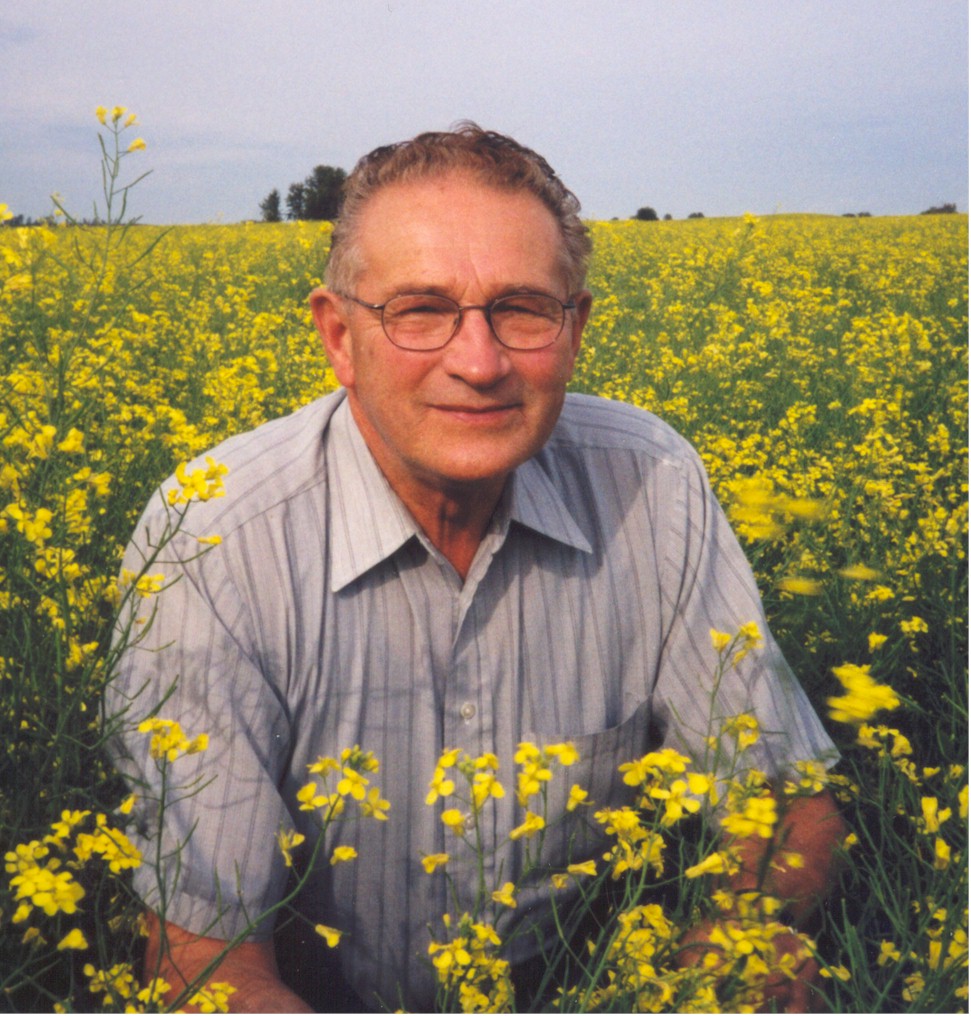
In the mid-90s, the biochemical leviathan Monsanto developed a genetically modified canola seed that is resistant to its Roundup brand of herbicide, which became known as Roundup Ready Canola. Farmers are required to purchase a license in order to use the seed. After only two years in use, it quickly constituted one quarter of Canada's canola production.
Percy Schmeiser was a canola farmer in Saskatchewan with a 1,000 acre farm and a custom strain of canola. He did not use Roundup Ready Canola, but found in 1997 that a portion of his crops were resistant to Roundup herbicide, which he used to kill weeds even though his canola plants typically die. But this time, many of them survived. A farmhand later saved the seeds from the resistant plants and they were planted the following season and later sold for feed. When it was revealed that the seeds being used by Schmeiser were the Roundup Ready variety, Monsanto sued Schmeiser for patent infringement.
Schmeiser, a former mayor and former member of the provincial legislature, fought the allegations, claiming that his actions were accidental and that the seeds came onto his property without his knowledge or consent. Although Monsanto admitted this was possible, the federal judge found that it was extremely unlikely and ruled in favour of Monsanto, citing Schmeiser's patent violations. It still remains unclear how the seeds got onto Schmeiser's farm.

Schmeiser, who had received a lot of publicity and (financial) help from environmental & anti-genetic groups, appealed the decision, but it was upheld by the Federal Court of Appeal. Schmeiser then tried the Supreme Court, which in a 5-4 decision, also ruled in favour of Monsanto. It did, however, also decide that Schmeiser did not have to pay Monsanto the nearly $20,000 he had received from sale of the modified canola. More importantly, he also did not have to pay for Monsanto's legal fees, which were well over $500,000.
As a result of the judgements, Schmeiser had to destroy all trace of his custom-bred strain, which he had been using for several decades. He also had a legal bill of approximately $400,000 to deal with. He now travels the world as a speaker telling his story and raising awareness of genetically modified plants, as well as the tactics of major companies like Monsanto. Indeed, many predict that the judge's decision on the poor likelihood of Monsanto's seed spreading accidentally is a reflection of the lack of knowledge we have on genetically modified plants, which have since been shown to spread very rapidly.
Schmeiser did, however, sue Monsanto in 2007 for the clean up costs after more Roundup Ready Canola made its way onto his property. An out of court settlement was agreed upon in 2008. Although it was only for a few hundred dollars, it demonstrates that the danger of seeds spreading is very real.
What is particularly interesting about the case is that none of the three federal courts approached it as an issue over the spread of the seed -- as Schmeiser did in 2008 -- but rather the patent violation. It set a protective precedent for large companies like Monsanto in that it recognizes patent violations as priority over the accidental spread of product, a problem that is sure to increase over the coming years.
Monday, March 1, 2010
Score one for the precautionary principle...

The Globe and Mail recently reported that a new study by researchers at the University of California Berkeley has found that when male frogs are exposed to a herbicide commonly used in Canada, they can be turned into female frogs. The study, published in the Proceedings of the National Academy of Sciences, focused on the chemical atrazine, which is a weed killer commonly used in North America but banned by the European Union.
Atrazine has brought up concerns from authorities and health officials as it has been found throughout drinking water systems and especially in agricultural regions. Although Health Canada has explored atrazine before, it has yet to deem it riskiness enough to ban in entirety. The United States Environmental Protection Agency is in the same boat.
The EU has a tendency to ban things that are relatively new, not well understood and could potentially be harmful. It adheres to something known as the precautionary principle, which simply states that we should make decisions very carefully and perhaps not adopt certain things until we know much more about them. For example, the EU has banned almost all food products that have been genetically-modified, citing that just too little is known about them yet to be throwing them into the food supply. In North America, genetically-modified foods run rampant.
The precautionary principle is becoming increasingly important as we start to realize that decisions that were made several years ago are starting to have unexpected consequences. For example, links have been drawn between the chemicals put into the drinking water supply that we flush down the toilet and decreased sperm count in men. Who would've seen that coming? And with more and more technological and biochemical advances being made every day, sometimes it is important to stop and think about what impact it might have.
Sometimes there is no evidence to backup the application of the precautionary principle. But when studies like this come along, it is probably worth taking a stronger look at what effects this herbicide could have. Having human beings starting to change sex could be a little problematic...
The precautionary principle is becoming increasingly important as we start to realize that decisions that were made several years ago are starting to have unexpected consequences. For example, links have been drawn between the chemicals put into the drinking water supply that we flush down the toilet and decreased sperm count in men. Who would've seen that coming? And with more and more technological and biochemical advances being made every day, sometimes it is important to stop and think about what impact it might have.
Sometimes there is no evidence to backup the application of the precautionary principle. But when studies like this come along, it is probably worth taking a stronger look at what effects this herbicide could have. Having human beings starting to change sex could be a little problematic...
Tuesday, January 12, 2010
Delivery Groceries: A greener approach to food shopping...

In his book Heat, George Monbiot talks about all the stuff we do as human beings that contribute to climate change and some of our craziest behaviour actually comes from our supermarkets.
Yes, these things are absolutely massive. But this is not unique to supermarkets; huge buildings can be found everywhere. But it is the inner workings of these things that are very astounding. When you first enter the building, you are normally smashed by a fan of either very cold or very hot air (depending on what the temperature is like outside). And when you get in, the lights are among the brightest available on the market. Why? All the food needs to look pretty and the best way is with pretty lights. And lots of them. Everywhere. That day-old fillet of tilapia not look so appetizing? Just toss some extra lights on top of it. Perhaps the most ridiculous thing you'll find at the supermarket are the open freezers & fridges (a friend of mine refers to them as bunkers). Do you ever leave your freezer open all day at home? It's probably the biggest waste of energy you'll find at a supermarket.
So Monbiot proposes something very different. Rather than driving to the supermarket, we could have it delivered to us. No more need for bright lights, high-powered entrance fans or open freezers. And no more need for such massive building footprints. Instead, there could simply be a warehouse with delivery vans. The energy savings would be enormous. According to a supermarket chain executive interviewed in Heat, the food storage section takes up only 5-10% of the entire building's energy usage. Wow.
Energy savings for the suppliers wouldn't be the only advantage of this type of system. People would no longer have to drive to the supermarket (gas & time), find a parking spot (imagine not needing those massive parking lots), spend valuable time in the grocery store (some spend hours) and stand in line. Rather, you could just have it delivered at a time that was convenient for you. Sure, there would be a fee, but it would certainly outweigh the hours spent driving, shopping and unloading. When both my sister and I were still living back home with our parents, my dad would go grocery shopping almost weekly and fill up the entire cart. He would be gone for several hours. Imagine if he were able to stay home, work more or just go out for the hours he would have spent shopping. And as a student with no car but a large appetite, I wouldn't have to go through the struggle of hauling all the food -- after buying far more than I can reasonably carry -- back by foot.
You would simply go online and shop like you would on Amazon.com and create your shopping list. You could submit your order and choose a time to have it delivered. A delivery truck would later come by with your delivery as it makes the rounds for other houses, too. The net energy benefit would be fantastic, as a fleet of delivery trucks would surely be more efficient than a ton of individuals driving their own cars. You could even develop a relationship with the delivery guy, like there used to be with the milk man.
So why don't we have these everywhere?
I'll first dismiss one argument I've heard. That is, the romantic notion that the supermarket is a place where the community gathers and you see folks from around town that you know. This is gone in most supermarkets in North America. I never see anyone I know when I go to the supermarket and I expect people might run into one or two people they know, but very rarely. And other than the proverbial cute girl you're supposed to meet in the supermarket, it certainly isn't the type of place that you make lifelong friends.
The bigger deal is that we, as a society, are bent on seeing our food before we purchase it. If it is delivered, how on earth will we know the quality of it. There is some legitimacy to this, but only some. Yes, with fruits, veggies and meat, I'd rather not have rotten or bruised food delivered to me. With some element of quality assurance, this could be easily be avoided. But the majority of other foods we buy are packaged and preserved in one way or another, so it doesn't really matter if we see it or not.

This is not a new idea and Monbiot (at least in this respect) is not a revolutionary. A group out of Toronto called Grocery Gateway has been doing delivery groceries for years, but it has taken a long time to catch on and it is still far from overtaking the major chains. They serve a rather niche market and serve only premium foods (thus allowing for quality control). And even greater niche markets exist for this. Throughout Peterborough, several groups exist that will deliver locally grown produce from nearby farms weekly to you. But again, these are niche and small operations.
Now I should also mention that not every store should do this. The small markets in the neighbourhood and the farmer's markets are wonderful. In these places, those romantic notions of community still exist. Going to the Farmer's market is one of my most pleasant experiences and such a view is shared by many I know. And you will frequently need to go to certain places to pick up only one or two items, which wouldn't be worth paying delivery for.
In an ideal world, we wouldn't have supermarkets and we would all grow our own food. But then we couldn't have mangoes in January and some people wouldn't like that. The reality is that we have and are going to continue to have large, centralized food sources with a great variety of choice. People are too used to it to revert back to only community gardens and farmer Ed's cows down the road. We can't simply make a massive transition in how we purchase and grow our food, but we can certainly make our current system work a hell of a lot better.
Friday, November 27, 2009
A talk on how the economic crisis impacted food security....
The World Affairs Colloquium is hosting a talk next Wednesday (December 2nd) at 3pm in Trent's Alumni house. For those of you who have not been to the Alumni house, I would say it is the most prestigious building on campus so you should check it out. It is located in Champlain College next to the residence staircases.
The title of the talk is "Local Insight, Global Outlook" - How the Economic Crisis has Impacted Food Security on a Local, National, and Global Level. This talk will feature a panel of three speakers. For the local perspective, our panelist is Dave Ralph from the Kawartha Food Share. Our speaker on the national perspective is Paula Anderson from Peterborough Green-Up. Finally, Professor Tom Hutchinson will speak to the consequences that the economic crisis produced on the global scale.
More information about the speakers:
Prof. Emeritus Tom Hutchinson, Department of Environmental and Resource Studies, Trent University, is one of Canada's leading ecologists. Tom has extensive knowledge of sustainable agricultural systems and the biodiversity of old-growth forests. His distinguished international reputation is rooted in his extensive expertise and research as an ecologist.
Paula Anderson is the Waste Reduction Manager for Peterborough Green-Up, a local environmental charitable organization. Paula also teaches an undergrad course at Trent entitled "The Canadian Food System: A Community Development Approach".
Dave Ralph is the Chair of Kawartha Food Share, a broad-based community effort that coordinates community resources to provide emergency food in the City and Country of Peterborough.
The title of the talk is "Local Insight, Global Outlook" - How the Economic Crisis has Impacted Food Security on a Local, National, and Global Level. This talk will feature a panel of three speakers. For the local perspective, our panelist is Dave Ralph from the Kawartha Food Share. Our speaker on the national perspective is Paula Anderson from Peterborough Green-Up. Finally, Professor Tom Hutchinson will speak to the consequences that the economic crisis produced on the global scale.
More information about the speakers:
Prof. Emeritus Tom Hutchinson, Department of Environmental and Resource Studies, Trent University, is one of Canada's leading ecologists. Tom has extensive knowledge of sustainable agricultural systems and the biodiversity of old-growth forests. His distinguished international reputation is rooted in his extensive expertise and research as an ecologist.
Paula Anderson is the Waste Reduction Manager for Peterborough Green-Up, a local environmental charitable organization. Paula also teaches an undergrad course at Trent entitled "The Canadian Food System: A Community Development Approach".
Dave Ralph is the Chair of Kawartha Food Share, a broad-based community effort that coordinates community resources to provide emergency food in the City and Country of Peterborough.
Tuesday, September 22, 2009
Trent University, Aramark and Bottled Water...

Venture into a university campus across Canada and, when you find yourself hungry, you will likely be directed to a food court operated by Aramark. Be prepared to reach into your wallet. Deep into your wallet.
Aramark is an American giant. It is the 19th largest employer on the Fortune 500 and routinely generates nine-figure profits. It is one of the largest food service providers in the world, supplying businesses, sporting events and hospitals. But it is its role in schools, specifically Trent University, that I will dwell on in this discussion.
At Trent, Aramark holds a near monopoly on food service. With the exception of a small, basically student-run cafe, Aramark operates all five cafeterias on campus, including a small Tim Horton's satellite. Students living in residence are almost forced to buy into an outrageously priced meal plan and others are commonly found trying to scrape together the nine dollars charged for a simple burger and fries.
Several controversies have stiffened Trent's relationship with Aramark over the past years, but because of its efficiency and well-managed size, it is seen as an actor Trent can not live without. Even as its contract expired amidst student anger, Aramark was signed on again last year and was even granted permission to raise its meal plan prices nearly $300 -- citing commodity price increases -- from Trent's seemingly pro-business Board of Governors, a topic out of the scope of this piece.
But as much as I dislike Aramark's involvement at Trent, I will offer them some credit in relation to the work they have done with Trent's environmental student group, Sustainable Trent, of which I serve as an executive member. ST has worked with Aramark to develop notable, popular and successful programs. The Lug-a-Mug program, whereby customers using a re-usable mug receive discounts for beverages has been a hit, as has been the implementation of 'Resource Recovery Stations', organized and well-labelled stations to deposit waste, compost and recyclable goods. These are only a few of the many joint-programs.
But ST is embarking on what might be its most difficult project with Aramark: the ultimate ban of bottled water from campus. And since Aramark is in charge of the sale of all bottled water on campus, removing the beverage from its shelves is necessary for such a task. Although we are unsure of bottled water's share of revenue for Aramark, judging by the number of bottles seen around campus daily, it is a fairly significant share. Convincing a multi-national giant to drop the sale of such a lucrative product in even one of its locations is a tall order.
An anti-bottled water sentiment is slowly moving over the school. This summer, Trent held Canada's first bottled water-free convocation. Posters proclaiming the downsides of bottled water are frequently seen on campus and stainless steel water bottles are attached to nearly every backpack or bookbag you pass in the halls. Even bottled water filling stations, essentially modified water fountains, are being installed on campus after years of resistance from Trent administration and, I speculate, some influence from Aramark, who might see a significant drop in drink sales as thirsty schoolgoers will refrain from paying the two bucks for a Coke.
Aramark has even agreed to work with ST to develop a bottled water education campaign, but my pessimism predicts that the ST version might be considerably watered-down once Aramark goes through it (pardon the pun).
But bottled water is rapidly becoming an eyesore in the eyes of the public. Some schools have already banned the sale of the stuff and municipalities throughout Canada are banning the sale in its public buildings. Despite the arguments of bottled water companies and their distributors, it appears as though the battle might be leaning in the direction of the opposition.
That being said, ST certainly has its hands full. Keep your eyes peeled.
And remember, tap water is just as good, often safer and a hell of a lot cheaper. Buy smart.
Tuesday, July 7, 2009
A battle of solar proportions...
The promising future for solar energy in Ontario is in danger of taking a solid knock backwards in the next few months. A powerful lobby from the agricultural sector is trying to ban solar power development on prime agricultural land. This could very well sink the solar industry in Ontario.
Under the province's ambitious new green legislation, the Green Energy Act, solar energy is being provided with large subsidies under the Feed-In Tariff program. Solar power can be sold back to the electricity grid for nearly eight times the price of normal electricity, making them quite an economical option. Connecting to the grid, a traditionally difficult achievement, is also streamlined and made easier for producers of solar energy.
But one of the best ways to produce significant levels of solar electricity is by building large, dense solar farms. These solar farms, which typically consist of several hundred solar panels, require large pieces of land, usually over 100 acres. Often, the most attractive type of land for these farms are land designated as prime agricultural land: farms.
Farmers and others in the agricultural industry argue that this type of land should only be used for growing food. Concerns over the spoilage of the wonderful, but lessening topsoil from things like stray voltage also add fuel to the fire.
In Canada, and Ontario especially, agriculture often gets the ear of big politicians when it beckons it. In this case, members of the Ontario government, after hearing the case of Ontario farmers, are considering the option of banning all solar development on prime agricultural land in the province. Since these areas are often some of the only economical options, solar developers are cringing at the thought of being banned from these lands.
In response, solar proponents have argued that in order to meet the goals of the Ontario government, only 1/10th of 1% of the province's prime agricultural land would be needed for solar. It is true, this might not be very much land, but food is important and with a growing global population, we'll need to produce as much as we can. Furthermore, the billions of dollars being put towards corn-based ethanol subsidies are already encouraging many farmers to move away from food-intended crops.
With a climate change-focused future, we'll have to make a lot of mutually-exclusive decisions. In this case, it's food vs. green energy. Each option will not be simple. Each will have social and political implications that will always have to be recognized. I guess we'll have to figure out where our priorities really sit.
Sunday, May 31, 2009
Environmentalism as a luxury is not always a bad thing...
You're at the supermarket and faced with a very tough decision: do you go with the apples labelled 'organic' (we'll assume in this example that they actually are organic and also not of the GMO variety) or the regular ones? You've seen the news shows and read the books on the risks of non-organic foods and are fully aware that those apples were probably splattered in pesticides. If you continue to eat them you might be slowly killing yourself in one way or another. But the organic apples are twice the price. Decisions, decisions...
I am a student, and like a hefty number of people living in Canada, student or not, I do not have huge amounts of money to be spending on groceries. I already spend a great share of my income on food, but at the prices charged for organic products, I simply can't afford it, at least without giving up on other aspects of my spending.
This is certainly not news. The organics debate (at least the pricing aspect of it) has been charging along for quite some time now. The common conclusion is quite simple: eating organic foods is reserved for those of us who can afford it. It is a luxury. Sure, you can grow a wide range of organic foods in your backyard for a much cheaper price, but the reality is that the majority of people do not have the time, space or most importantly, the patience, to do so.
In my own experience I've certainly run into people who think having expensive organics is an awful thing. Price gougers; bourgeoisie; capitalist exploiters: some of the phrases I've heard associated with organics in Canada (you'll notice the rather socialist leanings of some of these remarks. For more, I highly recommend taking a tour of the Trent Campus...).
A month or so ago I visited the Carrot Common in Toronto, a grouping of 'green' stores, headlined by a massive grocery store where nearly everything was organic. While it was a nice place to be, I came to realize that although I could be healthier, my grocery bill would probably be three to four times more expensive if I shopped there.
But here's the thing. Having organics so expensive is not necessarily a bad thing. This is simply because it is a relatively new product trying to make its way into an already overfilled market. If we look at products that today are very common we can quickly realize that the organics market is only at its earliest stages. For example, when computers first became consumer goods and battled the typewriter industry, they were outrageously expensive and reserved only for those with a nice chunk of change. But now the majority of people in Canada have or have access to a computer. Cars, too.
This is all because of the law of economies of scale: as more of a good is produced overall, the marginal cost of producing each good falls. Quite simply, it's like buying bulk. The more you make, the cheaper each individual one becomes. Compared to 'regular' foods, organics are a tiny share of the market and therefore are more expensive. But as they become more popular, the cost will go down. But in the meantime, the market has to start somewhere.
The other argument I'd pose is that organics (at least the ones that aren't price gouged and also the ones that are local) reflect what the more realistic economic cost should be. Although we've gotten used to our food industry, being able to buy whatever we want and whenever we want at remarkably low prices is a function of a lot of dangerous processes we're now learning might be more trouble than they're worth. Globalization, pesticide use and agricultural subsidies are making our food overly abundant and overly cheap, at the expense of our health, the world's farmers and the environment. More expensive food is seen as a bad thing (which largely, it is), but maybe more expensive food is a reality if we want to be living sustainably.
The expensiveness of being 'environmental' or 'green' is not reserved for organics. Renewable energy systems, hybrid cars and 'green' clothing products are also expensive and largely out of reach for many people. Having a completely solar powered home is a nice idea, but few can afford it, right now. So yes, these environmental products may be expensive and out of reach, but soon enough they'll be in the market place so the common-person can afford them.
The danger is if we denounce these products as being too luxurious, effectively reducing their desirability in the market and leaving them to go extinct. Everything has to start somewhere and unfortunately, it often starts with the rich.
Thursday, May 7, 2009
Tsk Tsk, Mr. Gates...
A brief tidbit in the journal from the very leftist, progressive Canadian Centre for Policy Alternatives (CCPA) reports that The Bill and Melinda Gates Foundation--the multibillion dollar charity funded through Bill's not-so-modest stake in Microsoft--has given $5.4 million to a technology firm funded by Monsanto.
The money is to be put towards lobbying African governments and promote the entry of genetically modified crops (GMOs) to the continent, which, in all likelihood, will largely be provided by Monsanto. As I've blogged about before, GMOs can be beneficial. But as I also mentioned, it is the nature of the GMO industry that should be very concerning for the world's population and Monsanto's presence in this group is quite worrying.
Although I did not have incredibly detailed knowledge about the Gates' foundation, I did think of it as a wonderfully beneficial group. Their work in the prevention and treatment of HIV/AIDS and other diseases has been particularly notable. But this new donation strikes them down a few notches on the 'awesome pole'.
The trouble with such a situation is the deep respect, resources and connections the Gates' foundation has. Warren Buffett (now the world's third richest man, but last year topped the list) provided the foundation with nearly $30 billion worth of shares (paid over time) from his investment company, Berkshire Hathaway. That'll be one hell of a tax receipt. But I can't think of any other charity in the world that would be getting anything close to $30 billion.
So if people think the Gates' foundation is doing good in the world, then they're sure to follow suit. In this case, they're following in the wrong direction. As the CCPA said, the floodgates could open up wide. Very wide.
Wednesday, April 15, 2009
The unfortunate truth of GMOs...
GMO: Genetically modified organism. A GMO is any animal, plant or other living thing that has had its genetics permanently altered, generally intentionally by humankind (although this definition is slightly up for debate). GMOs can be found in a wide range of products, but their presence is most pronounced and controversial in food.
Theoretically, GMOs could solve a wide range of the world's food production problems. The potential to improve the shelf life of foods, crop resistance to pests and bad weather and make foods grow quicker and in greater quantities are all benefits of genetic alteration. Concerns over fruits being bruised during transport, whole harvests being lost due to an early frost and drought-prone areas not being able to grow food could very well all be concerns of the past. What a wonderful world it could be.
But as Yogi Berra said, "in theory there is no difference between theory and pratice. In practice there is."
GMOs are not living up to the hype. The reason? A mercilessly oligopolistic industry. The majority of research and funding is provided by the private sector, which (despite what their spokespeople say) is not developing GMO foods for the public good. A small handful of companies have ownership title of almost all the GMO crops. Canadians will be familiar with the corporation Monsanto.
Having so few companies dominate one industry is rarely a good thing. Prices of GMO seeds and the products needed to grow the seeds (which are conveniently supplied by the same companies) are outrageously high and often are only applicable to cash crops consumed in the "rich" world. Some companies have even developed specific seeds that only work once, removing the ability for farmers to "save seeds" (a popular practice among farmers) and leaving farmers dependent on that company.
GMOs have environmental risks, too. As you make crops more resistant to pests, the pests adapt. As a result, increasingly potent levels of resistance are required and in all likelihood pests will continue to adapt. This resistance arms race could go on forever will devastating consequences (picture Mothra, the giant moth monster from Godzilla movies).
Furthermore, seeds tend to mix fairly easily, which is a natural occurrence on the planet. The natural ecosystems of the world have tended to adapt and often flourish with seed mixtures. But when genetically modified seeds start getting transplanted and mingle with everything, trouble brews very quickly. Several studies have confirmed that butterfly populations have fallen significantly after coming into contact with GMO crops. The ripple effects could be very large and a reduction in overall biodiversity would be a very bad thing.
I highly recommend everyone read Brian Halweil's "The Emperor's New Crops". It's short and is one of the best descriptions of the way GMO industries work, although it is slightly dated.
The question I ask is where we should go next with GMOs? The private sector will continue to exploit the industry. After all, it's a huge money maker. But governments in Europe require labelling of GMO products, which is sure to batter the industry. Canada doesn't have such a requirement, so perhaps we should start there.
Education is also a key. Very few people know the true nature of the industry, which can probably be chalked up to marketing campaigns from the company themselves.
But from a grander fundamental point of view, are GMOs something that we should even pursue?
We're able to grow our food in a sustainable manner (ex. organic, local farming), which could theoretically be applied throughout the world. Moreover, a great share of experts argue that the world's hunger problems are not an issue of food production (the world produces 1.5 times more food than needed for the world's population), but rather an issue of access and distribution. Considering GMOs might draw us away from considering the solutions to those problems and may, as the industry currently stands, actually exacerbate those access problems as farmers have less money to buy food after paying for the high-priced seeds.
Regardless of how difficult it would be from a realistic standpoint, should we simply ban GMOs altogether? I think it could be something to consider.
Theoretically, GMOs could solve a wide range of the world's food production problems. The potential to improve the shelf life of foods, crop resistance to pests and bad weather and make foods grow quicker and in greater quantities are all benefits of genetic alteration. Concerns over fruits being bruised during transport, whole harvests being lost due to an early frost and drought-prone areas not being able to grow food could very well all be concerns of the past. What a wonderful world it could be.
But as Yogi Berra said, "in theory there is no difference between theory and pratice. In practice there is."
GMOs are not living up to the hype. The reason? A mercilessly oligopolistic industry. The majority of research and funding is provided by the private sector, which (despite what their spokespeople say) is not developing GMO foods for the public good. A small handful of companies have ownership title of almost all the GMO crops. Canadians will be familiar with the corporation Monsanto.
Having so few companies dominate one industry is rarely a good thing. Prices of GMO seeds and the products needed to grow the seeds (which are conveniently supplied by the same companies) are outrageously high and often are only applicable to cash crops consumed in the "rich" world. Some companies have even developed specific seeds that only work once, removing the ability for farmers to "save seeds" (a popular practice among farmers) and leaving farmers dependent on that company.
GMOs have environmental risks, too. As you make crops more resistant to pests, the pests adapt. As a result, increasingly potent levels of resistance are required and in all likelihood pests will continue to adapt. This resistance arms race could go on forever will devastating consequences (picture Mothra, the giant moth monster from Godzilla movies).
Furthermore, seeds tend to mix fairly easily, which is a natural occurrence on the planet. The natural ecosystems of the world have tended to adapt and often flourish with seed mixtures. But when genetically modified seeds start getting transplanted and mingle with everything, trouble brews very quickly. Several studies have confirmed that butterfly populations have fallen significantly after coming into contact with GMO crops. The ripple effects could be very large and a reduction in overall biodiversity would be a very bad thing.
I highly recommend everyone read Brian Halweil's "The Emperor's New Crops". It's short and is one of the best descriptions of the way GMO industries work, although it is slightly dated.
The question I ask is where we should go next with GMOs? The private sector will continue to exploit the industry. After all, it's a huge money maker. But governments in Europe require labelling of GMO products, which is sure to batter the industry. Canada doesn't have such a requirement, so perhaps we should start there.
Education is also a key. Very few people know the true nature of the industry, which can probably be chalked up to marketing campaigns from the company themselves.
But from a grander fundamental point of view, are GMOs something that we should even pursue?
We're able to grow our food in a sustainable manner (ex. organic, local farming), which could theoretically be applied throughout the world. Moreover, a great share of experts argue that the world's hunger problems are not an issue of food production (the world produces 1.5 times more food than needed for the world's population), but rather an issue of access and distribution. Considering GMOs might draw us away from considering the solutions to those problems and may, as the industry currently stands, actually exacerbate those access problems as farmers have less money to buy food after paying for the high-priced seeds.
Regardless of how difficult it would be from a realistic standpoint, should we simply ban GMOs altogether? I think it could be something to consider.
Tuesday, February 10, 2009
Ethanol from corn = inefficiency
The previous Bush administration had an outstandingly bad position on ethanol subsidization. Under Bush, something like $9 billion was allocated in subsidies to farmers and ethanol producers. Generous subsidies under Bush were advantageous for corn farmers and ethanol producers, but problematic for consumers of corn, and for farmers in developing countries. Just from a socio-economic standpoint, ethanol production was a mess. In late 2006, the price of tortilla corn flour in Mexico, which gets 80 percent of its corn imports from the U.S., doubled because of a rise in corn prices in the United States. Also, Bush`s poor sighted plan led to a dramatic increase in domestic corn prices going up 60 percent while world corn prices increased by more than 50 percent.
Many think that ethanol is an environmentally friendly alternative with ostensible justification for reducing the amount of carbon dioxide that would normally be released with the burning of oil. However, this is false. Corn-based ethanol has to be trucked over long distances which results in more CO2 emissions released. You are also taking land away from wilderness and not growing food locally. Growing crops for fuel instead of food. This is even worse for the environment because it encourages consumers to keep buying crops that were cultivated thousands of kilometers away. At the UN climate change conference 2007 in Bali, Indonesia, a survey of 1,000 climate change professionals in 105 countries found low faith in ethanol as a low-carbon technology.
The Obama administration has a lot of work to do. But Obama has pledged to invest in cellulosic ethanol. Cellulosic ethanol is manufactured from woody plant matter (cellulose) from sources such as grasses, trees, rapeseed, switchgrass and agricultural waste. Unlike corn, these things are not traded internationally and thus do not raise food prices. If Obama follows through, he will invest federal resources like tax incentives, cash prizes and government contracts into developing two billion gallons of celluosic ethanol by 2033. Also, increasing the renewable fuel standard whereby cellulosic fuel becomes more widely available for American automobiles.
Key message: Why can`t Canada learn from Obama`s well thought out fuel policy? Cellulosic ethanol is more efficient to produce and more environmentally friendly. It is time the Minister of the Environment wakes up and time to start planning ahead.
Many think that ethanol is an environmentally friendly alternative with ostensible justification for reducing the amount of carbon dioxide that would normally be released with the burning of oil. However, this is false. Corn-based ethanol has to be trucked over long distances which results in more CO2 emissions released. You are also taking land away from wilderness and not growing food locally. Growing crops for fuel instead of food. This is even worse for the environment because it encourages consumers to keep buying crops that were cultivated thousands of kilometers away. At the UN climate change conference 2007 in Bali, Indonesia, a survey of 1,000 climate change professionals in 105 countries found low faith in ethanol as a low-carbon technology.
The Obama administration has a lot of work to do. But Obama has pledged to invest in cellulosic ethanol. Cellulosic ethanol is manufactured from woody plant matter (cellulose) from sources such as grasses, trees, rapeseed, switchgrass and agricultural waste. Unlike corn, these things are not traded internationally and thus do not raise food prices. If Obama follows through, he will invest federal resources like tax incentives, cash prizes and government contracts into developing two billion gallons of celluosic ethanol by 2033. Also, increasing the renewable fuel standard whereby cellulosic fuel becomes more widely available for American automobiles.
Key message: Why can`t Canada learn from Obama`s well thought out fuel policy? Cellulosic ethanol is more efficient to produce and more environmentally friendly. It is time the Minister of the Environment wakes up and time to start planning ahead.
Subscribe to:
Posts (Atom)