Showing posts with label Waste Management. Show all posts

Saturday, December 10, 2011

The return of the e-waste discussion

Image credit: veracitystew.com

It has been a while since Enviro Boys has written about the topic of e-waste, or waste management more generally. Like all environmental problems, this one is complicated.

Elisabeth Rosenthal from the NY Times Green Blog reports:

"When Americans turn in their old car batteries for recycling, they probably think they are doing good for the planet. And done well, recycling batteries is certainly environmentally responsible, since lead mining and processing cause far greater emissions of carbon dioxide than extracting lead from old car batteries for re-use."

More:

"But my article from Mexico should remind us that recycling can be “green” or not, depending on how it is done. That is particularly true of electronic waste, including batteries, where one goal of the recycling process is to extract precious metals. In much of the world, recycling is a big business with ties to gangs and organized crime. That is often the case with lead battery recycling plants in Mexico, that country’s officials told me".

I wrote about this topic of couple of years ago. E-waste is electronic waste in the form of batteries, computers and other electronics that are exported from one country to another for informal recycling processes.

My quick assessment pointed to how the US has not signed the Basel Convention on the Control of Transboundary Movements of Hazardous Wastes and Their Disposal. Worse yet, the Resource Conservation and Recovery Act of the US gives the country authority and control over hazardous and toxic wastes.

E-waste is simply a part of the US's waste disposal strategy. These policies surreptitiously cover up their inherent problems, because they appear to be designed to promote E-waste but in actuality, such waste can end up countries such as Mexico (as reported by Elisabeth Rosenthal). E-waste is also a problem within southeast and east Asia causing pollution and serious ecological harm. See here for the article. While the US is guilty, I am sure Canada is just as bad but alas, the lack of transparency with its waste disposal, make it difficult to know where our car batteries end up, for example.

E-waste is a tricky problem. There have been many recommendations made to nation states on how to deal with this problem. Rosenthal concludes with:

"The government could simply ban used battery exports, as Slab Watchdog suggests. Or it could require that Mexican factories processing used batteries from the United States meet our environmental standards and undergo inspections. The Food and Drug Administration inspects foreign factories that make drugs imported into the United States. The Environmental Protection Agency could take on a similar role for battery recycling plants".

You can read the full story of recycling American car batteries in Mexico here.

Monday, February 14, 2011

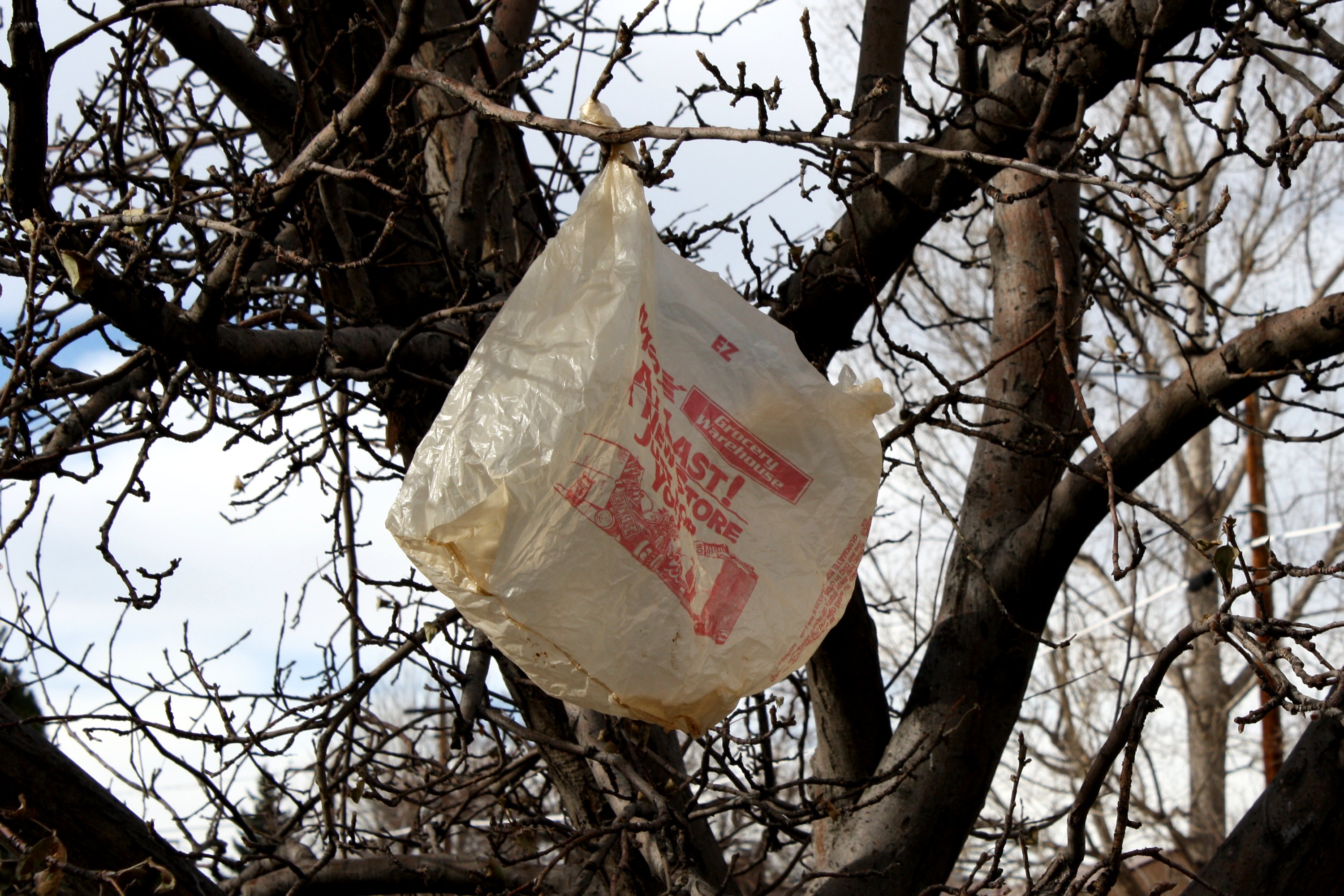
Guest Entry: Paper Bag it or the Back of the Line for You

By: Maria Rainier
                                                                                              Image credit: Photos Public Domain
We all do it – go to the grocery store and forget to bring our reusable grocery bags. Oops, I’ll just have to remember next time. But in some states and countries and maybe soon everywhere, using plastic bags won’t be an option. San Francisco started the trend in 2007, banning plastic bags in grocery stores – according to a story covered by NPR in 2008, other cities, states and countries are jumping on the bandwagon to ban the use of plastic bags.

There are many conveniences to using plastics bags: they are lightweight, cheap, easy to use, always  available and always convenient. Banning these conveniences seems like a major inconvenience to most people, but the impact of plastic bags on the environment is what’s most inconvenient.

The harmful effects of plastic bags on the environment:

1.Plastic bags litter the landscape and if burned, produce toxic fumes
2.Plastic bags are non-biodegradable and stick around for about 1,000 years, long after landfills
3. Plastic bags kill animals through ingestion and strangulation
4. Petroleum is used to produce plastic bags – we need petroleum unfortunately

How many times have you driven by a park, parking lot, garden or anywhere else and seen a plastic bag just sitting there, glued to another unobtrusive object? Unobtrusive may have been a bad descriptor for a plastic bag; in all reality, there’s nothing unobtrusive about it.

How many times have you been accosted or surprised by a plastic bag flying in your face or seen one floating into space. In fact, a major part of the film American Beauty, where the boy says to Jane it is “the most beautiful thing I’ve ever filmed,” is about a plastic bag. Really? If that’s beautiful then Ricky, you need to get out more.

Many cities and countries have already started banning the use of plastic bags in supermarkets and stores:
  • San Jose recently passed a ban on the usage of plastic bags and many surrounding cities are following the ordinance.
  • Last November, parts of L.A. banned single-use and disposable plastic bags to 1.1 million people
  • In August 2009, Mexico City banned the use of plastic bags from check-out lines at supermarkets
  • In January, Muntinlupa City in the Philippines banned plastic bags & polystyrene containers
  • Michigan is starting a movement and petition to ban plastic bag usage in their state
  • Last October, an ordinance went into affect banning plastic bags from the Outer Banks of Dare, Currituck and Hyde counties.

Click here for a detailed list of these countries’ Plastic Bag Laws.

Plastic bags may be convenient for our daily lives but they are detrimental to the environment and when we start taking these environmental risks into consideration, only then will we be able to do something about it. The citizens who helped start the movement back in 2007 in San Francisco, probably started by voluntarily banning themselves from the use of plastic bags because starting a movement starts with yourself.

I have recently chosen to ban myself from using plastic bags as well – it’s simple really. I put reusable bags in my car for when I go grocery shopping and in the event that I forget them, I make myself buy news one to bring home my new purchases in. Having to buy a reusable bag that I already have at home is my way of punishing myself – I would rather go broke, due to my own forgetfulness, than punish the environment.

Maria Rainier is a freelance writer and blog junkie. She is currently a resident blogger at First in Education, where she's been looking into gender wage gap statistics to see if it can be explained through women choosing lower paying degrees and men choosing higher paying degrees. In her spare time, she enjoys square-foot gardening, swimming, and avoiding her laptop.

Tuesday, September 21, 2010

Minnesota's Adopt a Highway Program...

I am nearly 1000 km into my bicycle journey and have just arrived into Michigan, having passed through Manitoba, Minnesota and Wisconsin over the past week. The routes have been absolutely stunning, as fall approaches and the roads are lined with miles and miles of multi-colored leaves sitting in the trees, just waiting to fall. But before they fall, plenty of volunteers will be making the final roadside clean up throughout much of northern Minnesota.

Along my route in Minnesota, I encountered what seemed like hundreds of different "adopted highways". Adopt A Highway programs typically involve and organization of some kind volunteering to pick up trash along a stretch of highway a few times per year. In exchange, the government puts up a big sign exclaiming the group's effort. You see these from time to time in Ontario and Manitoba (I'm sure they are elsewhere in Canada, too), but I have never seen them in such abundance as I did in Minnesota.

I have never personally been involved with an Adopt A Highway program, but it seems like a great idea. You get free advertising, the roadsides become cleaner (very noticeable by those of us who stop there frequently) and people can get outdoors and do some volunteering. Moreover, it reminds us that some environmental problems are still fixed simply by doing a little hard work, even though much of the world has moved on to the more exciting and global problems, like climate change and solving our energy needs.

I'm on a bike most of the time, so I'll admit I have little desire to research this any further and I have no substantive evidence that proves how popular Minnesota's program is. This is simply something I've noticed. Why is it so popular compared to other places? My only guess is that the signs the Minnesota government puts up are far larger than what you'd get in Manitoba or elsewhere. Advertising is advertising.

Thursday, August 5, 2010

Keep a wary eye on 'Industry-Led' initiatives...

An environmental controversy is brewing in Manitoba. A new Eco-Fee is likely to be introduced on consumer products, specifically electronics. When you go to Best Buy to purchase your new flatscreen TV, you will be hit by an additional fee that could be upwards of $25.00. The fee will appear on your receipt below the subtotal, similarly to a tax.

But here's the thing. It isn't a tax. At least, not a government-issued tax. It is a fee imposed by industry.

Presently, much the recycling and disposal costs in Manitoba are covered by the provincial and municipal governments, funded through provincial and property taxes. But new rules will soon have industry footing their share of the bill, which happens to be most of it. And since companies can't grab from your property tax bill, they will be funding many of the costs by charging consumers a separate fee.

Having industry incur the costs of recycling and disposing of products it creates is a step in the right direction, but the Eco-Fee issue sparking in Manitoba is illustrative of a wrong turn that is all too frequent in environmental policymaking. Two parties hate regulation: industry and the government. Industry, of course, doesn't like the hassle and added costs of government interfering with its business. Government, commonly misperceived as control freaks, generally don't want the hassle and costs of policy creation, enforcement and monitoring. So when something needs to happen -- say, industry paying for disposal of their products -- a common policy takes form: the 'industry-led initiative'.

Such an initiative is generally brought about by a "Stewardship" association, which is basically a group of companies. They see the writing on the wall, and instead of accepting government regulations, they come up with their own plan; "we'll do it, just in our own way". It is usually less strict than regulations would be and are typically voluntary in nature. Both government and industry win out. The environment loses.

Many industry-led initiatives are great and get the job done. But in the case of eco-fees, it isn't the best method. We need only look at the debacle in Ontario. Huge consumer backlash occurred when similar eco-fees were introduced by Stewardship Ontario. Thanks to a very poor information campaign by the industry association, lots of people thought it was a new tax by the government and became known as a secret tax. This was even more problematic given the new and unwelcome Harmonized Sales Tax the province was implementing. Stewardship Ontario and the province threw tantrums each other's way, more consumers got pissed and the fee has since been pulled.

What should have happened is a full blown extended producer responsibility program whereby industry would simply incorporate the added costs of disposal into the cost of the product, rather than a deceiving fee. For industry, the formula would be simple. Make your products easier to safely dispose of and it can be cheaper, attracting more customers.

Tuesday, July 27, 2010

Are you Green or Congreenient?

I certainly hope you are genuinely green and not congreenient.

Thanks to urban dictionary for providing a hilarious and clever word for the day:
Congreenient: The practice of recycling, or being green, only when convenient. A person who only recycles when it is convenient to do so.

Used in a sentence: I really dislike recycling my glass bottles because recycling is a futile act. Luckily, it is congreenient that my neighbour recycles bottles and pays me 10 cents for every bottle I don't throw out in the garbage.

Friday, July 9, 2010

Charging for plastic bags: Hong Kong

It has been one year since Hong Kong introduced a levy scheme charging 50 HK cents (6.6 cents Canadian) per plastic bag. That's right, if you forget to bring your reusable bags to the supermarket, you get charged 50 HK cents for every plastic bag you need. Hong Kong’s levy scheme has been successful as evidenced from the statistics below.

Recent news in Hong Kong confirm the success of the 50 cent charge. The only surprising statistic, which can be both negative or positive (depending on how you look at it) was that the government was expecting to pool in about $200 million from the levy over the course of the year, however, it only brought in $20 million. Obviously, this this can be attributed to the large scale reduction in plastic bag use and the massive increase in reusable bag use.

This news provides a great deal of relief to city officials who have been criticized for their lackluster efforts on waste management. As land is scarce in Hong Kong, there is little space for waste sites and landfills. This continues to challenge city officials as to what approach might be most effective and efficient with dealing with waste. Fortunately, plastic bag use has dropped significantly.

Toronto and Washington D.C. both have plastic bag levy schemes. Washington DC, unlike Toronto and Hong Kong, is clearer as to how they spend the revenue raised from the scheme. F
or example, Washington D.C. raised $150,000 from their 5 cent levy in January 2010. This money went towards cleaning up the Anacostia River. Thus, environmental remediation efforts in D.C. have been aided by the levy and citizens are much clearer about how the revenue is spent.

Hopefully the government of Hong Kong will be a little clearer as to how they will spend the revenue.

Here is a summary of some of some statistics:

-$19.8 million was the total amount of money collected from the levy between July 2009 and March 2010. This revenue goes directly to the government

-Usage of plastic bags is now far less than before the levy was introduced, with a reduction of 90%

-The number of registered outlets now collecting the plastic bags levy has reached 3,000


Saturday, May 1, 2010

Guest Entry: Vermicomposting program a big hit in Queen’s residences

By: Trevor Shah

The Queen's Vermicomposting Program was initiated in the fall term of the 2009-2010 academic year and is the first systematic University Residence vermicomposting program in Canada. What’s more, the program is entirely student driven. Queen’s university helped us run the initiative through paying the necessary expenses to lease 11 hand-made vermicomposters from a local, student-run non-profit business called the Living Cities Company.

The idea for the Vermicomposting program came about in April 2009 when four students came together to explore ideas on how to make Queen’s residence greener. Though the project was initiated by four students, it became the project of hundreds of students living in residence. Throughout the year, the residents of the 11 floors in residences, led by their Residence Advisors, looked after the day-to-day maintenance of the composters.

It should be noted that these vermicomposters were used to process the food students ate outside of the cafeteria. Most students ate in the cafeteria which uses an industrial composter; this industrial composter is entirely separate from the vermicomposting program.

From the point of view of residents, Residence Advisors, custodial staff, and the Queen’s community, the program has been successful. As shown by organic waste statistics tracked by students in two different residence buildings, each vermicomposter is able to consistently divert 2-4kg of waste each every week. Throughout the 8 months, we were able to divert about 400kg of waste through using 11 vermicomposters.

To promote the initiative and garner support we wrote articles to 3 different media sources; this was one of the best ideas as we were shortly contacted by CBC Radio Host Wei Chen, who read one of our articles in a local Kingston newspaper and interviewed us on CBC Ontario Morning.

These articles can be found at:
http://www.queensjournal.ca/story/2009-11-10/news/residences-venture-vermicomposting/
http://www.thewhig.com/ArticleDisplay.aspx?e=1773166
http://qnc.queensu.ca/gazette/4b0bf3bcb0220.pdf

There is an array of benefits of vermicomposting for residence buildings. They include:

First, vermicomposting offers an easy, cheap, and sustainable way to divert student generated organic waste from garbage cans/landfills. Since you can dispose of waste on-site, there is no energy cost of transportation. Moreover, the start-up cost of vermicomposting is almost twenty times less expensive than procuring an industrial composter. Vermicomposters are also self-propagating, as the worms are able to reproduce within 3 months, allowing their offspring to be used to start another vermicomposter.

Second, vermicomposting is net-energy-neutral and non-polluting. Unlike industrial composters, the vermicomposting process does not require inputs of heat energy, because vermicomposting utilizes worms to convert waste into fertilizer. In addition, no harmful chemicals are added, making vermicomposting 100% organic.

Third, the vermicomposting progress is fast. In general, 2 pounds of red wiggler worms will decompose 1 pound of waste within 24 hours. The ability of worms to consume their weight daily means that the system has high-throughput and is able to handle the waste-generation requirements of students in residences.

Fourth, the compost produced by the worms can be sold as an excellent fertilizer. The vermicompost increases soil workability, water holding capacity, erosion, while moderating temperature of the soil environment. Compost also enhances microbial action in the soil, further increasing the remineralisation of soil nutrients for plant use.

Finally, vermicomposting has a great educational value, as it exposes you to the first-hand practicality and benefits of vermicomposting.

We are looking to double the number of vermicomposters to 22 next year and we have submitted a 26-page report to residence administration proposing this expansion.

Trevor Shah is a second-year commerce student at Queen’s University and is one of the four founding members of the Vermicomposting program.

Monday, April 26, 2010

A desperate paper plea coming to a Facebook page near you...


If you're young, you probably won't print this blog post. But you really should. Print five copies for your friends, even. And please, don't feel guilty about the environmental impact.

This is the message being put forth by one of North America's largest copy paper companies, Domtar. An article published in today's Globe and Mail details the new strategy being taken by Domtar. Quite simply, the company believes that the "think before you print"mantra endorsed by environmentalists is "just bull" and that people should not feel bad about printing. Indeed, it is very proud -- and it should be -- of its use of FSC Certified process and the fact that three trees are planted for every one used.

Domtar appears to be convinced that it is the environmental issue hurting its business -- sales are expected to slide significantly over the next several years -- and so it has put together a campaign called Put it on Paper to convince people that printing isn't nearly as bad for the environment as people make it out to be. Moreover, because young people don't seem to print too often, much of the campaign will be aimed at Facebook and Twitter, where most young people live. Don't worry, printed material will also be part of it.  

Domtar is right, the environmental issue is hurting its business. And I'm glad it is, as it means that more recycled paper is being used and, more importantly, less paper is being used overall. Its 'green' practices should not overshadow the underlying fact that using virgin materials is rarely, if ever, more environmentally sustainable than recycled products.

But where I think Domtar is wrong is in its targeting of the environmental issue as its main enemy. Paper is being used less frequently not because of its environmental impact, but because the alternative is so much more convenient. It has little to do with telling people printing is OK.

Why don't kids print out all the emails from their friends, Domtar asks? Because their square foot laptop can store as many emails as would fill their house if all of them were printed. And specific messages can be found in less than a second. Filing cabinets just can't do that.

Clutter is a problem, too. I'm in the process of moving out of my rental house and I've been rifling through piles of old pages I was encouraged to printout in earlier years. All of it is going to the recycling bin. Electronic forms of that stuff would be much more convenient.

We should not get rid of paper entirely. It most definitely has its place. I have been raised by a family with a vested interest in the printed word and still enjoy reading the newspaper, magazines and books in printed word over their electronic versions. But Domtar is a copy paper company and is encouraging the increase of printing things like emails. Sure, some things should be printed, specifically those things that are very important, and multiple copies should be made in the same way that we use backup drives on our computers. But printing with the mindset or in the volume proposed by Domtar seems ridiculous.

It is nothing more than a desperate plea from a company that sees its future going down the toilet. That, unfortunately for Domtar, is the nature of capitalism. As more and more industries start to grind to a halt, I just hope that the pleas are at least somewhat accurate and realistic, and more importantly, that alternatives can be found so as few as possible jobs are impacted.

Photo Credit: MSNBC

Monday, April 12, 2010

Poll results: The Optimal waste management solution...

The poll results are in. We wanted to take this time to thank everyone for continuing to participate in the weekly polls. It is always fun for us to come up with questions and to see the subsequent results.

The poll question was "what is the most optimal waste management solution to you?"

My city should invest heavily into a composting program 3 (14%)
Implement policy that requires more products to be recyclable 1 (4%)
Make manufacturers more responsible for collecting their products after use 8 (38%)
Make residents pay for every garbage bag of waste they produce 8 (38%)
Send all of our garbage to waste incinerators 0 (0%)
Heavily tax our landfills to encourage conservation 1 (4%)

Total votes = 21

Disposing of municipal solid waste has historically been a challenging responsibility for cities across Canada. Municipal solid waste (MSW) has become an environmental issue pushing political agendas and having multiple implications for public policy decisions. I wrote a multi-criteria analysis on waste management options for a public policy course. It can be accessed here.

"Make manufacturers more responsible for collecting their products after use" and "make residents pay for every garbage bag of waste they produce" were the two popular options in the poll, each with 8 votes. They are both critical waste management options. Making manufactures more responsible is a process known as extended producer responsibility, which we have blogged about before. In short, the industry, not the government, is responsible for internalizing waste management costs in their product prices. The EPR strategy is best epitomized by the Beer Store. All beer bottles that are purchased at the store by the consumer can be sold back to the manufacturer as the Beer Store will re-buy the bottles that they have sold you. Although they buy the bottle back from the consumer at a low cost, it still encourages recycling and reusing.

Making residents pay for each bag of waste is known as a user pay system. Like most user charges (plastic bags for example) the minute you start paying for something, consumers start to think about conservation or simply using less because it saves them money. These are the shifts in behaviour that we need to see for a more sustainable planet.

Sending our garbage to incinerators had no votes. Incineration is a semi-popular waste management option in Canada (although very controversial), it is more widespread in Europe and Japan. Composting programs are expensive but very important. They require a lot of monitoring and enforcement. Landfill taxes are a great instrument, however, it all depends on how the revenue (from the tax) is used. Ideally, most of this revenue should go towards waste diversion programs (recycling, composting etc).

Key message: All of these options have merit. Such options need secured funding (which should be consistent) and the political will! As environmentalists, be sure to pressure your institution, school, city, company and/or organization to consider one of these waste management options. Take the time to gather some information about your preferred option and start raising awareness and advocacy for it.

Friday, April 2, 2010

The five cent charge on plastic bags in Washington D.C.

A number of months ago, I wrote about plastic bag charging in the City of Toronto. As of June 1, 2009 the city passed a by-law requiring all stores under the Canadian Federation of Independent Grocers (CFIG) to bring about a five cent charge on plastic bags. I do not know the specific statistics, but I would imagine that plastic bag use has dropped with the introduction of the charge.

What I do know is that Washington D.C. has been very successful with their plastic bag charging initiative. The five cent disposable bag fee took effect this January 2010 and like Toronto, it received a tonne of opposition off the bat. The Office of Tax and Revenue reported that the city brought in $150,000 in bag fee revenue in the month of January alone! The big question for all of these charging schemes is what you do with the revenue raised from the charge. What the revenue is spent on in Toronto is quite nebulous, ostensibly it goes to "environmental projects".. whatever that means.

In D.C., the $150,000 will go towards cleaning up the Anacostia River. That is a wonderful initiative and it is good to know that D.C. cares about its natural environmental features. In terms of the plastic bags themselves, about 3 million of them were purchased in January, a drop from the average 22.5 million per month that the city is accustomed to.

We know that the rationale of the five cent charge is to induce citizens to change their behaviour to cut down on their use of plastic bags. In general, a user charge can persuade citizens to make the investment in buying reusable bags which are sturdier, compact and can carry a higher volume of groceries. D.C. provides evidence that such a five cent charge has actually been working and has changed consumer behaviour tremendously.

More fascinating to me is the city's inclination to use the revenue on cleaning up the Anacostia River. The river is something that everyone could relate to. It is a natural environmental feature that has only become more polluted and inundated with things like plastic bags. With a clear vision to clean up their own environment, I think we should applaud D.C. for its hitherto successful five cent charge initiative.

Key message: Changing consumer behaviour, getting D.C. residents to think about the river and cutting down on plastic bags are all positive endeavors for the present and for the future.

Saturday, March 27, 2010

The Story of Bottled Water...

From the creators of "The Story of Stuff", comes "The Story of Bottled Water". Sometimes the most effective message is a simple one.

Tuesday, March 2, 2010

Stupid Green Ideas: Dell's Tree-Saving Boxes...

A friend of mine recently had a package delivered to him that looked as though it had been kicked around as a practice ball for England's upcoming stab at the World Cup. The tarnished box came from Dell, one of the world's largest computer and hardware manufacturers in the world. My friend tossed me the box and told me to take a look at the label attached on the side. Expecting to see one of the typical "we are sorry about the condition of the package, it was damaged during travel", I was very surprised to instead see the words inscribed, "We apologize for the condition of this package. Dell is reusing packaging to save trees."

As my friend said in a more polite fashion, what a load of bull. I admire the desire to try and "green" itself, but this is pushing it. My friend rightly believes that they are not reusing the boxes for environmental reasons, but rather to save money. They should admit it, rather than trying to greenwash consumers. It's similar to a case where I tell my friends that I won't wash the dishes for a week because cleaning them in bulk is more efficient than in small spurts and less water and soap will be used. Regardless of whether or not there is any truth to that statement, we all know that the real reason is that I'm just lazy.

Don't pretend to be something you're not. You like like an idiot, and worse, you give the environmental movement a bad name.

But he was a little more sympathetic to the actual state of the box than I was. Granted, it was still structurally sound and the product inside was protected with bubble wrap. But when I saw the box, the first thing that I thought was how bad Dell looked. Now I realize that we live in a consumer culture where aesthetically pleasing packaging is an environmental folly and that we shouldn't focus so much on the appearance of packaging, but there are ways to save money and/or be more environmentally friendly that won't make your packages -- Dell was built on packaged and mailed products -- look like junk. When someone sends me something by mail in a package, significant damage to the package indicates to me that at some point in the trip perhaps something else more important was damaged.

I do not know the packaging industry particularly well, nor do I pretend to understand the technology overly comprehensively, but I'm sure there are substitutes to reusing cardboard boxes that won't have a massive impact on the presentation of the packaging. Perhaps supply chain management could develop some innovative reusable box system or maybe the boxes could be compostable. Of course, Dell would unlikely go for any of those considering its true motive is probably financial.

But if I were Dell, I would look to make 'green' improvements in other facets of my business that don't make the average consumer wonder whether having them send something by mail is a liability to the product. But most of all, as my friend pointed out, don't pretend to do something for environmental reasons if that isn't your main intention.

Monday, February 22, 2010

The Fun Theory...

I think the last time I had fun recycling a product was tossing a glass bottle into a recycling bin like a basketball, which quickly turned to guilt-ridden fear as the bottle shattered and I ran away. But for the most part, activities like recycling or cleaning up litter are far from exciting. A self-induced pat on the back is probably the most many people get when they toss their can in the recycling bin.

German auto manufacturer, Volkswagen is trying to change that. As part of an initiative known as the Fun Theory, Volkswagen has launched a website filled with videos that are dedicated to making mundane but important activities fun. According to the website, "This site is dedicated to the thought that something as simple as fun is the easiest way to change people’s behaviour for the better. Be it for yourself, for the environment, or for something entirely different, the only thing that matters is that it’s change for the better."


Some of the videos I have attached showcase how fun is being used to engage people to take part in activities that they might not otherwise engage in. For example, bottle return stations -- not used in Ontario and some other jurisdictions because of curbside pickup programs -- are about as thrilling as watching paint dry. But when they are turned into a flashy arcade game, people flock to it.


Or how about waiting for the bus? In some cities it might be difficult to know whether the bus is actually on its way. And standing around awkwardly not talking to other people is all too common. But this all changes when a street periscope is built at the station. People can look through the periscope to see if their bus is on its way, and can also explore other parts of the city. Plus it gives them something to talk to others about at the station.


And when you are coming off the subway, why would you take the tiring and boring stairs when the elevator doesn't require you to really do anything? To play a song of course! When the stairs are turned into a piano, use of the stairs increases significantly. 


Our friend Kingsley -- who happens to originate many of the ideas that appear on this blog, although he never seems interested in writing anything himself (hint, hint, cough, cough) -- was telling me about can-crushing Plinko. Based on the famous game from The Price is Right, people crushed their cans and then dropped them onto a Plinko board and then settled into a recycling bin. You can only imagine how much of a hit that'd be.


One of the biggest problems with environmental programs is getting people to buy into them and become engaged. No matter how green they are, how convenient they might be, how healthy they are or how nice they are financially, people just might not care enough to get engaged. But if they are made fun and exciting, as the videos above indicate, people will participate.


Now of course, the novelty would quickly wear off if every set of stairs in a city all of a sudden allowed you to practice Beethoven's Fifth and get in your fitness workout at the same time. But there are undoubtedly countless creative and innovative ideas out there waiting to be unleashed on the unexciting but important aspects of our world. 


What is more, having these fun programs out in the public generates all sorts of community energy. Rather than having everyone walk past each other on the street without offering as much as a glance to one another -- as I have encountered far too many times when travelling through downtown Toronto -- people could share in the fun of these activities, talk with one another and generally just have a good time. A happy, lively and friendly community is a good community.


Being told to take part in things in order to evade guilt and simply getting beaten over the head with the negative consequences of our actions is not always the best way to get people to buy into something. Sometimes they might do the opposite just to spite you. But putting a positive spin on things is a win-win for everyone involved. Well done, Fun Theory.  

Thursday, February 18, 2010

Waste-to-energy is a heated topic these days…

Waste-to-energy is a euphemism for incineration, which is that process where a plant will burn municipal solid waste using thermal treatment which in turn can be used to generate electricity. At the “Waste-Based-Energy” industry conference in November 2009, delegates learned about several new incineration plant proposals including one in the Durham/York Region (not too far from Peterborough). The facility’s price tag is roughly $272 million and will be operated by New Jersey based Covanta Energy Corp.

There are some advantages to this plant that I should note. Considering the large population growth of the Durham/York Region, and given the implications of their growing electricity demand, the incinerator could very well provide electricity for thousands of homes. It could also be a solution for neighbouring municipalities who are currently stressing over their landfill sites due to overuse and leachate problems (i.e. when a lot of organic wastes end up in the landfill, sometimes they can leach from the landfill carrying other toxic wastes into the groundwater supply). Other parts of Canada including Metro Vancouver, Ottawa and Edmonton are all on the path to building more incinerators, many of which are being done by public-private partnerships.

So, I have touched on the “good” and now I turn to my cynicism and pessimistic take on the proposed incinerator. Firstly, there are numerous health issues associated with incineration. The burning of waste releases thousands of toxic emissions implicated in asthma and respiratory illnesses, autism, dyslexia and Parkinson’s disease just to name a few. These sites are often built on Greenfield sites or in agricultural communities thereby eroding the viability of the farmer’s land and well-being. Tens of thousands of tonnes of toxic ash are generated annually from the burning of waste, and o yeah, that ash is often sent to the landfill.

These sorts of projects are highly controversial because the companies that operate them do not often account for their negative externalities. For example, when these plants spew out toxic emissions, those living within close propinquity suffer great respiratory illnesses. Indeed, the Durham/York Region is growing tremendously and an incinerator is bound to pose health issues which can potentially add even more pressure to a health care system that already has too much.

I think the Province should mandate that all new incinerators built in Ontario have “scrubber systems”. These systems are a diverse group of air pollution control devices that can be used to remove some particulates and/or gases from industrial emissions. This would account for some of those externalities and put the accountability right on the company that operates the plant.

Finally, the plant is proposing to have a $140 per tonne tipping fee (the charge for accepting waste at the site). I think that 50% of this fee should go directly towards the region’s recycling and composting programs. This would be imperative because empirical evidence suggests that when a city sees the construction of an incinerator, there is less of an incentive for keeping a well-maintained recycling system because incinerators are expensive! Also, taxpayers pay for them.

Key message: Companies that run these incinerators must be held accountable for their emissions. Indeed, they should be required to have mandatory scrubber systems to really minimize the health impacts of emissions. Our health care system is already stressed, let’s keep our innovative waste management programs like recycling and composting which pose no real health effects, unlike incineration.

Tuesday, November 3, 2009

Rethinking the single stream recycling system...


The waste management class I have the pleasure of taking this year has opened my eyes to quite a few of the waste systems that I had, largely until now, taken for granted. In particular, the blue box system in Ontario.

In addition to its storied political history as a product of industry implemented as an alternative to a deposit-refund system (perhaps Tim or I will tell that story in a later post...), the stream systems of the blue box are worth a second look.

When I say stream systems, I'm talking about the way the recycling is divided up. Indeed, many jurisdictions are multi-stream, meaning that the onus falls on the home or business-owner to divide up their recycling into its respective bins before the truck shows up to take it away. However, several jurisdictions in Ontario have employed single stream systems, meaning that you can throw everything into one bin.

Someone of considerable reputation told me a few years ago that Peterborough had moved to a single stream system. As a result, I elected to no longer separate my recycling, thinking that somehow this single stream system was a better recycling system. Nevermind the fact that this certain someone was wrong and that the truck seemed to take it anyway, I, like many other Ontarians, was quite wrong in thinking that this new, single stream system was great.

But why? What's wrong with it? When a city decides to change its recycling system, it must be in a progressive direction, right?

That is certainly what I thought. I pictured a hyper-futuristic recycling facility with different machines that could separate everything very cleanly and efficiently. Wrong. In fact, single stream is considerably less efficient, especially when it comes to recycling recovery rates.

Recycling facilities are from perfect and it is difficult to separate the different materials. When you can't separate materials, they can't always be recycled. Herein lies the problem of a single stream system.

So why have a number of Ontario municipalities moved to such a system?

One answer is cost. Actual collection costs are significantly lower for a municipality when they only have one bin to toss in and there trucks can easily crush everything together, rather than carefully dividing each material up. Collection is also faster, meaning less gas used and less employee hours needed.

The other is a function of the world's economy. As oil prices spiked over the past few years, more manufacturers moved to recycled inputs in their products because processing virgin materials cost outrageously more. The market exploded for recycled materials, even if they were slightly contaminated with other recycled materials, and municipalities made a killing. Demand grew and municipalities moved to single stream so they could collect as much recycling material as possible to sell off.

But then the market crashed. Oil prices plummeted and virgin materials became much cheaper to use as inputs for manufactured goods. Additionally, industry now only wanted the cleanest recycled products, which only the municipalities employing multi-stream systems could supply. The single-stream system was left in the dust, so many places (including Toronto) were unable to sell and of their recycling and had to store it until the market recouped.

As the market recovers, single stream might become more viable again. But don't be fooled, it is not the perfect solution. It is much, much, less than that.

Tuesday, September 22, 2009

Trent University, Aramark and Bottled Water...


Venture into a university campus across Canada and, when you find yourself hungry, you will likely be directed to a food court operated by Aramark. Be prepared to reach into your wallet. Deep into your wallet.

Aramark is an American giant. It is the 19th largest employer on the Fortune 500 and routinely generates nine-figure profits. It is one of the largest food service providers in the world, supplying businesses, sporting events and hospitals. But it is its role in schools, specifically Trent University, that I will dwell on in this discussion.

At Trent, Aramark holds a near monopoly on food service. With the exception of a small, basically student-run cafe, Aramark operates all five cafeterias on campus, including a small Tim Horton's satellite. Students living in residence are almost forced to buy into an outrageously priced meal plan and others are commonly found trying to scrape together the nine dollars charged for a simple burger and fries.

Several controversies have stiffened Trent's relationship with Aramark over the past years, but because of its efficiency and well-managed size, it is seen as an actor Trent can not live without. Even as its contract expired amidst student anger, Aramark was signed on again last year and was even granted permission to raise its meal plan prices nearly $300 -- citing commodity price increases -- from Trent's seemingly pro-business Board of Governors, a topic out of the scope of this piece.

But as much as I dislike Aramark's involvement at Trent, I will offer them some credit in relation to the work they have done with Trent's environmental student group, Sustainable Trent, of which I serve as an executive member. ST has worked with Aramark to develop notable, popular and successful programs. The Lug-a-Mug program, whereby customers using a re-usable mug receive discounts for beverages has been a hit, as has been the implementation of 'Resource Recovery Stations', organized and well-labelled stations to deposit waste, compost and recyclable goods. These are only a few of the many joint-programs.

But ST is embarking on what might be its most difficult project with Aramark: the ultimate ban of bottled water from campus. And since Aramark is in charge of the sale of all bottled water on campus, removing the beverage from its shelves is necessary for such a task. Although we are unsure of bottled water's share of revenue for Aramark, judging by the number of bottles seen around campus daily, it is a fairly significant share. Convincing a multi-national giant to drop the sale of such a lucrative product in even one of its locations is a tall order.

An anti-bottled water sentiment is slowly moving over the school. This summer, Trent held Canada's first bottled water-free convocation. Posters proclaiming the downsides of bottled water are frequently seen on campus and stainless steel water bottles are attached to nearly every backpack or bookbag you pass in the halls. Even bottled water filling stations, essentially modified water fountains, are being installed on campus after years of resistance from Trent administration and, I speculate, some influence from Aramark, who might see a significant drop in drink sales as thirsty schoolgoers will refrain from paying the two bucks for a Coke.

Aramark has even agreed to work with ST to develop a bottled water education campaign, but my pessimism predicts that the ST version might be considerably watered-down once Aramark goes through it (pardon the pun).

But bottled water is rapidly becoming an eyesore in the eyes of the public. Some schools have already banned the sale of the stuff and municipalities throughout Canada are banning the sale in its public buildings. Despite the arguments of bottled water companies and their distributors, it appears as though the battle might be leaning in the direction of the opposition.

That being said, ST certainly has its hands full. Keep your eyes peeled.

And remember, tap water is just as good, often safer and a hell of a lot cheaper. Buy smart.

Wednesday, August 5, 2009

Green Bin Programs need to be better monitored…

Toronto's recent city strike revealed many things and one was a heap of facts surrounding its multi-million dollar Green Bin Program. Ostensibly, according to investigations, Toronto garbage workers have routinely and surreptitiously mixed regular garbage with compostable organic waste (stuff that is supposed to go in the Green Bin).

We have all the jubilation in the world to celebrate the ending of the strike, but we should not be too excited because of the Green Bin problem. Knowing that our composted waste actually ends up in landfills is a little unsettling. This is the most appropriate time to discuss Toronto’s compost program as many are under the impression that organic waste, recycling and regular garbage are all sorted separately. They may be according to investigators, but organic waste eventually ends up in landfills or dumpsites.

While all of this is simply speculation and vociferous allegations from past garbage workers, the city has to think about future steps in the area of waste management. Toronto diverted 94,000 tonnes of kitchen waste in 2008. This is good progress but nothing stupendous given all of the resources we get from the city including the green bin itself and curb side pick-up.

The unfortunate rationale for mixing green bin waste with regular garbage is that garbage trucks that transport waste to Michigan landfills have pressure to fill their load to the maximum of 35.7 tonnes. This is done for "efficiency" purposes. This is hard to do when you only truck regular garbage which is much lighter than organic waste by comparison. When you add organic waste like meats, fruits, vegetables, diapers- then the truck gets a lot heavier and you can compact the waste a lot easier. Compostable waste is supposed to be collected from the transfer stations by a contractor and the city and then subsequently used as rich nutritious soil for gardens and environmental purposes. It is not supposed to go to Michigan's landfills!

As a multi-million dollar program that is ostensibly gaining more prominence, we need to ensure that it is properly monitored and enforced. Garbage workers can deny the allegations all they want but citizens are soon going to find out the truth behind them and be infuriated over two things- a wasting of property taxes to fund such a program and secondly, the fact that citizens take the time to compost waste and it ends up in places it is not supposed to, i.e. landfills.

Transfer station managers should report how much organic waste comes on site and they must also require the respective garbage truck worker to report what goes in his/her truck. The Green Bin program should have individuals that are positioned at these transfer stations to ensure that everything is sorted properly. False compliance must result in penalties. Reports can be issued monthly by these paid green bin program workers to update the city on the status of them and where the organic waste ends up. We are talking here about tracking every kilogram of organic waste.

Key message: If Toronto actually wants to achieve 70 percent waste diversion from landfills by 2012, then the entire city is going to have to be smarter about monitoring and expanding composting.

Tuesday, July 28, 2009

Community outreach and recycling on campus

A number of months ago Trent launched a new environmental program with a grant from the Ontario Trillium Foundation. Trent has officially partnered with a not-for-profit group called Community Living Peterborough to establish an innovative waste diversion program on campus. The Ontario Trillium Foundation has agreed to provide funding of $67,400 for this program which is centred on institutional and community interaction.

The recycling program on campus provides volunteer opportunities to people with intellectual disabilities and other individuals who use the services of Community Living Peterborough. This environmental partnership is an example of how communities can collectively play a role in waste reduction whether it is on campus, at elementary schools or community centres. Such a program can have social benefits and practical waste diversion outcomes. Moreover, with the support of community volunteers, Trent's waste diversion program is strengthened and gives Trent staff, students and faculty an opportunity to operate a sustainable program. This program will also create better awareness over efficient waste management practices that can influence the city’s waste diversion programs.

The waste diversion initiative, funded by the Ontario Trillium Foundation is a step forward with bottom-up planning. With the environmental partnership between the university and Community Living Peterborough, community volunteer positions are now created on campus giving these individuals an opportunity to be engaged with the university’s waste diversion process and have a hands-on education. This initiative is an example of how a community group, a group of students, faculty and staff can come together to increase waste diversion on campus. As our campus progresses on waste diversion, we may see more funding opportunities if we articulate the connection between education, waste management and community well-being.

Friday, July 17, 2009

Waste diversion programs are not cheap…

but we could be paying for them partially through revenue from landfill tipping fees. Within the past two years, the city of Toronto purchased the Green Lane Landfill in St. Thomas, Ontario for $220 million. A worthy investment considering that projected capacity is until 2034 (under current waste consumption patterns). Because the landfill has a decent capacity, and with the augmentation of waste diversion programs like composting, recycling and waste education, the city should institute a landfill tax also known as tipping fees.

Landfill tipping fees are fairly common in the U.K. and certain U.S. states like California. Tipping fees are like a tax levied in units of currency per unit of weight or volume; for example, $/yard or $/kg or $ $/tonne.

Toronto currently has no tipping fee policy but by introducing one at the Green Lane Landfill it can potentially induce more waste reduction efforts, resulting in a total decrease in the flow of waste sent to the landfill. Why landfill tipping fees? The main impetus for this policy would be to control and price external waste which could offset the city’s own waste management costs. For instance, through establishing a tipping fee to external users or municipalities, it could cover the landfill operating costs such as land taxes and property fees, environmental monitoring costs like repairing liners to prevent groundwater contamination, and service costs to offset payments for employees who work at the landfill.

Operating a landfill is costly especially one that collects waste from the city of Toronto. The city should not merely invite hundreds of municipalities across the region to use the landfill however, those currently using the landfill should be subjected to tipping fees based on how much waste they bring.

On the waste conservation side, having a tipping fee in place could provide a stronger incentive for external municipalities to reduce waste and reduce costs. In other words, let's say that Toronto’s tipping fee is set at a price such as $35/tonne of waste. This fee can act as an incentive for users to send less waste to avoid such a financial burden. Of course, this would mean that municipalities can simply use other landfills in the region that do not have such tipping fees. However, as waste management becomes even more of a salient issue, we may witness a good provincial policy decision to bring about legislation that require all landfills in Ontario have a tipping fee in place.

Toronto can benefit tremendously by charging these external users a designated tipping fee which can help offset some of its annual waste management costs. If municipalities continue to send their waste to the landfill because it is simply more convenient and efficient to do so, then Toronto can consider raising its tipping fee which can provide additional revenue to fund increased waste diversion activities.

Toronto’s waste diversion rate is hovering around the 60% mark and this can increase with more funding (which we know is limited right now). For instance, increased revenues can be directed towards Toronto’s Greenbin composting program, blue box recycling program or even for consumer education, teaching consumers about the merits of conservation and waste reduction effort.

The city has a goal of 70 percent solid waste diversion from landfill by 2010. Achieving such a rate would extend the life of the Green Lane landfill until 2034. However, waste diversion programs would require more funding in the range of $50 million annually to achieve this goal. While landfill tipping fees are not the be all end all solution to this, they can surely help raise some revenue to achieve the city's goal of 70 percent solid waste diversion from landfill by 2010.

Key message: Landfill tipping fees can provide Toronto with more economic flexibility when it manages waste diversion and provides waste consumer education. It can also discourage municipalities to send their waste to the landfill because of the exorbitant tipping fee in place.

Tuesday, June 23, 2009

User Fees… The best option municipalities face right now?

Over the course of the year, I had the opportunity to explore user fees in various municipalities in Southern Ontario. I did research through my Waste Management and Public Policy classes and learned a tonne about their theory, implementation and widespread use. Most of the work I did was on municipal waste management and why cities should stop using property taxes for waste collection and why we should alternatively introduce a user fee system for conservation purposes, economic opportunity and optimal efficiency.

Looking at a user fee system for waste management would require city taxpayers (residents, companies, businesses) to pay for the pick-up of general waste based on volume or weight rather than through general tax levies (property tax) that are unrelated to quantities of household waste. They are great systems because they are flexible and allow the household to set out one or two bags for free before being charged for collection. This will of course depend on the municipality but generally there is some leeway. For those not familiar with these systems, the economic rationale for user fees is that by attaching a cost to each bag of garbage a household produces, the economic incentive will encourage householders to recycle more and to reduce the amount of waste they produce. And due to the cost involved, the household would theoretically re-think how much waste it produces.

Hundreds of municipalities across Canada including Toronto rely on property taxes for financing residential waste management costs. Ostensibly though, Toronto has introduced some user fees for its waste and has seen waste management costs and volume go down by as much as 15%. One advantage of financing a city’s waste management system through property taxes is the low administrative requirements that accompanies this and it also provides a secure and predictable revenue stream for the city. But again, the argument, which I vigorously support, is that property taxes are a general tax that does not affect demand for municipal services. In other words, property tax systems may lack a cost incentive to reduce the total amount of waste a household generates because residents can continue to produce waste and pay their taxes at a fixed rate.

A user fee system can replace a property tax mechanism thereby sensitizing residents about their waste generation practices and providing them with an incentive to reduce and divert waste. When there is a direct cost involved for each garbage bag a household creates, the household will have a better understanding of the actual costs of waste. As an example, Peel has become the largest municipality in Ontario to adopt a user-pay three bag system where the first three bags of garbage are free. The city charges $1.00 a bag after that. In 2005 alone, Peel generated 442,015 tonnes of garbage under a two-bag limit, diverted 60 percent of its waste from landfills through recycling, reusing and cutting down on household waste production.

Toronto’s waste management workers are currently on strike. What does this mean for the city? It means mounting frustration, chaos, diffusion of municipal and civic responsibility and a wake-up call to our extravagant and consumerist lifestyles. Maybe a strike will provide us with the realization that we generate too much waste. Maybe we will have to re-think our waste management and turn to user fee systems which are environmentally and economically smarter. Could this strike act as an impetus to explore user fees in more depth?

Key message: User fees can relieve pressure on municipal property taxes and ultimately reduce the quantities of waste requiring disposal. This means less waste being sent to landfills which we know have numerous environmental health implications.