Enviroboys has blogged about green roofs before, citing their numerous advantages for urban environments. The main environmental benefits associated with them include minimizing air pollution, reducing the urban heat island effect and improving stormwater management. Noting these benefits, Toronto recently adopted a by-law to require and govern the construction of green roofs on new development in the city. The bylaw is quite comprehensive and rigid leading Toronto in a sustainable direction and demonstrating its commitment to urban greening projects.
A PhD student at U of T is doing research on how urban greening projects like green roofs can increase the health and well-being of employees in the workplace. One major dimension of the PhD student’s research is whether employees in workplaces can actually see green roofs and roof top gardens from their workplace windows. Just being able to see greenery can have important health benefits.
Rachel and Stephen Kaplan have done extensive research on the “role of nature in the context of the workplace”. What has emerged out of this research is the indispensable fact that employers need to invest in programs that are oriented to prevention and enhancing well-being of their employees. In workplace settings, employees experience stress, mental fatigue and occasionally burnout when things get really overwhelming. What becomes fatigued is one’s capacity to focus attention to demands that require effort, thus decreasing their level of productivity… in theory.
Rachel and Stephen Kaplan came up with a theory called attention restoration theory. This theory emerged out of their 1980s book "The experience of nature: A psychological perspective”. This theory asserts that people can concentrate better after spending time in a wilderness, or even looking at scenes of nature. Thus, natural environments have a restorative function for human-beings and we don’t always realize this. In one of their studies of an office environment they reported that “almost 50% of employees thought that the lack of windows affected them or their work adversely”. Job satisfaction and work attitudes were significantly related to the presence of windows for their sample of 123 office workers and health care providers.
In throwing together a nice interdisciplinary analysis of green roofs, we know that they have the potential to improve the health and well-being of urban residents. They have important environmental benefits and from an economic point of view, they can help minimize the energy costs associated with building heating and cooling. The health benefits though, are still nebulously defined, but we can speculate that they do play a role based on the work from the Kaplan’s. Parks and gardens have long been noted for their restorative effects on both mental and physical health. Toronto’s new bylaw can gain way more popularity from developers, residents and hospitals if the health benefits are made clearer.
Finally, if green roofs do corroborate “attention restoration theory” just think about the economic advantages workplaces would accrue. Less stress and mental fatigue among employees can undoubtedly lead to better workplace productivity and job satisfaction. But above all, if green roofs do take off because of their ostensible health benefits, employees would have to have access to them. On breaks and lunches, employees could go to these urban green sites and interact with colleagues.
Key message: Nature can help reduce a person's stress, as well as improve attention. Do green roofs constitute nature? And if so, how do workplace employees perceive them? Interesting how this will play out for Toronto considering its new green roof bylaw.
Wednesday, December 2, 2009


George Monbiot argues that Canada is the major factor that will impact a new major climate agreement...
Tyler Hamilton, author of the Clean Break blog and Toronto Star columnist, posted a link to a column written by the famed environmental activist George Monbiot. In the column, titled "The Urgent Threat to World Peace is...Canada", Monbiot identifies Canada as the major threat to any potential climate agreement at this month's meetings in Copenhagen. It is strange that Canada could play such an important role, but it very well might.
Hamilton recommended we read it and pass it along. I suggest you do.
Hamilton recommended we read it and pass it along. I suggest you do.
Tuesday, December 1, 2009
Carbon credits & Ontario's FIT...
Ontario's uber-progressive Feed-in-Tariff program is wonderful for someone wanting to produce renewable energy. Solar PV producers can get as much as $0.802 per kWh produced, which is almost twenty times greater than the market rate for electricity in Ontario.
 At the same time, much talk is happening provincially, nationally and globally about a possible cap-and-trade system: Ontario has mumbled about a potential interprovincial program with Quebec; Stephen Harper's government is bound to join up with any system that comes out of the American government (which I assure you, will be a cap-and-trade system); and the climate change summit in Copenhagen in just a few days will have a large cap-and-trade facet to it. For renewable energy project developers, this could mean cashing in on the carbon credits they'd receive for their "emissions-free" projects. They could sell their credits to the less-green folks out there.
 At the same time, much talk is happening provincially, nationally and globally about a possible cap-and-trade system: Ontario has mumbled about a potential interprovincial program with Quebec; Stephen Harper's government is bound to join up with any system that comes out of the American government (which I assure you, will be a cap-and-trade system); and the climate change summit in Copenhagen in just a few days will have a large cap-and-trade facet to it. For renewable energy project developers, this could mean cashing in on the carbon credits they'd receive for their "emissions-free" projects. They could sell their credits to the less-green folks out there.
Renewable energy developers should be licking their chops. Serious money could be made from two different angles.
But hold your horses. Ontario's independent energy manager, the Ontario Power Authority (OPA & delivery agent of the Feed-in-Tariff) has a nice little clause written into the FIT contract. Under section 2.10 of the contract it reads that "the supplier hereby transfers and assigns to...the OPA who thereafter shall...retain all rights, title, and interest in all Environmental Attributes associated with the Contract Facility during the Term of this Agreement."
In layman's terms, the OPA keeps everything that might contribute to potential carbon credits, which in its terms is an "Environmental Attribute".
You could easily criticize the OPA for doing this, especially for no direct cost in exchange. But the OPA claims that no price can be put on it at this time because their is such uncertainty in what the carbon credits could be worth.
But really, who can fault them? The government is providing huge swaths of money for these projects, so any chance of reclaiming some of that without really harming anyone isn't really out of the question. Furthermore, it could inevitably end up making the FIT program considerably cheaper, if, say in a few years, the government decides to sell its carbon credits on a carbon market to recoup some of its costs.
This is not a new policy from the OPA. Some of its conservation-demand management programs -- like the Power Savings Blitz program where $1000 worth of lights are given to businesses for free -- have the same "Environmental Attribute" clause written into them.
For now it is not a problem, mostly because a significant carbon market does not exist and nobody really knows about the OPA contract clause. But give it a few years and you can be sure that some people might be a little up in arms when they decide to sell their carbon credits only to find out they don't own them.
Monday, November 30, 2009
G&M Rejects: The Questionable Future of Ontario's Green Energy Act...

It may only be a few months old, but Ontario’s landmark Green Energy Act (GEA) legislation could soon find itself in hot water. Environmentalists and green energy advocates alike might very well choose to dispel such a statement amidst their victorious celebrations, but let us not ignore the political realities of the GEA. While much of the legislation’s content is not particularly controversial and quite popular, it faces pressure for a few key reasons.
The first such reason is cost. The government is allocating $5-billion over a three year period to the GEA, much of which will be put towards investment in the current electricity infrastructure. Investment in the system is absolutely necessary, but some might say that a few billion dollars in only a few years might be pushing it. Regardless of the appropriateness of the government spending, billions of dollars worth of investment in a new program will almost always breed critics. Furthermore, the significant conservation programs and hefty Feed-in-Tariffs that will spur renewable energy development – the other two fifths of the GEA budget – have left those in opposition to the act chomping at the bit, most notably Ontario’s Progressive Conservatives. The criticisms range from overvaluation of the conservation programs to the unfair market distortions that will be created by government subsidies, but it is clear that the GEA is not a political lovefest in Ontario.
The first such reason is cost. The government is allocating $5-billion over a three year period to the GEA, much of which will be put towards investment in the current electricity infrastructure. Investment in the system is absolutely necessary, but some might say that a few billion dollars in only a few years might be pushing it. Regardless of the appropriateness of the government spending, billions of dollars worth of investment in a new program will almost always breed critics. Furthermore, the significant conservation programs and hefty Feed-in-Tariffs that will spur renewable energy development – the other two fifths of the GEA budget – have left those in opposition to the act chomping at the bit, most notably Ontario’s Progressive Conservatives. The criticisms range from overvaluation of the conservation programs to the unfair market distortions that will be created by government subsidies, but it is clear that the GEA is not a political lovefest in Ontario.
Dalton McGuinty’s government could very well suffer from some of the GEA measures. This is what GEA proponents should really be worried about. It is not too surprising, as any large, progressive legislation is often fraught with political risk. From within the GEA itself, the risk stems from the centralized and streamlined approvals process for renewable energy projects that removes the autonomy of the local municipalities. While touted by its proponents as a mechanism of efficiency, this particular tool of the GEA could backfire as local opposition to green projects swells. Indeed, during a well-packed community meeting in October in Manvers, Ontario, a proposed wind farm was heavily scrutinized by the 500 strong crowd. But the criticism wasn’t just reserved for the wind project itself; the crowd, residing in a Liberal-controlled riding, took direct aim at the McGuinty government and its support for projects like this. Manvers is only one of a growing many places where the GEA will really touch some nerves.
The biggest risk lies within the factors the GEA has no control over. That is, the current state of affairs of Dalton McGuinty’s government. The E-Health scandal, high unemployment rates and a severely hindered economy have done little to raise the public confidence of the provincial government. Indeed, an unprecedented $25-billion move into the red could spell political disaster. Interestingly, this budget shortfall does not even account for the money expected to be doled out in the GEA. At best, several of the grand ambitions of the GEA will have to be revised or dropped outright for lack of funds. The next provincial election is not for another two years, but if a the PCs manage to regain power in Ontario, you can be sure that a good chunk of the GEA will be changed significantly, if not removed.
But the trouble for the GEA does not stop there. Its most vehement political supporter, Deputy Premier and Minister of Energy and Infrastructure, “Furious” George Smitherman, announced his plan to resign in March to run in Toronto’s mayoral race. If anything is proposed to happen to the GEA, he won’t be around to stop it. Eyeing the budget shortfall, some of his colleagues in Cabinet that he so passionately fought off when proposing the GEA will seek to cut up the more flexible and politically viable aspects of the act. Unfortunately, these pieces might be some of the most progressive.
The GEA is indeed a landmark decision and the Ontario government should be applauded for implementing it. The sweeping measures taken will help to ensure a beneficial and efficient transition to a green energy future for the province. But in today’s political and economic climate, nothing is completely written in stone. Take advantage while you can because the Green Energy Act might be a limited time offer.
Friday, November 27, 2009
A talk on how the economic crisis impacted food security....
The World Affairs Colloquium is hosting a talk next Wednesday (December 2nd) at 3pm in Trent's Alumni house. For those of you who have not been to the Alumni house, I would say it is the most prestigious building on campus so you should check it out. It is located in Champlain College next to the residence staircases.
The title of the talk is "Local Insight, Global Outlook" - How the Economic Crisis has Impacted Food Security on a Local, National, and Global Level. This talk will feature a panel of three speakers. For the local perspective, our panelist is Dave Ralph from the Kawartha Food Share. Our speaker on the national perspective is Paula Anderson from Peterborough Green-Up. Finally, Professor Tom Hutchinson will speak to the consequences that the economic crisis produced on the global scale.
More information about the speakers:
Prof. Emeritus Tom Hutchinson, Department of Environmental and Resource Studies, Trent University, is one of Canada's leading ecologists. Tom has extensive knowledge of sustainable agricultural systems and the biodiversity of old-growth forests. His distinguished international reputation is rooted in his extensive expertise and research as an ecologist.
Paula Anderson is the Waste Reduction Manager for Peterborough Green-Up, a local environmental charitable organization. Paula also teaches an undergrad course at Trent entitled "The Canadian Food System: A Community Development Approach".
Dave Ralph is the Chair of Kawartha Food Share, a broad-based community effort that coordinates community resources to provide emergency food in the City and Country of Peterborough.
The title of the talk is "Local Insight, Global Outlook" - How the Economic Crisis has Impacted Food Security on a Local, National, and Global Level. This talk will feature a panel of three speakers. For the local perspective, our panelist is Dave Ralph from the Kawartha Food Share. Our speaker on the national perspective is Paula Anderson from Peterborough Green-Up. Finally, Professor Tom Hutchinson will speak to the consequences that the economic crisis produced on the global scale.
More information about the speakers:
Prof. Emeritus Tom Hutchinson, Department of Environmental and Resource Studies, Trent University, is one of Canada's leading ecologists. Tom has extensive knowledge of sustainable agricultural systems and the biodiversity of old-growth forests. His distinguished international reputation is rooted in his extensive expertise and research as an ecologist.
Paula Anderson is the Waste Reduction Manager for Peterborough Green-Up, a local environmental charitable organization. Paula also teaches an undergrad course at Trent entitled "The Canadian Food System: A Community Development Approach".
Dave Ralph is the Chair of Kawartha Food Share, a broad-based community effort that coordinates community resources to provide emergency food in the City and Country of Peterborough.
Wednesday, November 25, 2009
Nature Provides, Industry Develops...Really?

Walking past Peterborough's City Hall this evening I happened to see a flag raised with the logo of Vancouver's Winter Olympics. I decided to peruse the event's website and found out that the Olympic Torch will be coming through Peterborough on December 15th & 16th. This is kind of cool, but I also noticed something else on the site. It listed Peterborough's city motto: "Dat Natura, Elaborant Artes".
In English, this translates to "Nature Provides, Industry Develops".
So maybe I'm simply a jaded Trent student that sees things through a certain lens, but even so, this is completely ridiculous. Peterborough repeatedly touts itself as the "Gateway to Cottage Country" and a wonderfully green city. Indeed, it was recently listed as one of Canada's most walkable cities. But such a city motto emanates everything that is wrong with how we approach our relationship with nature.
I decided to look it up on Wikipedia and found that the motto -- also titled on its Coat of Arms -- is supposed to mean "Nature gives bountifully and the crafts and energy of the people elaborate nature's gift". Forgive me, but that's a load of BS.
What it really means (and is very much reflective of) is the belief that nature has provided us with wonderful things that we can develop and exploit at our will. We can take from nature, but we don't care too much about giving back, or at least not taking too quickly.
Now before you roll your eyes and ride this off as simply a broken-recordesque hippie rant against "the establishment", I have nothing against development as a whole. But there is a right way to do it and a wrong way. For the large part, we've been doing it the wrong way. And such a simplistic view that is very much reflected in the Peterborough motto only perpetualizes this.
I understand that such a motto might be traditional and untouchable in the eyes of some, but going with what is traditional has left us with a lot of problems to deal with.
Let's take a second look at our official mottos and rethink how we really want to represent ourselves.
Is climate change really about risk management?
This post is a sequel to Chris's post about the Munk debates on climate change.
According to Greg Craven, climate change is a game of risk management. As he explains in the video, we can take action on "global warming" and spend trillions of dollars doing this. But, what if global warming is "false"? Then we run ourselves into a global depression. Or we spend trillions of dollars and we benefit through this as it greatly minimizes the risks associated with global warming. Or we do nothing (status quo) and global warming does not prove to be as catastrophic as it was predicted to be. Here we do not take action, nothing significant happens and we save $$$. And if we don't take action and it actually happens.... well, then we are screwed.
I am just summarizing the video. Watch it with a critical eye. There is so much controversy surrounding this issue, how much thought have you given climate change? For you, is climate change a question of risk management? Or is it more of a science issue or political problem? Feel free to share thoughts about the video on enviroboys. We always welcome comments.
If you want to know more about Greg Craven, see here.
Sunday, November 22, 2009
The Munk Debates: Climate Change...
As a lead-in to the historic climate change summit in Copenhagen, the Munk Debates in Toronto will be holding one of its famed debates on December 1st. The question: how should the world respond to climate change?
In the pro-corner (that is, supporting significant action against climate change) are the leader of Canada's Green Party, Elizabeth May, and the famed British journalist and author, George Monbiot.
Taking them on will be the Danish professor, Bjorn Lomborg, author of the wildly popular Skeptical Environmentalist, and Lord Nigel Lawson, a former British journalist and parliamentarian.
The debate itself will begin at 6:45 pm and continue until 9:00 pm and will be held in Toronto's Royal Conservatory. Tickets are available to the public starting at $20, but space is limited. If you're like me, and can't find the time to get down to Toronto, the debate will be broadcasted online at www.munkdebates.com .
I highly encourage you to watch the debate. The Munk Debates only happen a few times per year, but are very successful and wonderfully popular. The most recent debates have touched on topics like foreign aid and world security and have included the likes of Stephen Lewis, Rick Hillier, Niall Ferguson and Sam Power.
Happy debating...
In the pro-corner (that is, supporting significant action against climate change) are the leader of Canada's Green Party, Elizabeth May, and the famed British journalist and author, George Monbiot.
Taking them on will be the Danish professor, Bjorn Lomborg, author of the wildly popular Skeptical Environmentalist, and Lord Nigel Lawson, a former British journalist and parliamentarian.
The debate itself will begin at 6:45 pm and continue until 9:00 pm and will be held in Toronto's Royal Conservatory. Tickets are available to the public starting at $20, but space is limited. If you're like me, and can't find the time to get down to Toronto, the debate will be broadcasted online at www.munkdebates.com .
I highly encourage you to watch the debate. The Munk Debates only happen a few times per year, but are very successful and wonderfully popular. The most recent debates have touched on topics like foreign aid and world security and have included the likes of Stephen Lewis, Rick Hillier, Niall Ferguson and Sam Power.
Happy debating...
Tuesday, November 17, 2009
Imagine cars as an investment...

Sure, they provide drivers with the independence to go where they want, when they want and with the comforts of heat, shelter, music and most importantly, cupholders. And yes, some might argue there is value in the opportunities a car can give you, such as being able to get to a job. But when you pay for that car, the value consistently falls over time, especially as you dump money into repairs. And at the end of its life, you can sell it for a much lower value or just scrap it altogether.
But imagine this: What if you could use your vehicle as its own source of revenue, enough so that it could pay for itself? This is a possibility being brought forth by electric cars.
It would work quite simply. When you charge your electric car, you can do so at the low-peak hours (i.e. throughout the night while you sleep while electricity will be cheaper) and then any amount that was unused or regenerated can be sold back to the electricity grid at peak hours (i.e. weekday evenings when everyone gets home from work). The vehicle acts as a storage for electricity that can be sold back for a profit while also levelling out the peak demand on the electricity system.
That, in conjunction with the up to $10,000 the Ontario government has proposed, could make vehicles profitable and, over time, pay for themselves.
For those of you familiar with this futuristic view of our electricity system, the benefits of electric cars might be well known already. However, I had never come across the idea that the cars could pay for themselves and be their own source of revenue.
What an exciting plethora of possibilities we have for the future...
Ontario's 1st Annual Community Power Conference...
In November of 2008, CBC's Fifth Estate aired its hugely successful documentary, The Gospel of Green, that explored the wonderfully successful development of renewable energy in Europe and relatively dismal performance of the technologies in Ontario. A year later, things have changed.
As if Ontario's provincial government had just watched the documentary, its Green Energy and Economy Act was passed this past summer as North America's first uber-progressive energy-related legislation, essentially mirroring the innovative policies adopted in countries like Germany and Denmark. The act will certainly spur the rapid development of renewables in Ontario through the Feed-in-Tariff program, but it also emphasizes a lesser-known approach to renewable energy development known as community power.
Community power is the ownership, development and management of renewable energy projects by the local community. Rather than having big companies come in and rent out the land to put up, say, ten wind turbines, the landowners instead opt to do the project themselves. These types of projects have significant local economic benefits (local jobs and the revenue stays in the local economy), environmental benefits (after all, they are renewable energy projects) and very importantly, create a greater understanding of the technologies, which aids in the social acceptance and uptake of renewable projects.
You will often find community power projects developed in the form of community co-operatives, First Nations groups, municipalities and local utilities, farmers and most commonly a combination of these groups. Unfortunately, by the end of 2008, less than 1% of Ontario's renewables were community-owned. The Green Energy Act hopes to change that raise the share to levels found in (surprise, surprise) Denmark and Germany, which have community ownership rates of ~90% and ~50%, respectively.
As a means to get the ball rolling on community projects, the Ontario Sustainable Energy Association (OSEA) recently held the 1st Annual Community Power Conference in Toronto. Despite the steep $1000 conference fee (I'll discuss this later) I was able to attend for free thanks to a generous donation from David Suzuki (pictured below).
The conference brought together a broad range of delegates: folks from the renewables industry, government officials, consultants, representatives of different lobby groups, First Nations members and some small start-up companies. Of course, some Europeans came across the pond to give us an idea of how successfully this model had worked in Europe. The talks were very informative (several future blog posts will relate to the conference) and the networking opportunities were quite substantial. And of course, getting to sit beside David Suzuki for a $200 banquet dinner (covered, thank goodness) wasn't too shabby either.

But there were some big things missing from the conference. You might have justifiably gasped at the size of the conference fee. How many community groups can afford to dish out $1000 to attend a conference for two days? Not many, apparently. There was only a handful of individuals from community groups considering putting together a community project. This bothered me. But much emphasis at the conference was put on partnerships between developers and community groups, so we may very well see a series of community partnerships pushed forward by big developers. It looks good on their part (usually actually is good if done properly) and actually makes projects more profitable (the Feed-in-Tariff includes bonuses for community or First Nations involvement).
I've attended a few of these conferences the past summer and have come to realize that excessive hobnobbing is quite commonplace. Fortunately, the level of 'community' participation in this conference does not reflect the true potential for community projects in Ontario. What the conference indicated very clearly is that the potential benefits of these projects are immense in Ontario and more importantly, there is a wealth of excitement building up in the province to put renewables all over. It is a very exciting time for Ontario.
As if Ontario's provincial government had just watched the documentary, its Green Energy and Economy Act was passed this past summer as North America's first uber-progressive energy-related legislation, essentially mirroring the innovative policies adopted in countries like Germany and Denmark. The act will certainly spur the rapid development of renewables in Ontario through the Feed-in-Tariff program, but it also emphasizes a lesser-known approach to renewable energy development known as community power.
Community power is the ownership, development and management of renewable energy projects by the local community. Rather than having big companies come in and rent out the land to put up, say, ten wind turbines, the landowners instead opt to do the project themselves. These types of projects have significant local economic benefits (local jobs and the revenue stays in the local economy), environmental benefits (after all, they are renewable energy projects) and very importantly, create a greater understanding of the technologies, which aids in the social acceptance and uptake of renewable projects.
You will often find community power projects developed in the form of community co-operatives, First Nations groups, municipalities and local utilities, farmers and most commonly a combination of these groups. Unfortunately, by the end of 2008, less than 1% of Ontario's renewables were community-owned. The Green Energy Act hopes to change that raise the share to levels found in (surprise, surprise) Denmark and Germany, which have community ownership rates of ~90% and ~50%, respectively.
As a means to get the ball rolling on community projects, the Ontario Sustainable Energy Association (OSEA) recently held the 1st Annual Community Power Conference in Toronto. Despite the steep $1000 conference fee (I'll discuss this later) I was able to attend for free thanks to a generous donation from David Suzuki (pictured below).
The conference brought together a broad range of delegates: folks from the renewables industry, government officials, consultants, representatives of different lobby groups, First Nations members and some small start-up companies. Of course, some Europeans came across the pond to give us an idea of how successfully this model had worked in Europe. The talks were very informative (several future blog posts will relate to the conference) and the networking opportunities were quite substantial. And of course, getting to sit beside David Suzuki for a $200 banquet dinner (covered, thank goodness) wasn't too shabby either.
But there were some big things missing from the conference. You might have justifiably gasped at the size of the conference fee. How many community groups can afford to dish out $1000 to attend a conference for two days? Not many, apparently. There was only a handful of individuals from community groups considering putting together a community project. This bothered me. But much emphasis at the conference was put on partnerships between developers and community groups, so we may very well see a series of community partnerships pushed forward by big developers. It looks good on their part (usually actually is good if done properly) and actually makes projects more profitable (the Feed-in-Tariff includes bonuses for community or First Nations involvement).
I've attended a few of these conferences the past summer and have come to realize that excessive hobnobbing is quite commonplace. Fortunately, the level of 'community' participation in this conference does not reflect the true potential for community projects in Ontario. What the conference indicated very clearly is that the potential benefits of these projects are immense in Ontario and more importantly, there is a wealth of excitement building up in the province to put renewables all over. It is a very exciting time for Ontario.
Saturday, November 14, 2009
Special talk on eco-psychology next week....
This coming Wednesday, the World Affairs Colloquium at Trent is hosting the 2009 Jack Matthews fellow, Douglas Blakey. The talk is titled "Eco-psychology and Educational Leadership: Bridging the Gap". It will be hosted in the Camp Kawartha Environment Centre (2505 Pioneer Road) on November 18th from 3-5pm. The centre is just south of Gzowski College. For a map of the centre in relation to the university, see here.
Douglas Blakey spent over 30 years as a teacher and principal of Upper Canada College in Toronto. Mr. Blakey has recently worked as an advisor on environmental sustainability for independent schools. Using a unique pedagogy approach based on “Learn it By Living It” concepts, Mr. Blakey uses these concepts to upgrade facilities and grounds with environmental technologies and integrates them with curriculum and organizational behaviour. Also working with local communities, Douglas Blakey has recently developed a fascination with eco-psychology and is interested in the interplay between eco-psychology and its positive impact on inspiring educational leadership.
The Jack Matthews Fellowship was created in 2008 to honour the founding contributions Jack made to to Trent University, Lakefield College School and the Canadian Canoe Museum.
It's going to be a great talk that you definitely don't want to miss.
Douglas Blakey spent over 30 years as a teacher and principal of Upper Canada College in Toronto. Mr. Blakey has recently worked as an advisor on environmental sustainability for independent schools. Using a unique pedagogy approach based on “Learn it By Living It” concepts, Mr. Blakey uses these concepts to upgrade facilities and grounds with environmental technologies and integrates them with curriculum and organizational behaviour. Also working with local communities, Douglas Blakey has recently developed a fascination with eco-psychology and is interested in the interplay between eco-psychology and its positive impact on inspiring educational leadership.
The Jack Matthews Fellowship was created in 2008 to honour the founding contributions Jack made to to Trent University, Lakefield College School and the Canadian Canoe Museum.
It's going to be a great talk that you definitely don't want to miss.
Thursday, November 12, 2009
Dyer's gloomy and doomy perspective on the world...
I attended Gwynne Dyer’s lecture last night and was blown away with both hope and despair. The title of his talk entitled “Climate Wars” inherently has that feeling of global desolation. Dyer revealed many important points about the numerous implications of climate change. These included its impact on global food production, the melting of permafrost, depleting groundwater aquifers, population growth, warming oceans and their eventual inability to absorb carbon dioxide emissions and many more.
His 1 hour lecture was filled with compelling arguments albeit scary, wit and humorous jokes and stories of his visits to and interviews with numerous political leaders, scientists and military generals around the world.
He organized and structured his talk with five conclusions. This would make for an excessively long blog post if I went into detail for each one, so instead I will just tell you what I thought was interesting and frightening at the same time. Firstly, Dyer says that a global temperature rise of two degrees Celsius (note this is important) can have cataclysmic consequences for world. Take food production in sub-tropical states for example, with increased droughts creating less favourable climate conditions for crop production and irrigation, countries can face massive food shortages. A two degree rise can cause India to lose up to 25% of its food production, that’s equivalent to roughly 250 million of its inhabitants becoming hungry.
He kept making reference to how a two degree rise in global temperature can have drastic consequences. Consequences such as disasters causing environmental refugees to seek new places for food and water and face governments who are themselves concerned with feeding their own populations. Mexico and Central America have a combined population of 200 million people, food and water shortages can send these people north to the U.S. says Dyer. The U.S. has been somewhat pro-active with upholding security at the Mexican border, but things can get a lot more defensive in the future.
There are many other examples that Dyer draws on including potential water/nuclear conflicts between India and Pakistan, or Iraqi refugees on the Saudi Arabian border. Point being, that armies or the “generals” as Dyer puts it, are going to have lots of work coming their way in terms of protection and natural security against potential refugees.
On Copenhagen, Dyer is cynical but realistic. In short, he thinks it will be an utter failure. He expects nothing positive to come out of it because Obama has not made any federal commitments to cutting greenhouse gas emissions. Not yet at least. The U.S. has to have a solid plan or proposition for a conference like Copenhagen, otherwise the prospects of creating a global climate change binding agreement is hopeless.
Same goes for Canada, realistically we would have to cut our national emissions by as much as 40%, yeah sounds absurd doesn’t it? The average Canadian emits 21 tonnes of carbon emissions annually, gargantuan in comparison to China’s 4 tonnes per person or India’s 1.5 per person. A global agreement on climate change is only possible if nations like Canada, the U.S. and France are willing to make major cuts.
The world is presently at 390 ppm of carbon dioxide emissions in the atmosphere. We are adding about 3.2 ppm every year which over 20 years will bring us to 450 ppm. 450 ppm is considered the tipping point! Crazy how 4 out of every 5 Americans own a car. This number would be higher but the other 20% of the nation is either too old or young to drive, or find themselves in prisons says Dyer.
Key message: In order to stay below 450ppm and avoid a global temperature increase of two degrees, Canada and the U.S. are going to have to step up. We are going to have to make major emission cuts which means more significant changes to our lives… driving less, spending more on energy efficient appliances and eating more locally. Sounds pretty easy to me, but harder to pitch to North America as we know it.
His 1 hour lecture was filled with compelling arguments albeit scary, wit and humorous jokes and stories of his visits to and interviews with numerous political leaders, scientists and military generals around the world.
He organized and structured his talk with five conclusions. This would make for an excessively long blog post if I went into detail for each one, so instead I will just tell you what I thought was interesting and frightening at the same time. Firstly, Dyer says that a global temperature rise of two degrees Celsius (note this is important) can have cataclysmic consequences for world. Take food production in sub-tropical states for example, with increased droughts creating less favourable climate conditions for crop production and irrigation, countries can face massive food shortages. A two degree rise can cause India to lose up to 25% of its food production, that’s equivalent to roughly 250 million of its inhabitants becoming hungry.
He kept making reference to how a two degree rise in global temperature can have drastic consequences. Consequences such as disasters causing environmental refugees to seek new places for food and water and face governments who are themselves concerned with feeding their own populations. Mexico and Central America have a combined population of 200 million people, food and water shortages can send these people north to the U.S. says Dyer. The U.S. has been somewhat pro-active with upholding security at the Mexican border, but things can get a lot more defensive in the future.
There are many other examples that Dyer draws on including potential water/nuclear conflicts between India and Pakistan, or Iraqi refugees on the Saudi Arabian border. Point being, that armies or the “generals” as Dyer puts it, are going to have lots of work coming their way in terms of protection and natural security against potential refugees.
On Copenhagen, Dyer is cynical but realistic. In short, he thinks it will be an utter failure. He expects nothing positive to come out of it because Obama has not made any federal commitments to cutting greenhouse gas emissions. Not yet at least. The U.S. has to have a solid plan or proposition for a conference like Copenhagen, otherwise the prospects of creating a global climate change binding agreement is hopeless.
Same goes for Canada, realistically we would have to cut our national emissions by as much as 40%, yeah sounds absurd doesn’t it? The average Canadian emits 21 tonnes of carbon emissions annually, gargantuan in comparison to China’s 4 tonnes per person or India’s 1.5 per person. A global agreement on climate change is only possible if nations like Canada, the U.S. and France are willing to make major cuts.
The world is presently at 390 ppm of carbon dioxide emissions in the atmosphere. We are adding about 3.2 ppm every year which over 20 years will bring us to 450 ppm. 450 ppm is considered the tipping point! Crazy how 4 out of every 5 Americans own a car. This number would be higher but the other 20% of the nation is either too old or young to drive, or find themselves in prisons says Dyer.
Key message: In order to stay below 450ppm and avoid a global temperature increase of two degrees, Canada and the U.S. are going to have to step up. We are going to have to make major emission cuts which means more significant changes to our lives… driving less, spending more on energy efficient appliances and eating more locally. Sounds pretty easy to me, but harder to pitch to North America as we know it.
Sunday, November 8, 2009
Vancouver should be more pro-active with green roof development...
Vancouver is a “great opportunities city”- it has enormous potential to revitalize its environmental and economic environment. Vancouver’s city policies have thus far supported numerous urban sustainability solutions such as increased urban density, mixed-use developments, buildings that preserve special green space and infrastructure for transit, cycling and walking to provide non-automobile options for living in and moving between Vancouver.
What the city needs to do is bring about green roof technology through policy tools such as market-based instruments. Why? Vancouver receives a higher than average amount of precipitation than other Canadian cities. Climate change, in particular excess rainfall, can pose numerous challenges for Vancouver in the future.
Vancouver’s urban hydrologic system will have to cope with a highly fluctuating amount of surface runoff water, which can become extremely high during periods of rainfall. Climate change has the potential to intensify rainfall patterns resulting in increased risks with flooding.
When a high percentage of the city’s residents live in these compact urban areas, flooding will cause massive displacement and be an economic nightmare. Market-based instruments such as direct financial incentives, serve as the necessary policy tools to promote this technology and make it affordable. Green roof technology will serve to help the city with stormwater management and reducing risks of floods.
Market-based instruments like direct financial incentives can help make them popular and environmentally attractive. More importantly, the utilization of market-based tools can help determine if there is sufficient demand for green roof development and the economic viability of them.
Toronto recently adopted a by-law that will govern the construction of green roofs on new development. However, before this regulatory requirement came about, the city ran a program called “Toronto’s Green Roof Incentive Pilot program”. This program offered a grant of $10/m² to eligible green roofs and proved to be popular. Vancouver should run a similar program.
As mentioned, over the past 10 years, a large percent of the metropolitan region’s new housing units were built within the existing urban area. Such density is important for the city, but there must still be a sufficient amount of permeable surfaces to capture and drain rainfall so it does not runoff and cause flooding. Thus, stormwater management must be optimal to avoid flooding of a highly dense urban core.
Green roofs can help capture rainfall and ultimately improve the urban hydrologic system. This environmental reason alone should suffice and act as an impetus to begin a green roof pilot project program as done in Toronto.
Through pilot projects, knowledge and experience is gained and the city becomes more familiarized with how green roofs operate. These steps are important for bringing about green roofs because everyone benefits through increased knowledge. These sorts of policy instruments are more effective for environmental change than by simply resorting to regulatory measures. While regulation sets a precedent for the city’s commitment to sustainability, it is too precipitous to implement right now and does not provide the developer with sufficient incentives.
As stormwater management gains more salience, policy-makers will realize the benefits of providing incentives to developers and building owners to bring about green roof technology. Also, energy prices are increasing for building heating and cooling and green roofs have proven to be efficacious at minimizing these costs.
Key message: Green roofs will help Vancouver promote healthy and sustainable communities.
What the city needs to do is bring about green roof technology through policy tools such as market-based instruments. Why? Vancouver receives a higher than average amount of precipitation than other Canadian cities. Climate change, in particular excess rainfall, can pose numerous challenges for Vancouver in the future.
Vancouver’s urban hydrologic system will have to cope with a highly fluctuating amount of surface runoff water, which can become extremely high during periods of rainfall. Climate change has the potential to intensify rainfall patterns resulting in increased risks with flooding.
When a high percentage of the city’s residents live in these compact urban areas, flooding will cause massive displacement and be an economic nightmare. Market-based instruments such as direct financial incentives, serve as the necessary policy tools to promote this technology and make it affordable. Green roof technology will serve to help the city with stormwater management and reducing risks of floods.
Market-based instruments like direct financial incentives can help make them popular and environmentally attractive. More importantly, the utilization of market-based tools can help determine if there is sufficient demand for green roof development and the economic viability of them.
Toronto recently adopted a by-law that will govern the construction of green roofs on new development. However, before this regulatory requirement came about, the city ran a program called “Toronto’s Green Roof Incentive Pilot program”. This program offered a grant of $10/m² to eligible green roofs and proved to be popular. Vancouver should run a similar program.
As mentioned, over the past 10 years, a large percent of the metropolitan region’s new housing units were built within the existing urban area. Such density is important for the city, but there must still be a sufficient amount of permeable surfaces to capture and drain rainfall so it does not runoff and cause flooding. Thus, stormwater management must be optimal to avoid flooding of a highly dense urban core.
Green roofs can help capture rainfall and ultimately improve the urban hydrologic system. This environmental reason alone should suffice and act as an impetus to begin a green roof pilot project program as done in Toronto.
Through pilot projects, knowledge and experience is gained and the city becomes more familiarized with how green roofs operate. These steps are important for bringing about green roofs because everyone benefits through increased knowledge. These sorts of policy instruments are more effective for environmental change than by simply resorting to regulatory measures. While regulation sets a precedent for the city’s commitment to sustainability, it is too precipitous to implement right now and does not provide the developer with sufficient incentives.
As stormwater management gains more salience, policy-makers will realize the benefits of providing incentives to developers and building owners to bring about green roof technology. Also, energy prices are increasing for building heating and cooling and green roofs have proven to be efficacious at minimizing these costs.
Key message: Green roofs will help Vancouver promote healthy and sustainable communities.
Friday, November 6, 2009
Water use per person in the U.S. is nearly 30 percent lower than in 1975...
This post is from Peter Gleick's blog: City Brights
Ponder this paradox...
"Water Number: 410 billion gallons per day in 2005 compared to 413 billion gallons per day in 2000. This is the total amount of water withdrawn in the U.S. for all purposes (residential, commercial, agricultural, industrial, and power plant cooling). Despite continuing population growth, despite continued economic growth, total water use in the United States is effectively unchanged from five years ago. Even more remarkable? Water use today is lower than it was 30 years ago, in 1975. And on a per-capita basis, the drop is dramatic: Water use per person in the U.S. is nearly 30 percent lower than in 1975."
"It used to take 200 tons of water to make a ton of steel. Now steel plants in the U.S. use less than 20 tons of water to make a ton of steel. That is a 90% reduction."
To read more on this topic, click here.
As you read, keep in mind population growth as a major factor. U.S. population circa 1975: 215,000,000. U.S. population circa 2009: 305,000,000. Therefore, total water use per capita should theoretically be lower, given bigger population and less water available for each person. Water droughts and shortages have been more common over the past 20 years and climate change has reduced the quantity of water in major U.S. rivers.
Ponder this paradox...
"Water Number: 410 billion gallons per day in 2005 compared to 413 billion gallons per day in 2000. This is the total amount of water withdrawn in the U.S. for all purposes (residential, commercial, agricultural, industrial, and power plant cooling). Despite continuing population growth, despite continued economic growth, total water use in the United States is effectively unchanged from five years ago. Even more remarkable? Water use today is lower than it was 30 years ago, in 1975. And on a per-capita basis, the drop is dramatic: Water use per person in the U.S. is nearly 30 percent lower than in 1975."
"It used to take 200 tons of water to make a ton of steel. Now steel plants in the U.S. use less than 20 tons of water to make a ton of steel. That is a 90% reduction."
To read more on this topic, click here.
As you read, keep in mind population growth as a major factor. U.S. population circa 1975: 215,000,000. U.S. population circa 2009: 305,000,000. Therefore, total water use per capita should theoretically be lower, given bigger population and less water available for each person. Water droughts and shortages have been more common over the past 20 years and climate change has reduced the quantity of water in major U.S. rivers.
Tuesday, November 3, 2009
Rethinking the single stream recycling system...

In addition to its storied political history as a product of industry implemented as an alternative to a deposit-refund system (perhaps Tim or I will tell that story in a later post...), the stream systems of the blue box are worth a second look.
When I say stream systems, I'm talking about the way the recycling is divided up. Indeed, many jurisdictions are multi-stream, meaning that the onus falls on the home or business-owner to divide up their recycling into its respective bins before the truck shows up to take it away. However, several jurisdictions in Ontario have employed single stream systems, meaning that you can throw everything into one bin.
Someone of considerable reputation told me a few years ago that Peterborough had moved to a single stream system. As a result, I elected to no longer separate my recycling, thinking that somehow this single stream system was a better recycling system. Nevermind the fact that this certain someone was wrong and that the truck seemed to take it anyway, I, like many other Ontarians, was quite wrong in thinking that this new, single stream system was great.
But why? What's wrong with it? When a city decides to change its recycling system, it must be in a progressive direction, right?
That is certainly what I thought. I pictured a hyper-futuristic recycling facility with different machines that could separate everything very cleanly and efficiently. Wrong. In fact, single stream is considerably less efficient, especially when it comes to recycling recovery rates.
Recycling facilities are from perfect and it is difficult to separate the different materials. When you can't separate materials, they can't always be recycled. Herein lies the problem of a single stream system.
So why have a number of Ontario municipalities moved to such a system?
One answer is cost. Actual collection costs are significantly lower for a municipality when they only have one bin to toss in and there trucks can easily crush everything together, rather than carefully dividing each material up. Collection is also faster, meaning less gas used and less employee hours needed.
The other is a function of the world's economy. As oil prices spiked over the past few years, more manufacturers moved to recycled inputs in their products because processing virgin materials cost outrageously more. The market exploded for recycled materials, even if they were slightly contaminated with other recycled materials, and municipalities made a killing. Demand grew and municipalities moved to single stream so they could collect as much recycling material as possible to sell off.
But then the market crashed. Oil prices plummeted and virgin materials became much cheaper to use as inputs for manufactured goods. Additionally, industry now only wanted the cleanest recycled products, which only the municipalities employing multi-stream systems could supply. The single-stream system was left in the dust, so many places (including Toronto) were unable to sell and of their recycling and had to store it until the market recouped.
As the market recovers, single stream might become more viable again. But don't be fooled, it is not the perfect solution. It is much, much, less than that.
Scientists and the blogosphere...
Scientists should write blogs. To quote from an article written by Nature (one of the world`s top science journals) "The standard scientific paper is irreplaceable as a fixed, archivable document that defines a checkpoint in a body of work, but it's static, it's very limited”. Scientists should continue to publish in journals, but they should provide a synopsis of their research via blogs.
When scientists communicate their research to the public, more of a discussion takes place. Whether it is climate change research or geo-engineering- people can formulate their opinions on the subject matter if it is made publicly available.
People from other academic communities learn about the research and about its applicability to society. As one author from Nature writes “academia is a marketplace of ideas”. As such, ideas can be more informally shared within the academy through wikis and blogs. Anyone can read them. Scientists produce material that is controversial at times and highly criticized by other members of the science community. Once scientists put a description of their paper on a blog, people far from the usual circle start thinking about the subject.
In the blogosphere, scientists analyze a topic and provide discussion over it- information that is educational and generally interesting. This discussion is usually more interactive, inclusive and engaging.
In terms of environmental debates, blogging is the ultimate information engine comprising arguments and opinions from various individuals. Environmental debates are current with blogging and the insight is more in-depth. A journal publication in a scientific paper, while highly scholastic, is limited to readers and analysis from other communities.
Blogging is also a challenge for some of these scientists because they have to communicate jargon and scientific terms to an audience that will understand them. This theoretically makes the scientist think more carefully about language and how to communicate more effectively to environmental debates. Generally we know that scientists are not the best communicators to the public. I think blogging can help with this.
One main risk identified by the Nature article is “many scientists don't blog because they fear it has a poor image and could damage their careers.” Blogging is not universally accepted in academia, supervisors caution their students not to share academic information because others may steal their ideas. Or, it may be dangerous to share your academic work online because others may publicly criticize it deeming the author untrustworthy, biased, ill-informed etc. These impede the process of blogging acceptability, but this will change over time.
The benefits of blogging are wide-ranging: sharing novel research ideas allows for collaboration. Scientists can work with others to produce ground-breaking scientific ideas. Blogging allows for other communities to read the work which can bring diverse opinions, knowledge and interests to the table.
Blogging in a sense does compromise the peer-review system (essential for journal publications). However, blogging is not meant to be an academic forum or research database, it is meant to generate discussion from all communities. Nature says “Once scientists come up with some sort of peer-review mechanism for blogs that increase their credibility, without diminishing their spontaneity, blogs will take off.”
Scientists may have their reservations about blogs but must understand its true purpose. A peer-review mechanism will add another dimension to the blogosphere ultimately making it more popular for the scientific community. But hopefully this does not transform blogging into an esoteric and inaccessible commentary base.
Key message: Blogging is for everyone. Scientists are researching very complex and salient topics that the public should be aware of. Keeping this information reserved in journals is not only exclusive, but disallows other academic communities to learn about the topic. Having said all this, please check out this science blog.
When scientists communicate their research to the public, more of a discussion takes place. Whether it is climate change research or geo-engineering- people can formulate their opinions on the subject matter if it is made publicly available.
People from other academic communities learn about the research and about its applicability to society. As one author from Nature writes “academia is a marketplace of ideas”. As such, ideas can be more informally shared within the academy through wikis and blogs. Anyone can read them. Scientists produce material that is controversial at times and highly criticized by other members of the science community. Once scientists put a description of their paper on a blog, people far from the usual circle start thinking about the subject.
In the blogosphere, scientists analyze a topic and provide discussion over it- information that is educational and generally interesting. This discussion is usually more interactive, inclusive and engaging.
In terms of environmental debates, blogging is the ultimate information engine comprising arguments and opinions from various individuals. Environmental debates are current with blogging and the insight is more in-depth. A journal publication in a scientific paper, while highly scholastic, is limited to readers and analysis from other communities.
Blogging is also a challenge for some of these scientists because they have to communicate jargon and scientific terms to an audience that will understand them. This theoretically makes the scientist think more carefully about language and how to communicate more effectively to environmental debates. Generally we know that scientists are not the best communicators to the public. I think blogging can help with this.
One main risk identified by the Nature article is “many scientists don't blog because they fear it has a poor image and could damage their careers.” Blogging is not universally accepted in academia, supervisors caution their students not to share academic information because others may steal their ideas. Or, it may be dangerous to share your academic work online because others may publicly criticize it deeming the author untrustworthy, biased, ill-informed etc. These impede the process of blogging acceptability, but this will change over time.
The benefits of blogging are wide-ranging: sharing novel research ideas allows for collaboration. Scientists can work with others to produce ground-breaking scientific ideas. Blogging allows for other communities to read the work which can bring diverse opinions, knowledge and interests to the table.
Blogging in a sense does compromise the peer-review system (essential for journal publications). However, blogging is not meant to be an academic forum or research database, it is meant to generate discussion from all communities. Nature says “Once scientists come up with some sort of peer-review mechanism for blogs that increase their credibility, without diminishing their spontaneity, blogs will take off.”
Scientists may have their reservations about blogs but must understand its true purpose. A peer-review mechanism will add another dimension to the blogosphere ultimately making it more popular for the scientific community. But hopefully this does not transform blogging into an esoteric and inaccessible commentary base.
Key message: Blogging is for everyone. Scientists are researching very complex and salient topics that the public should be aware of. Keeping this information reserved in journals is not only exclusive, but disallows other academic communities to learn about the topic. Having said all this, please check out this science blog.
Wednesday, October 28, 2009
Making a buck from the environment (in a good way)...

But for those of you thinking a nice, long-term investment might be in order in the next few years, consider something I've been wheeling around my head for a little while. Consider investing in renewable energy.
The trend is a simple one. As climate change draws ever closer to the forefront of people's minds, the realization that unsustainable energy sources can not keep the world going will come to fruition. This, along with the fact that oil resources will eventually (if they have not already) begin to dwindle, will create significant demand for renewable energy resources. Technologies like wind, solar, geothermal, hydro, biomass and tidal will become very popular.
What is very important to realize is that we have not reached this point yet. In fact, we're not even close. Despite all the talk and news coverage about renewable energy, we're not about the hit the point where we can shut down the world's oil refineries. The likelihood that such a point will come within my lifetime (judge your estimated lifetime accordingly) is far greater. The David Suzuki fantasy of self-sufficient everythings could very well be a reality.
But it won't happen tomorrow. It won't happen next year. And when it does happen, it won't happen overnight. The transition to a clean energy world will take decades. That is why those of us in the younger generations might stand to make a killing from it.
Imagine a time when the world's biggest renewable energy firms (ex. Vestas in Denmark or First Solar in the USA) replace the world's big oil firms as the leading energy companies. While they might not be quite as profitable -- you can't own the wind the same way you can unrefined petroleum -- they might still be massive. Imagine when Vestas wind turbines are scattered throughout the world as plentifully as barrels of good ol' Exxon-Mobil crude.
This will happen. We just don't know when. As young people, several of us have the benefit of time. While a significant investment into a specific company or industry might not necessarily pay huge amounts in the short term, the long term growth of renewables will be tremendous. The shares you pay for today might be worth a whole lot more in the years to come.
Indeed, some people have invested a lot of money in the renewables industry hoping that the current 'boom' will pay off huge. But as we have seen, this is not necessarily the case. The economic or political climate has not yet reached the point where renewables can be seen as anything more than 'alternative'. Those looking for a quick buck might not find it here. But those looking to make a secure, long-term investment probably will make a nice chunk of change.
In terms of where to actually invest that money, I don't know. I'm not a financial planner. My guess would be the big companies like Vestas and First Solar, but renewables are still in their infancy and other, much smaller companies could very well grow much larger. Other options would include Index-funds, which would invest in an entire sector, such as solar, wind or even 'clean tech' to cover every renewable company around.
You won't make lots of money right away. But you might very well set yourself up nicely in the future. And hey, you probably won't hurt the environment all that much, either.
Water pipes leak a lot but there is a way to minimize this...
Leaking water systems waste a lot of water. Take any city in the world that has an extensive water supply system, chances are their infrastructure, pipes and water mains leak on a daily basis. This results in numerous inefficiencies including lost water, lost energy (energy is required to pump and pressurize water through pipes) and municipal capital.
Fixing these leaks have proven to be a nuisance and extremely costly. So, a lot of cities will simply resort to the easiest solution: reduce the water pressure to reduce water leakage. The World Bank estimates that 88 billion litres of treated water is lost from leaking urban pipelines every day.
Fortunately, thanks to the ingenuity of an Israeli company called “Curapipe”, there is now a system that aims to seal leaks cheaply with only a small disruption to the water supply.
Check out how it works at the economist here.
Fixing these leaks have proven to be a nuisance and extremely costly. So, a lot of cities will simply resort to the easiest solution: reduce the water pressure to reduce water leakage. The World Bank estimates that 88 billion litres of treated water is lost from leaking urban pipelines every day.
Fortunately, thanks to the ingenuity of an Israeli company called “Curapipe”, there is now a system that aims to seal leaks cheaply with only a small disruption to the water supply.
Check out how it works at the economist here.
Tuesday, October 27, 2009
Trent University's New (Stupid) Parking Lot...

Every student campus in the country seems to have a parking problem. Trent is no different. Despite ever-increasing parking fees, more and more students, staff, faculty and visitors seem to drive to Trent. The obvious and easy fix for Trent's administration? Simply build more more parking lots.
Last week, a notice was posted on Trent staff accounts that the administration was considering building a new 25-space parking lot on the north-east end of the campus to deal with the influx of demand for parking spaces on the east side of the campus. The majority of classes are on the east side, most notably Trent's largest lecture hall, which seats between 300 and 400 people.
This got a few of us on campus fairly ticked off. One professor in particular was quite angered by the approach taken by the university. We quickly noticed several problems with the plan:
1) A new parking lot of 25 spaces will do little to actually satisfy the increased demand for parking,
2) Parking lots are less than environmentally friendly, especially when you take into account the ripped out trees and the fact that more cars will be driving to the school,
3) Parking lots are expensive! A typical surface-level parking lot is $4000 per space. This one parking lot will cost upwards of $100,000. That's outrageous.
4) It's a band-aid solution that does nothing to account for the actual source of the problem: people driving cars.
The professor quickly contacted those who might be interested, particularly those in the administration, as well as local green groups. He proposed instituting programs that might reduce the demand for driving, such as bike-friendly programs, car-pooling and public transit initiatives. These types of projects could certainly reduce the demand for parking by 25 people per day and at a far lesser cost than the parking lot.
One particular problem at Trent is not the total influx of cars, but rather the demand to park on the east side of the campus. The west side has tons of parking spaces that are frequently only half-filled. But they are so far away from everything that people are willing to pay the extra cost to park closer to the school. The solution may simply lie in playing with the prices of parking to such a degree that it becomes much more attractive to park on the west side of campus.
Even the parking authority got back to us asking for ideas because (they claimed) they don't want to build new parking lots.
This week, we were surprised to see construction crews ripping out trees and preparing to level out the land to put in the new parking lot. Clearly, the notice posted was not intended to be a request for consultation, but rather a statement advising us that it will be noisy for the next while.
Despite the enthusiastic dialogue with the administrative departments, this project had been approved ages ago, since it isn't that easy to approve a $100K project one day and have it constructed a few days later.
Trent has been doing a lot of silly spending these days -- no thanks to the inflow of cash being doled out for infrastructure projects under the federal stimulus. It has also taken a lot of flack for its involvement in a wide range of projects that have arguably lacked consultation. Hopefully it will soon slow itself down, talk to people and think about some of the decisions it is making.
Friday, October 23, 2009
Climate change contrasts: The frustrating reality...

Mr. Jagdeo was speaking later that evening as the keynote speaker for the launch, but a group of students and faculty were able to meet with him earlier in the day to discuss some of his initiatives, particularly what he and his country are offering in the global climate change arena.
Guyana sits in the northern part of South America and is largely made up of rainforest. The destruction of the rainforest in South America has been one of the key tenets of the global environmental movement for decades and as the global climate change debate unfolds, it is becoming clear that deforestation is one of the biggest players. Indeed, approximately 20% of the world's GHG emissions are a result of deforestation, as huge amounts of CO2 are released to the atmosphere through the process of cutting them down. More importantly, the forests, which use CO2 to grow, can no longer capture and sequester large amounts of CO2, leaving more to sit in the atmosphere and warm the climate.
Guyana, however, is providing the world with an unprecedented offer. Rather than making an absolute killing on its rainforest resources and harvesting all of it, it is offering to conserve its rainforest in exchange for a substantial amount of funding from the developed world. Using a variety of variables, Guyana estimates that the amount of funding required would be equivalent to $4/tonne of CO2. If put on some of the world's pre-existing carbon markets (ex. EU) it would be a steal, as a tonne of CO2 is currently trading in the $20 range.
What Mr. Jagdeo is really offering is a different way to value our environment. The true costs of exploiting our environment have long been evident, but these days it is really being brought to the forefront of the mainstream mind. If we can put a formal economic value on something that has up until now been without a one, it will allow things like forests to be integrated into our economies and hopefully discourage unsustainable environmental exploitation.
It was certainly an inspiring discussion. Here in front of us was a real-life world leader talking about real-world stuff. This man will be going to Copenhagen and meeting with other world leaders to try to convince them to buy into this system. Some called it refreshing to hear a world leader being so proactive about the climate issue. Indeed, it is certainly better than what you hear about in Canada.
Just today, the Globe & Mail reported that Canada's Environment Minister, Jim Prentice, has effectively quashed any hope of Canada signing on to any global GHG reduction agreement that many are hoping will be forged in Copenhagen this December. Instead, Prentice considers the meeting act as a catalyst to smooth out future meetings where an agreement can be formalized. Considering the success of the last big climate agreement, Kyoto, Copenhagen may very well turn out to be a bust.
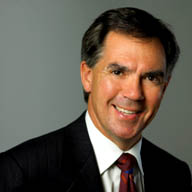
The Canadian federal government's position is not unique. Plenty of other countries are not prepared to legally commit to significant emissions reductions.
It is certainly disheartening to realize that the inspiring Guyanan President you meet one day will be pitching his wonderful ideas to the likes of unenthusiastic Jim Prentice types.
Wednesday, October 21, 2009
Should we be thinking about urban containment policies?
The United States circa 1975, had 95% of its population growth occur in suburban areas outside of cities. Even today, many cities like Los Angeles or even Miami have a vast portion of their populations living in suburban areas and commuting to work (downtown) thanks of course to the automobile.
Urban sprawl has allowed for low-density development and commercial strip malls in the suburbs. More importantly, the automobile has allowed this to happen and consequently, this has emerged as the common development pattern in the United States. Can urban containment policies help encourage increased urbanization, high-density development, public transit improvement and overall better city living? Some experts believe so, but it is always hard to tell because the citizen ultimately makes the final call and influences the decision.
An urban containment policy would impose geographical constraints on urban growth to contain sprawl. What's more, it prevents the outward expansion of the urban field and forces the development market to look inward.
The rationale of an urban containment policy is to preserve natural landscapes, encourage urban development and reinvest in existing urbanized areas. In terms of the policies themselves, there are regulatory urban growth boundaries, the implementation of greenbelts and restricting new residential development in agricultural areas. The interesting one I find is regulating urban growth boundaries. Their rationale is a simple one: to curb sprawl, protect open space and encourage redevelopment of inner-city neighboourhoods. This may work well for large American metropolises but not in a city like Peterborough.
Much of Peterborough's population growth has occurred on these "urban growth boundaries" not within them. That's where the demand is- for single detached housing away from the urban growth centre and usually on open space. Developers know that the housing market demand calls for these types of development which are low-density and inefficient from a mixed land use perspective.
While regulating urban growth boundaries can theoretically encourage more pedestrian friendly cities, they should only come about if the economic rationale is a good one. Regulating urban growth boundaries in Peterborough would be impractical because that is where the population is growing. Alternatively, the city should encourage developers to construct mixed use (commercial and residential) units in the city to optimize space and be more attractive for the suburbanites.
Key message: Urban containment policies can do many things.... above all, they help minimize automobility.
Urban sprawl has allowed for low-density development and commercial strip malls in the suburbs. More importantly, the automobile has allowed this to happen and consequently, this has emerged as the common development pattern in the United States. Can urban containment policies help encourage increased urbanization, high-density development, public transit improvement and overall better city living? Some experts believe so, but it is always hard to tell because the citizen ultimately makes the final call and influences the decision.
An urban containment policy would impose geographical constraints on urban growth to contain sprawl. What's more, it prevents the outward expansion of the urban field and forces the development market to look inward.
The rationale of an urban containment policy is to preserve natural landscapes, encourage urban development and reinvest in existing urbanized areas. In terms of the policies themselves, there are regulatory urban growth boundaries, the implementation of greenbelts and restricting new residential development in agricultural areas. The interesting one I find is regulating urban growth boundaries. Their rationale is a simple one: to curb sprawl, protect open space and encourage redevelopment of inner-city neighboourhoods. This may work well for large American metropolises but not in a city like Peterborough.
Much of Peterborough's population growth has occurred on these "urban growth boundaries" not within them. That's where the demand is- for single detached housing away from the urban growth centre and usually on open space. Developers know that the housing market demand calls for these types of development which are low-density and inefficient from a mixed land use perspective.
While regulating urban growth boundaries can theoretically encourage more pedestrian friendly cities, they should only come about if the economic rationale is a good one. Regulating urban growth boundaries in Peterborough would be impractical because that is where the population is growing. Alternatively, the city should encourage developers to construct mixed use (commercial and residential) units in the city to optimize space and be more attractive for the suburbanites.
Key message: Urban containment policies can do many things.... above all, they help minimize automobility.
Monday, October 19, 2009
Raaawwwwrrrrr! Me eat wind turbine...

The opposition to wind power is becoming increasingly diverse. The disdain for the industry is no longer reserved for upset property owners, saddened bird and bat lovers, low-frequency electromagnetic wave health worriers or the powerful fossil fuel industry.
No, the newest threat to wind power is a giant, four-armed monster. Where these monsters can be found is so far uncertain, but warnings are being issued to the world on value-brand tissue boxes.
I took this picture of my sister's tissue box. At first (and still) am not sure whether the tissue company is advocating the destruction of wind turbines, or whether it is highlighting how these monsters will soon rid the world of all its trees and wind turbines. Unless of course, an unnamed band of green superheroes are able to fend it off with large orange balls.
If the latter is indeed the case, a certain irony can be found in the message: the monster is destroying trees and tissue paper is made from trees. So who is the box really attacking?
Whatever the reason, be prepared to see a few of these monsters at any upcoming town hall meetings on a wind power development. Just make sure to pack your orange balls.
Gwynne Dyer is coming to town...

On Wednesday, November 11th, Gwynne Dyer will be coming to Peterborough. Mr. Dyer is famed for his syndicated columns appearing all over the world and for his work as a political and military historian, as well as an all around expert on international affairs. I had the pleasure of seeing him speak several years ago on a different topic, but he is a fantastic speaker.
He will be talking about the subjects in his new book, Climate Wars, which explores the geopolitical battles (and wars, hence the title) that might come about as a result of climate change. It should prove to be an eye-opening, frightening and highly interesting experience.
Admission is free, but limited. Contact (705) 748-1011 ext. 6205 or email dyerlecture@trentu.ca to reserve your tickets.
Wednesday, October 14, 2009
The implications of population growth on water resources...
Peter Gleick is the President of the Pacific Institute out of Oakland, California. The Pacific Institute is a non-partisan research group that does policy analysis on water issues, climate change, sustainable development etc. They make policy recommendations to municipalities of California and ultimately to the state. The President, Gleick, is also a blogger and wrote a highly informative piece today on population and water. Please read his post.
In brief summary, his main points are the following:
-as populations grow, the water policy approach should be demand focused, not supply. For example, using water pricing and by-laws for controlling demand versus building desalination plants and reservoirs to expand water capacity
-Technology has made water use more efficient, however this will not be enough to deal with drastic population increases
-water use per capita has decreased since the 1970s.... do not let this deceive you. It has gone done not necessarily because of greater conservation efforts, but because the population has increased making overall water supply less per capita
To read more, check out the post.
Key message: Water will be the indispensable resource of the 21st century. Population challenges will only make it more precious.
In brief summary, his main points are the following:
-as populations grow, the water policy approach should be demand focused, not supply. For example, using water pricing and by-laws for controlling demand versus building desalination plants and reservoirs to expand water capacity
-Technology has made water use more efficient, however this will not be enough to deal with drastic population increases
-water use per capita has decreased since the 1970s.... do not let this deceive you. It has gone done not necessarily because of greater conservation efforts, but because the population has increased making overall water supply less per capita
To read more, check out the post.
Key message: Water will be the indispensable resource of the 21st century. Population challenges will only make it more precious.
Monday, October 12, 2009
Stern on contemporary issues surrounding climate change...
Does everyone remember the Stern review on the economics of Climate Change? It was a 700-page report produced by Nicholas Stern, an economist in Britain. Released in October 2006, Stern wrote this paper to convince the British government and the world in general, that not taking action on climate change will have serious repercussions on the world economy. His two big buzz words were “mitigation” and “adaptability”.
Mitigating greenhouse gas emissions could be done through environmental taxes, carbon trading schemes and the more technological carbon capture and storage (CCS), which Chris has touched on in the past. Adaptability refers to the sustainable changes that we (mainly developed world) must make to our lives to cut down on greenhouse gas emissions. This includes everything from driving less to minimizing our use of air conditioning. Adapting to new conditions brought about by climate change can be difficult, but these changes are critical for the well-being of our planet.
This video features an interview between Allan Greg and Stern. It is quite lengthy (27 minutes) but I encourage you to briefly look through it. Stern talks about his new book "The Global Deal" and gives insight into some of the real issues that surround climate change today. There are several interesting points that come out of the interview but the only one I will touch on is Canada’s role (Canada's role in the video starts at 21 minutes and 15 seconds). In brief, Stern says that Canada’s must have more of a leadership role on the equity aspects of climate change.
Being more vocal on deforestation for instance (deforestation accounts for 20% of global emissions) can set an example for developing countries who clear cut their forests. Canada’s abundance of forestry is highly advantageous from an economic point of view, but adopting more sustainable policies and showing the world that we actually care about our trees, can go a long way.
Stern also points to the massive renewable energy potential for Canada, especially for wind. Developing technologies in Canada like carbon capture or more efficient automobiles can demonstrate the feasibility of these technologies and create an impetus for other countries to explore them. Why should we explore them? We have money for research and development in Canada. Alas, money is not sufficiently allocated to these areas.
I guess anyone can ignore Canada’s leadership seeing as we are one of the highest per capita emitters of greenhouse gases in the world. Nonetheless, collaborating with other countries and being more vocal on the numerous problems associated with deforestation can be highly useful. Maybe Canada’s role on deforestation policies will be better solidified at Copenhagen.
Key message: Climate change is complex. Collaboration on this issue is of fundamental importance.
Wednesday, October 7, 2009
A quick history of Toronto's urban development...
I just read a really interesting paper for my urban environments class. The article was written by a Trent Professor. It is all about Toronto’s urban development from 1940 to 1970. Importantly however, the article discusses the role that urban expertise played in developing the city.
Because Toronto was growing so rapidly in these thirty years, it was vital to draw on the knowledge of planners, engineers, scientists and property developers to find ways that were economically productive and environmentally sound. This thirty year period was also quite tumultuous for the city as certain professions were favoured over others. Over time however, cohesion was better reached.
Historically, we have witnessed a clash between expert authority and political authority. Take the example of the urban planner in the 1950s. The urban planner might have said that bringing about a green space in an urban community can have health and aesthetics benefits. However, it may be challenging for them because they lack political authority to get these decisions passed by a municipality.
This has changed ever since, but it must have been so frustrating for planner then, who had good ideas for community improvement but was neglected because of the infrastructural solution proposed by the engineer. The city government always approved the solutions in which they perceived had immediate economic benefits. As the progressive environmental era emerged, city planners and scientists were given more voice.
The conventional view to resolving environmental problems in the 1950s and 60s was engineering solutions. Making sewers and water supply systems more efficient for example. But, a key point of the article that I wanted to share with you is that rapid urban development creates the impetus to draw on diverse expertise. Urban problems are far too complex to solve for any one profession. Floods for example, require diverse response teams for adequate remediation.
Toronto’s urban development approach was different than many of its American counterparts. Toronto for example, realized the importance of creating highways to allow suburban residents to travel from home to work. The construction of these roads and highways did not obliterate or destroy neighbourhoods (mainly low-income) while being built- something that has happened in the U.S. Take the cross-Bronx expressway in NYC for example.
The amalgamation of such expertise led to the creation of the metropolitan Toronto council. This represented a diverse body and helped find practical solutions to deal with Toronto’s rapidly growing population. Even the creation of suburban developments like the famous Don Mills suburb, was carefully thought out in design to avoid severe environmental damage and providing populations with a chance to settle in non congested areas.
Key message: The history of city development is interesting. Rapid urban development in Toronto not only led to more cohesion amongst professions (and expertise) but led to practical environmental and economic solutions.
Because Toronto was growing so rapidly in these thirty years, it was vital to draw on the knowledge of planners, engineers, scientists and property developers to find ways that were economically productive and environmentally sound. This thirty year period was also quite tumultuous for the city as certain professions were favoured over others. Over time however, cohesion was better reached.
Historically, we have witnessed a clash between expert authority and political authority. Take the example of the urban planner in the 1950s. The urban planner might have said that bringing about a green space in an urban community can have health and aesthetics benefits. However, it may be challenging for them because they lack political authority to get these decisions passed by a municipality.
This has changed ever since, but it must have been so frustrating for planner then, who had good ideas for community improvement but was neglected because of the infrastructural solution proposed by the engineer. The city government always approved the solutions in which they perceived had immediate economic benefits. As the progressive environmental era emerged, city planners and scientists were given more voice.
The conventional view to resolving environmental problems in the 1950s and 60s was engineering solutions. Making sewers and water supply systems more efficient for example. But, a key point of the article that I wanted to share with you is that rapid urban development creates the impetus to draw on diverse expertise. Urban problems are far too complex to solve for any one profession. Floods for example, require diverse response teams for adequate remediation.
Toronto’s urban development approach was different than many of its American counterparts. Toronto for example, realized the importance of creating highways to allow suburban residents to travel from home to work. The construction of these roads and highways did not obliterate or destroy neighbourhoods (mainly low-income) while being built- something that has happened in the U.S. Take the cross-Bronx expressway in NYC for example.
The amalgamation of such expertise led to the creation of the metropolitan Toronto council. This represented a diverse body and helped find practical solutions to deal with Toronto’s rapidly growing population. Even the creation of suburban developments like the famous Don Mills suburb, was carefully thought out in design to avoid severe environmental damage and providing populations with a chance to settle in non congested areas.
Key message: The history of city development is interesting. Rapid urban development in Toronto not only led to more cohesion amongst professions (and expertise) but led to practical environmental and economic solutions.
Stupid Green Ideas: No pee on this plane...

I couldn't believe my eyes when I saw it sitting in my inbox. The headline said it all: "Japanese airline wants you to go before boarding".
A Japanese airline, All Nippon Airways (ANA), has introduced a pilot program (pardon the pun) asking its passengers to use the washroom before boarding for a flight.
The reason, you ask?
ANA believes that if every passenger chooses to use the washroom before boarding, the weight of the plane will decrease, ultimately increasing fuel efficiency and reducing the level of greenhouse gas emissions from the flight.
Here's the math they use. On average, a human being carries up to one litre in their bladder, which weighs approximately one kilogram. Each flight can carry 247 passengers. So if everyone goes to the washroom before boarding, in theory the flight should be 247 kg lighter. Over the course of one month and 42 flights, ANA hopes to achieve a 5-tonne GHG reduction.
Several issues arise with this policy. Firstly, most people already go to the washroom before boarding a flight, so the theoretical savings are probably well overshot. And they certainly don't do this for the environment, but instead for convenience because they don't want to go through the hassle of lining up to use the shaky in-flight toilets.
Secondly, this could be a pain for passengers. Along with all the security protocols people have to go through these days at the airport, the last thing many people will want as they present their boarding pass is someone asking them if they have gone to the washroom yet. This was common when I was a kid, but it was my parents asking me, not airline staff.
Thirdly, this gives a bad name to environmental policies all across the board. It's fairly condescending and any backlash would not be particularly surprising. Hopefully its sheer silliness and short life span (fingers crossed) will lead it to be ignored and fall into the forgotten gallows of time forever.
One reporter on CBC made a very good point when she asked what might be next? Are they going to ask you to eat beforehand, too? (This wouldn't be all that effective either, though, considering the reputation for the quality of airline food...).
Unsurprisingly, Canada's major airlines are making no such steps. Westjet even called it "a bit extreme".
Let's just hope ANA flushes this one down the toilet. Before getting on the flight, of course.
Monday, October 5, 2009
Meet Canada's new Big Green Giant...

It took a few months, but Alberta's largest electricity generator, TransAlta, was finally able to finalize its takeover of Canada's largest renewable energy generator, Canadian Hydro Developers (CHD).
This is big. As it stands, the development of renewable energy in Canada has been fairly scattered as a multitude of different companies, utilities and community groups are installing 'green' power, primarily from wind, hydro, solar and biomass. The largest of these companies is CHD, generating nearly 700 MW from 21 wind, solar and biomass projects in B.C., Ontario, Quebec & Alberta. Those in Ontario may be familiar with its largest and most controversial wind project, the Wolfe Island Wind Project.
But today, TransAlta purchased CHD for $1.6B to significantly add to its green portfolio. TransAlta is known for its large coal-fired generation plants that generate nearly 4000MW, although it also dabbles in gas and some renewables. But acquiring CHD will put a lot of money behind renewables in Canada and could lead to a massive influx of grandiose renewable power projects.
This acquisition has several benefits for TransAlta. First, it makes them look greener. Coal is not cool anymore and being known as a coal giant degrades its reputation daily. Being green, however, is cool and people may look more favourably towards it.
Secondly, TransAlta intends to cease expansion of coal-fired generation plants in the next few years. Since energy companies like to grow, it leaves a sizeable (and profitable) gap of potential development. The new renewable projects will fill much of that gap, but more importantly, they will launch TransAlta into a sector that has nowhere to go but up, made especially enticing by considerable government incentives.
Thirdly, it gives TransAlta the right to any 'green credits' that might come along with a large cap-and-trade system. That is, groups creating green power will be given credits -- as opposed to having to purchase credits for GHG emitting behaviour, like coal plants -- that they can sell to other firms, or in TransAlta's case, use to offset some of the damage done by its GHG emitting gas and coal plants.
With the arrival of such a giant in Canada's renewable energy sector, the development of renewable power is hit with a question: What is the best way to go about deploying renewable energy? Is it through large companies like TransAlta that will be able to take advantage of massive economies of scale and significant resources to establish very large generation projects with an increased likelihood of encountering public opposition? Or should governments be focused on deploying them locally, through community-based power projects?
The presence of TransAlta will certainly make things interesting. And with the Green Energy Act coming into place, TransAlta's green future looks even more promising. But if its future projects are anything like Wolfe Island, you can be sure we'll stand witness to a big, windy fight.
Tuesday, September 29, 2009
An angry wind is blowing around Peterborough...

"No more wind! No more wind!"
These were the fledgling cries flying from directly behind me last night. The source of the quickly defunct chant was an irate man attending a public meeting in Manvers, Ontario where a controversial wind farm is being proposed. After the initial and vague proponent-driven open house drew hefty criticism from the community, a second, more open meeting was held.
Manvers is only one of the many small towns sitting southwest of Peterborough that lies within the study area of the proposed Settlers Landing Snowy Ridge Wind Park, a hypothetical wind farm being developed by a group based out of Brighton, ON, known as Energy Farming Ontario (EFO).
The project was initially considering 30 2MW turbines over an area covering several thousand acres, but has since been reduced to several clusters of turbines.
I attended the packed meeting last night in Manvers and arrived to find a large room in the local arena packed with so many people that we were forced to stand by the doors -- where a photo similar to the one above was plastered -- for much of the meeting. Estimates of attendance were well over 500, a sure rise from the 150 or so that attended the open house earlier.
Although I have been studying these kinds of meetings all summer, I had never actually been to one. But it played out just as expected. The proponents, well-dressed out of towners and armed with fact-filled powerpoint presentations, went through the motions of describing the project, its numerous benefits and perhaps stealing some of the fighting energy from the crowd as it drew on and on and on.
After scoffs by the crowd in response to certain claims by the proponents -- surrounding property values might actually increase -- members of different 'wind awareness' groups informed the audience, several times inaccurately, about the dangers of wind power. This included a man who spent over thirty minutes associating decibel levels from wind turbines with a myriad of health and quality of life defects, prompting several people to leave as he droned on.
However, another presenter showed a very powerful video taken by a farmer in the US showcasing the effects of the shadows of the turbines on his property. The thought of these very significant light changes going 24 hours/day and 7 days/week was sure to ramp up the opposition to the project.
The most interesting, and exciting aspect of these meetings is the question period. The floor was opened to anyone, as members of the public took turns blasting the project, lambasting the province's Green Energy Act -- which will reduce the power of local governments -- and pushing the proponents for answers they were never really able to give.
As you may have gathered, the crowd was less the excited about the project and there were consistent hoots and hollers from the audience.
Several interesting talking points were raised in the car ride back. Are the developers naive? Did they not know what types of questions would be asked of them? Are they really bad people, or are they well meaning people dipping their feet into a sensitive issue? Is their out-of-town nature a severe hindrance?
What about the public? How many of them were really against it? Are they just selfish landowners expressing NIMBY attitudes in the face of climate change? Will they even stay interested in the project?
The questions are endless, but an especially important question needs to be asked. How much are we willing to risk the change of our livelihoods against that of the changes coming from climate change that will ultimately effect nearly everyone?
One last interesting piece were the politics at play. The local MPP, Rick Johnson, a member of the Liberal Party -- the majority government pushing the Green Energy Act through -- was quoted as wanting to defend his community's interests, although it was implied that this would involve some criticism of the Green Energy Act. Dalton McGuinty & George Smitherman might get a little upset with him.
Sunday, September 27, 2009
Carbon tax in China...
Refresher: The carbon tax is among several market-based instruments that have the potential to spur incentives to develop and deploy carbon-reducing measures to mitigate climate change. Price increases on carbon emitting technologies can stimulate conservation measures, energy efficient investments, fuel and product switching and changes in the economy’s production and consumption structures.
While I have great hopes for China's rise in the 21st century, I am also somewhat dubious about their air pollution and environmental status. China`s economy is growing rapidly and this growth suggests that it will be one of the biggest economic giants of the world by 2030. With tremendous economic productivity, technological innovation and population growth, the country has numerous competitive advantages. However, air pollution and environmental degradation will do the country some severe harm and have multiple health implications. Air pollution for one can impede industrial productivity in the sub-urban areas due to health issues that the workers endure. Workers become ill and hence less productive. As factory workers learn more about air pollution issues, who knows how thing will turn out in these sub-urban areas.
In China, 200 million houses are going to be built with bricks in rural areas in the coming 30 years. Using bricks will take 25% of the top layer of the agricultural land and half of the coal reserves of the country to actually make these bricks. These industrial processes will spew out an abundance of carbon emissions and worsen its air quality, particularly smog.
The coal fire power plants (one of their greater sources of energy) are also vehemently condemned by the international community. While incredibly lucrative for China, they pose health issues for many of its citizens and contribute to an egregious carbon footprint globally. So, how can they resolve their air pollution and carbon emission crisis? Do you think a carbon tax would work for this nation? For a critical economic and environmental analysis on this issue, take a glance at this post courtesy of the marginal revolution.
While I have great hopes for China's rise in the 21st century, I am also somewhat dubious about their air pollution and environmental status. China`s economy is growing rapidly and this growth suggests that it will be one of the biggest economic giants of the world by 2030. With tremendous economic productivity, technological innovation and population growth, the country has numerous competitive advantages. However, air pollution and environmental degradation will do the country some severe harm and have multiple health implications. Air pollution for one can impede industrial productivity in the sub-urban areas due to health issues that the workers endure. Workers become ill and hence less productive. As factory workers learn more about air pollution issues, who knows how thing will turn out in these sub-urban areas.
In China, 200 million houses are going to be built with bricks in rural areas in the coming 30 years. Using bricks will take 25% of the top layer of the agricultural land and half of the coal reserves of the country to actually make these bricks. These industrial processes will spew out an abundance of carbon emissions and worsen its air quality, particularly smog.
The coal fire power plants (one of their greater sources of energy) are also vehemently condemned by the international community. While incredibly lucrative for China, they pose health issues for many of its citizens and contribute to an egregious carbon footprint globally. So, how can they resolve their air pollution and carbon emission crisis? Do you think a carbon tax would work for this nation? For a critical economic and environmental analysis on this issue, take a glance at this post courtesy of the marginal revolution.
Tuesday, September 22, 2009
Trent University, Aramark and Bottled Water...

Venture into a university campus across Canada and, when you find yourself hungry, you will likely be directed to a food court operated by Aramark. Be prepared to reach into your wallet. Deep into your wallet.
Aramark is an American giant. It is the 19th largest employer on the Fortune 500 and routinely generates nine-figure profits. It is one of the largest food service providers in the world, supplying businesses, sporting events and hospitals. But it is its role in schools, specifically Trent University, that I will dwell on in this discussion.
At Trent, Aramark holds a near monopoly on food service. With the exception of a small, basically student-run cafe, Aramark operates all five cafeterias on campus, including a small Tim Horton's satellite. Students living in residence are almost forced to buy into an outrageously priced meal plan and others are commonly found trying to scrape together the nine dollars charged for a simple burger and fries.
Several controversies have stiffened Trent's relationship with Aramark over the past years, but because of its efficiency and well-managed size, it is seen as an actor Trent can not live without. Even as its contract expired amidst student anger, Aramark was signed on again last year and was even granted permission to raise its meal plan prices nearly $300 -- citing commodity price increases -- from Trent's seemingly pro-business Board of Governors, a topic out of the scope of this piece.
But as much as I dislike Aramark's involvement at Trent, I will offer them some credit in relation to the work they have done with Trent's environmental student group, Sustainable Trent, of which I serve as an executive member. ST has worked with Aramark to develop notable, popular and successful programs. The Lug-a-Mug program, whereby customers using a re-usable mug receive discounts for beverages has been a hit, as has been the implementation of 'Resource Recovery Stations', organized and well-labelled stations to deposit waste, compost and recyclable goods. These are only a few of the many joint-programs.
But ST is embarking on what might be its most difficult project with Aramark: the ultimate ban of bottled water from campus. And since Aramark is in charge of the sale of all bottled water on campus, removing the beverage from its shelves is necessary for such a task. Although we are unsure of bottled water's share of revenue for Aramark, judging by the number of bottles seen around campus daily, it is a fairly significant share. Convincing a multi-national giant to drop the sale of such a lucrative product in even one of its locations is a tall order.
An anti-bottled water sentiment is slowly moving over the school. This summer, Trent held Canada's first bottled water-free convocation. Posters proclaiming the downsides of bottled water are frequently seen on campus and stainless steel water bottles are attached to nearly every backpack or bookbag you pass in the halls. Even bottled water filling stations, essentially modified water fountains, are being installed on campus after years of resistance from Trent administration and, I speculate, some influence from Aramark, who might see a significant drop in drink sales as thirsty schoolgoers will refrain from paying the two bucks for a Coke.
Aramark has even agreed to work with ST to develop a bottled water education campaign, but my pessimism predicts that the ST version might be considerably watered-down once Aramark goes through it (pardon the pun).
But bottled water is rapidly becoming an eyesore in the eyes of the public. Some schools have already banned the sale of the stuff and municipalities throughout Canada are banning the sale in its public buildings. Despite the arguments of bottled water companies and their distributors, it appears as though the battle might be leaning in the direction of the opposition.
That being said, ST certainly has its hands full. Keep your eyes peeled.
And remember, tap water is just as good, often safer and a hell of a lot cheaper. Buy smart.
Saturday, September 19, 2009
Blogging part 2: Taking blogging to another level….
One of the main objectives of this blog is to maintain an on-going dialogue about the environment. For a number of months, Chris and I have really got a grasp of what blogosphere journalism really feels like. It is certainly a wonderful break from the research papers we are accustomed to in our classes- where referencing is a requirement.
Learning about various environmental and urban issues in my classes has given me some level of optimism- at least an opportunity to communicate these issues through blogging to my friends, family and others who are genuinely concerned about the environment.
At this stage of my academic experience, I am by no means an expert on a given topic. However, my undergrad education thus far has really got me thinking about these issues and has provided me with an inclination to further explore them in a professional Master's program. Blogging has given me the chance to share my undergrad academic interests in a more fun, engaging and inclusive manner.
About 36% of the Canadian population is now reading blogs (this number is only increasing), which is 8.8 million people. People who read blogs as an alternative to newspaper articles may be looking for more in depth analysis of an issue. More opinionated and contentious writing is what the blogosphere is all about.
The blogosphere has certainly provided university students with an avenue to communicate their concerns- but how many actually do this? Whether it is the environment or Canadian Social Policy, blogging allows for an online discussion to exchange ideas and voice opinions.
Further, I hope this rise in blogging hits the university environment whereby professors and students can actively engage on more intellectual levels via online- making this information available to the public. Many university courses are structured through an online system called Web ct. Professors post links, course updates and relevant articles for students to read. There is also a discussion component which allows students to interact and post interesting articles of relevance to the course - a wonderful thing to have within the academy but exclusionary to those not in the courses. Blogging is an excellent alternative to this because everyone can read the academic discussions and engage in the material that they find interesting.
One professor of mine created a blog for his course. Students were required to submit one to two entries a semester about a subject relevant to urban geography. This counted for participation marks and created a great online forum (between students and others interested) with comprehensive commentary, high readership and inclusivity.
Key message: Blogging has the potential to do many things. They give people a chance to communicate opinions and ideas, they are inclusionary as anyone can contribute to them and they are informative. As blogging becomes more popular in our generation, hopefully we will see its acceptance in universities and as a trustworthy source of journalism.
Learning about various environmental and urban issues in my classes has given me some level of optimism- at least an opportunity to communicate these issues through blogging to my friends, family and others who are genuinely concerned about the environment.
At this stage of my academic experience, I am by no means an expert on a given topic. However, my undergrad education thus far has really got me thinking about these issues and has provided me with an inclination to further explore them in a professional Master's program. Blogging has given me the chance to share my undergrad academic interests in a more fun, engaging and inclusive manner.
About 36% of the Canadian population is now reading blogs (this number is only increasing), which is 8.8 million people. People who read blogs as an alternative to newspaper articles may be looking for more in depth analysis of an issue. More opinionated and contentious writing is what the blogosphere is all about.
The blogosphere has certainly provided university students with an avenue to communicate their concerns- but how many actually do this? Whether it is the environment or Canadian Social Policy, blogging allows for an online discussion to exchange ideas and voice opinions.
Further, I hope this rise in blogging hits the university environment whereby professors and students can actively engage on more intellectual levels via online- making this information available to the public. Many university courses are structured through an online system called Web ct. Professors post links, course updates and relevant articles for students to read. There is also a discussion component which allows students to interact and post interesting articles of relevance to the course - a wonderful thing to have within the academy but exclusionary to those not in the courses. Blogging is an excellent alternative to this because everyone can read the academic discussions and engage in the material that they find interesting.
One professor of mine created a blog for his course. Students were required to submit one to two entries a semester about a subject relevant to urban geography. This counted for participation marks and created a great online forum (between students and others interested) with comprehensive commentary, high readership and inclusivity.
Key message: Blogging has the potential to do many things. They give people a chance to communicate opinions and ideas, they are inclusionary as anyone can contribute to them and they are informative. As blogging becomes more popular in our generation, hopefully we will see its acceptance in universities and as a trustworthy source of journalism.
Wednesday, September 16, 2009

Subscribe to:
Posts (Atom)