Wednesday, September 16, 2009

Is the environmental attack on the Oil Sands going to make any headway?


A recent article in the Globe and Mail signalled that the fate of the hyper-destructive and very profitable Alberta Oil Sands might well be tipping in favour of those opposed to them. The article outlines the role the Norwegian state-owned oil company, Statoil, who has invested over $2B in the Oil Sands, is having in the country's federal elections.

Norway, from an international standpoint, is widely regarded as a friendly, progressive country, similar to its counterparts in Scandinavia. And even its historic oil industry -- Norway is the world's first country to employ a one-way CCS project -- is among the more respectable groups in the sector.

So being involved in the Oil Sands is sure to raise some eyebrows and rustle some feathers. The negativity of Statoil's involvement in the Oil Sands is so heavy that it could play a major role in the federal election as candidates from nearly every party are promising to carefully examine the role of Norway's state-owned company. One prominent leader is already offering to create environmental laws that would make it impossible for Statoil to even come close to getting involved with anything like the Oil Sands.

Norway is not the only one rethinking its involvement in Alberta. Even the Chinese government, whose state-owned oil enterprise is heavily invested in the Oil Sands, is looking at what's going on. The article also mentions that several Chinese journalists are on their way to take a tour of the areas surrounding the Oil Sands to witness the environmental destruction of the place.

But before we start to think that the tables have really turned and the Oil Sands are on their way to being shut down, let's just put a few things in perspective.

Statoil is state-owned. Generally speaking, state-owned energy companies have a lot more to answer to than their purely private contenders, especially in a country like Norway. The Chinese, although to a much lesser degree of social & environmental responsibility, are also state-owned. The downside is that the majority of investment in the Oil Sands is private. Private companies often, but not always, answer only to their shareholders who often, but again, not always, only want to make more money. The Oil Sands make money. Lots of it.

Secondly, keep in mind that it is election time in Norway. For those of us who have followed election campaigns, they are filled with promises. Often, these promises are politically charged and do not always come to fruition. Considering the length of time it would take to get out of there and the investment losses, the task of pulling out would be very difficult. I would not be surprised if this issue slowly fades away after election fever winds away.

Thirdly, and almost in summation, the Oil Sands are very, very lucrative. They are profitable for those involved and beneficiaries range from international partners (the United States) to domestic governments (Alberta). The Alberta government has certainly signalled more than once how little it really cares about the environmental consequences and its internal bureaucratic systems (see Andrew NikiForuk's Tar Sands) are far from being pro-environment. Furthermore, the Conservative stronghold of Alberta is almost insurmountable and if the current policies of both the Alberta and Federal Conservative government's is any indication, these policies are not going to change quickly.

And I wouldn't put too much money on Obama making a big deal about the Oil Sands anytime soon. His hands are full with his health care reform plan and any fight with the Oil Sands would surely have short-term economic consequences, which is the last thing he needs as the U.S. economy is starting to recover. Right now, he has bigger, more homegrown fish to fry.

I don't mean to sound like a pessimist, but the Oil Sands are big. Very big. I do not deny the environmental, economic and health damages due to the Oil Sands, but tackling such a beast is so complex and in my opinion, nearly impossible. However, I would urge those already fighting to shut down the Oil Sands to keep on doing what they're doing, as anything helps in the struggle against them.

But in some ways we need to be a bit realistic and make the best out of an already awful situation by looking more into conservation strategies, renewable energy markets and to pressure our elected officials. Perhaps we could at least reduce the demand for oil in this country. But really fighting the Oil Sands seems like a steep moutain to climb.

I can only hope I'm wrong.

Sunday, September 13, 2009

Could a Congestion Charge Zone work in Mumbai?


A number of months ago I blogged about London’s Congestion Charge Zone (CCZ) which charges motorists 8 pounds when they enter the city's designated zone from 7am in the morning to 6pm in the evening. It has been heavily praised and vigorously condemned from citizens all over the city. Despite its contestation and political controversy, it has increased public transit ridership and has led to an overall decrease in traffic congestion in the city along with a reduction in carbon dioxide emissions.

The CCZ scheme is effective in London as the statistics clearly demonstrate. Could such a system work in Mumbai, India? Its population is about 13.9 million not to mention a population density of 21,000 people per square kilometer. Automobiles are ubiquitous. They are inexpensive and everyone has one. If Mumbai brings about a CCZ the state (not city) would charge residents a cost (to be determined). This is one solution however, the city is also looking at other options. For instance, it may build a metro system connecting the densely populated suburbs of east and west Mumbai. It may implement a Bus Rapid transit system similar to the one in Curitiba, Brazil. They are also exploring air conditioned train coaches.

Mumbai appears to have many options. The IT company Mastek, who was principally responsible for putting London’s CCZ into practice, is being turned to for solutions. The CCZ has proven to work in the massive metropolis of London but implementing such a system in Mumbai could face tremendous social and economic opposition. Public transit infrastructure desperately needs revitalization. Many of the city’s residents simply drive because cars are cheap, more convenient and more dependable than the eroding and dilapidated transit services.

The city has a documented propensity to spend a lot of capital on city infrastructure. The only problem is that this time around the capital is non-existent, and hence public transit has no money. The key point is that reducing aggregate emissions from vehicles will only take place with a good public transit system. An adequate transit system would have unambiguous advantages, the risk however is that the residents may not even use it- frustrated about how they are being taxed and they could even condemn it stating that driving is cheaper than taking the transit.

Key message: A CCZ in Mumbai would undoubtedly raise the necessary capital to expend on public transit revitalization. It would also help with Mumbai’s pollution challenges. But it may be economically burdensome on the city’s residents who are highly dependent on using the roads.

Saturday, September 12, 2009

Green Cities: Peterborough is one of Canada's most walkable cities...

Nevermind the fact that Westjet and walking are at the opposite sides of the spectrum, but the airline's magazine, Up, along with the Canadian Federation of Podiatric Medicine (foot doctors) recently announced what it believes to be Canada's most walkable cities. Vancouver took first prize, followed by Toronto, Victoria and Halifax.

But in fifth place and the highest ranked small city is our very own Peterborough.

Peterborough's walkability is certainly something it can be proud of. I have been here for three years and have walked much of it. There are over 62 km of walking & hiking trails in the city limits that make it very comfortable and easy to get around.

Unlike many other cities, Peterborough's downtown core is located within easy walking distance to a series of diverse neighbourhoods, making it very easy for those from all walks of Peterborough life to walk downtown. And it is downtown where much of the action is.

Many of the city's trails are very well-maintained and link to all sorts of landmarks in the city, including the large Liftlock, Trent University even the Wal-Mart (if you so desire...). As a result of its wonderful walkability -- and perhaps income also plays a part -- there is only an average of 1.4 cars per residence in the city.

Walking is important, especially in a city. I often talk about the advantages of using a bicycle, but sometimes a walk can be much more appropriate. What a wonderful, sociable and clean way to get around.

Way to go, Peterborough.

Wednesday, September 9, 2009

Preston Manning's changing climate and some right wing bashing...


I was as surprised as the National Post's Peter Foster.

Last week, Preston Manning teamed up with the CEO of a "green" investment company, Andrew Heintzman, to deliver a piece of writing all too rare a sight to the eyes that commonly scan the pages of the National Post. Their editorial, 'Our (quality of) life depends on it', is an all-encompassing argument for investment in renewable technologies and the need for Canada to significantly reduce its greenhouse gas emissions.

To those of us who regularly wander through the pages of environmentally progressive newspieces and blogs, this kind of story is nothing new: Canada needs more renewables; the oil sands are bad; market-based instruments and government intervention is needed; Canada can harness all of this and benefit economically. But two things make this editorial stand out.

First, it appears in the National Post. The National Post is widely considered to be the more conservative of Canada's national newspapers and its columnists and guest editorialists are frequently known to bash government intervention and environmentalism at any chance they get. Some might even say the paper -- which is currently in dire financial straits -- is one of last relatively reputable safehouses for those who still believe anthropogenic climate change is a hoax.

Secondly, it was co-authored by Preston Manning. His involvement in the piece might be the only reason the National Post published it. Many of us, myself included, might be too young to remember Preston Manning in the public spotlight. My main recollection was that he reminded me a lot of Mr. Rogers and while watching the news or election coverage, my parents would continue to remind me that he and his buddies are on the bad team.

Well, for those of us with a more progressive view, Preston Manning and his buddies -- The Reform Party -- were the bad team. The party evolved throughout the late 1980s and had even gained the position of the Official Opposition in the late 1990s, although much of its strength lay in Western Canada and the Prairies, which continue to be a conservative stronghold. The party was often seen as an extremist right-wing party, advocating for everything from prohibiting abortions, taking a stance against homosexuals and other intolerant views to reducing the role of government and significantly cutting taxes. Its members were incredibly controversial, often referred to as xenophobes, homophobes and racists. Quite simply, these were not the folks preaching environmental protection, especially if the government were involved. (Thank goodness for Google).

But Manning was slightly out of tilt with the rest of his former party. He wasn't quite as intolerant as some of his fellow members and was quite the pragmatist. One elder family member of mine -- a well-entrenched left-winger -- told me Manning was much smarter than the rest of his party and, just as my Mr. Rogers comparison foresaw, was someone you would picture as your kind neighbour you talked with over the fence.

That being said, the former leader of one of Canada's most right-wing federal parties calling for government investment in renewables and the establishment of a price-setting cap-and-trade system is out of this world.

The National Post faithful were quick to fight back. Peter Foster wrote a scathing commentary titled, 'Manning turns to the dark side', that included the typical bashing of governmental intervention and price-setting policies, as well as the word 'wonk' -- in reference to people looking to combat climate change from the less conservative side of things -- more times than I've ever seen.

Another letter to the editor ended with a simple statement, "Preston, clearly, we hardly knew ye."

But Preston is doing more than writing in the Post. He is also an active member of the Steering Committee for the rapidly growing Sustainable Prosperity. Foster, unsurprisingly dismisses the group, its tag line being 'making markets work for the environment', as a "lobby for radical environmentalism."

But it is nice to know that even the most conservative, anti-government of folks can look beyond partisan ideologies to see what is probably much better for us. Even if they have to take a bit of heat from their former brethren.

Tuesday, September 8, 2009

Peterborough and the Greater Golden Horseshoe:

Cities within the Greater Golden Horseshoe are growing rapidly. In fact, these cities are the fast growing cities in the country located between Windsor (to the west) and Quebec City (to the east). Most of their growth is occurring in their urban growth centres (UGC) which are areas located within the downtown region. Peterborough's UGC is located within the horseshoe though is statistically one of the smallest. Its population grew about 5 percent from 2001 to 2006. 5 percent in five years is not that significant and it is no surprise that it is the most spatially isolated UGC in the horseshoe.

Peterborough relies less on economic synergies with neighbouring UGCs to achieve its growth. Toronto, Hamilton and Guelph for example, all rely on each other through economies of agglomeration as services, manufacturing and production are all interconnected. Being spatially isolated is somewhat problematic. Unemployment is hovering around 8 percent in the city, and if population density and growth do not rise then companies/corporations will have less of an inclination to be here.

Analyzing Peterborough from a geographical density lens would explain its uniqueness from other UGCs. Existing density of Peterborough’s UGC has been estimated at 100 residents/jobs per hectare- nothing significant but keep in mind the city's total population is 75,000. The ostensible goal is to reach 150 residents/jobs per hectare by 2031.

Achieving 150 residents/jobs per hectare by 2031 would require an additional 4,800 jobs and residents. But city planners have indicated that this growth will have to occur in the built area boundary and not in the outskirts of the city otherwise known as designated Greenfield areas. The idea is to concentrate population growth in areas where employment opportunities are high.

Is density really going to increase in Peterborough? Not sure. Forecasted growth is 14,000 people and jobs between 2006 and 2031. For one, housing will have to be revitalized and incorporate smart growth in the process. The urban growth centre has an abundance of single-detached houses which reflects the strong market demand for lower density housing in the city. If the city wants to remain competitive with other UGCs in the horseshoe, it will require more multi-unit residential developments like row housing, multi-storey buildings and better water infrastructure.

Among many of the benefits cities obtain from higher density- transit and water efficiency are the most notable. Transportation always becomes more sophisticated and efficient when density allows it to. Density usually correlates with higher transit ridership- this in turn means that the city would obtain more funding from the government to ameliorate its transit services.

On the water front, higher density housing helps lower the costs of piping installation for new residential housing units. It also reduces the maintenance costs for actually pumping the water through it. If low density units (single detached housing) continue to be built, then the water department will lose money because it costs more to deliver water to these units.

Key message: The city is growing albeit very slowly. If the city focuses on density development i.e. concentrating growth in its downtown area, then it can obtain more economic, environmental and social benefits. Being spatially isolated can be economically troublesome, but as the city becomes more dense, employment should concomitantly rise and urban amenities will improve as well.

Thursday, September 3, 2009

Deep lake water cooling: an urban solution

Have you ever heard of deep lake water cooling? I just learned about it today. In an effort to minimize energy intensive air conditioning in the city of Toronto, the city is now turning to its lake water to obtain really cold water to cool its office and commercial buildings.

Back in 2003, energy company Enwave was asked from the city government to innovate an environmentally friendly solution that can help take some pressure off of the electricity system. Air conditioning from office buildings can be incredibly profligate in the summer months and highly energy intensive. The innovation is based off of a district cooling system which draws from deep cold water (83 meters) in Lake Ontario. This is efficiency and water optimization to its finest. The deep lake water flows into Toronto’s water system at 4 degrees Celsius. It is sent through heat exchangers before entering the city's drinking water supply, and energy is transferred between two systems- the city's and Enwave's.

The city obtains a portion of the water for drinking (once it is treated), and Enwave gets a portion as well. Enwave transfers the cold temperature from the city water to its chilled water system. So all in all, you have two systems drawing from the same source and ultimately there are two uses - Enwave's and the city's which are maintained through heat exchangers that facilitate the transfer of energy.

This naturally cold water provides an alternative to the conventional air conditioning that is produced by coal-fired power plants. It is really intelligent infrastructure because it reduces the total electricity used in air conditioning systems by over 85 percent. Moreover, it also serves as a pollution abatement technique minimizing pernicious chemicals and emissions like CFCs and carbon dioxide (somewhere in the range of 40,000 tons a year). This innovation will undoubtedly help alleviate some serious urban pollution issues we have been facing of late- namely smog and acid rain.

Key message: Smart infrastructural changes are indispensable for the future of cities.

For more info about this technology, click here.

Tuesday, September 1, 2009

Stupid Green Ideas: hybrid parking spots...


A recent story in the Winnipeg Free Press, "Environmentally concious shoppers get prime parking spots", reports that a large local shopping mall has reserved several parking spots near the building for hybrid vehicles. The aim -- at least, from the mall's marketing director -- is to reward more environmentally concious drivers by giving them membership to the exclusive club previously limited to expecting mothers and the handicapped.

Apparently this is not the first of its kind. Larger box stores like IKEA and Whole Foods have dipped into these waters, too.

So is it a silly idea?

Well, enforcement is a bugger. Finding non-permit vehicles parked in handicapped spots is certainly not a rarity and such an offence probably strikes witnesses much more severely than parking illegally in a hybrid spot.

Secondly, the environmental benefits of hybrids over traditional vehicles is certainly not absolute. What if the hybrid driver drives tens times as much as the driver of an SUV? Which of these drivers should really be rewarded? And furthermore, hybrids are not always the most fuel-economic vehicles. Lexus has several hybrids, one of which has 438 HP V8 engine. Its fuel economy is worse than that of its parent company's Toyota Tacoma pickup truck. Even Cadillac's Escalade (pictured above) has a hybrid version. There is no way these vehicles should be given priority over non-hybrid, but more fuel-efficient vehicles. And what about an electric car? Would it qualify?

Thirdly, lots of people think poorly of hybrids because the drivers are sometimes perceived to be rich, snobby, self-righteous, do-gooding elites. They always aren't, but the perceptions will stick and this certainly won't help. Most people don't have a problem giving priority to the handicapped or expecting mothers, but they might think the hybrid spot a tad elitist.

Lastly, this seems like nothing more than a marketing ploy for those who employ such a strategy. It allows the stores to brand themselves as 'green' and attract more customers, without actually implementing an effective policy. It just looks good.

So yes, it is silly.

But then again, even if it is silly, at least it is something. The majority of hybrids out there are much more fuel-efficient than the rest of vehicles on the road. It probably won't hurt anyone, since angry drivers will soon drop their threats of switching supermarkets and just find another spot. And lots of corporations are employing 'green' strategies, so a harmless one like this can't hurt, right?

That is of course, if you live by the mantra 'an empty policy is better than no policy'.

I don't own a hybrid, but I do spot one in the parking lot across the way. I think I might steal the 'hybrid' logo on its rear end and attach it to my car so I can take advantage of this great deal.

Out of my way, soon-to-be mothers and handicapped, I'm saving the world!

Sunday, August 30, 2009

Canada's new man in Washington...


Don't be too surprised if there are a few more beer summits at the White House in the next few years. Yesterday, Canada's current longest serving premier, Manitoba's Gary Doer, announced he would not seek office again in the province's next election.

As it turns out, it was not the desire to golf or sit around at the cottage after serving as premier for ten years that led Doer to step down, but instead his new appointment as Canadian Ambassador to the United States announced today. Doer will replace Michael Wilson, who has served since 2006 and is most recently remembered for his alleged leak to the Canadian media during the 2008 U.S. Presidential campaign that Barack Obama had no intention of carrying through with his promise to re-evaluate NAFTA. (So far, it seems as though he was probably right).

Gary Doer is by far one of Canada's most popular premiers and is very highly regarded in Manitoba. He and his NDP party have won three consecutive majority governments, a success which is often attributed to Doer's left-centrist approach. Much of his success is also chalked up to his pragmatic, very sociable approach to life. He is the type of guy you would share a few laughs with over a beer and is the farthest you could get from a run-of-the-mill, stiff politician.

For those of us in the green camps, having Doer represent Canada's interests in the US is something to excite ourselves over. Doer is a relatively pro-green politician. He has consistently been a strong supporter of the Kyoto Accord, enacted several water-protection and conservation laws and gotten together with several other provinces and states to form a series of international and interprovincial cap and trade accords. It is the latter accomplishments that will transfer to Doer's new post in the US.

He has been a supporter of a North American cap and trade system for some time and his presence in Washington is a signal that the Harper government is really serious about joining onto Obama's ambitious climate change strategy. This is of course, if Doer is given plenty of slack from the Prime Minister's leash. But the two of them seem to be pretty chummy already. Although something tells me Doer will have a lot more fun hanging out with the Obama gang. We can just hope his good-natured approach will offer some aid in the climate agenda.

Mexico City: The Great Water User…

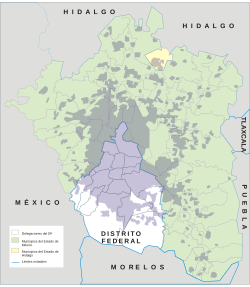
Mexico City is facing an egregious civil engineering problem. The culprit: a depleting groundwater aquifer. People around the world have been hearing about these so called sinking cities; Venice, Mexico City and Los Angeles to a lesser extent. From a geophysical standpoint, these sinking cities are sinking because its residents pump copious amounts of water from its underground aquifer. This is done primarily through wells and happens usually because of a phenomenon called “absolute dominion” which is when residents can essentially pump as much water as they like because the state allows them to.

When you over pump an aquifer or in Mexico City’s case, have 8 million plus people drawing heavily from it… its hydro capacity becomes jeopardized. It is estimated that Mexico City has sunk as much as 30 feet over the course of the 20th century.

When the city was planned by engineers and architects, they did not forecast or predict such rapid population growth. A fast growing population ultimately exhausted its natural springs causing the subsoil of the land to degrade very quickly. Indeed, this land subsidence has consequently led to serious financial problems for the city causing hundreds of millions of dollars in damage to buildings and structures.

Sewer lines and subway tunnels have required serious revitalization after being damaged by a collapsing aquifer. Civil and Structural engineers have begun putting up scaffolding and more compact structural materials to protect important buildings like the National Cathedral.

This particular conundrum is by no means an easy one to solve. 70 percent of the water used in the metropolitan area comes from the main aquifer. People are thirsty and are living in a climate that has an average yearly temperature of 30 degrees Celsius. It is hot and the ubiquity of pollution and smog are only exacerbating matters.

In the early 2000s, the New York Times summed up Mexico City’s water issue very well: “The water difficulties have become a vicious circle: as the city grows, more water is pumped from the aquifer. As more is pumped, the city sinks further. The sinkage ruptures more underground water pipes, sending fresh water gushing into the sewers, aggravating the shortage, requiring more water to be pumped from the aquifer, and so on.”

Having an inadequate water distribution system is incredibly troublesome. About a third of every gallon of fresh water pumped into the system leaks out- over a year that is enough water to supply the city of Toronto!

From an optimistic lens, change is coming to the forefront. The city is building vast pipelines to bring water from rivers outside of the metropolis- this is good water demand management albeit expensive. And rain water harvesting is becoming more salient. So when it rains… people are trying to collect that water, self-purify it and then treat it, and then drink it. The city should also explore an infrastructure leak index to locate, quantify and repair the leakage within its water distribution system.

There are a plethora of issues surrounding Mexico City. But as this blog has identified in the past, there are numerous solutions for managing water including education about water efficient technologies to more equitable water allocation decisions to conservation.

Key message: Mexico City must start looking and learning from California’s water solutions, a state that has a massive population and a dwindling water supply. For more information on this topic see here:

Friday, August 28, 2009

Are Canadians becoming more conservationist-minded?

This is a question that someone recently posed to me. My answer, not backed by any sufficient statistics or anything is.... yes we are. I am hopeful at least.

Let’s start with some natural resource history. Canada has been regarded as a resource-based economy since Confederation in 1867. Natural resources or staples such as lumber, minerals, fresh water and fisheries have all played an instrumental role in shaping and developing this nation’s economy. Natural resource development has contributed to the creation of jobs in British Columbia through their forestry sector, mineral development in Central Canada and now oil in Alberta and Saskatchewan. The national economy is characterized by a low population/resource ratio which has given Canada a comparative advantage in resources and primary resources.

In other words, Canada’s abundance of natural resources and low population density has both historically and contemporarily been a battle between nature and civilization; anthropocentric ideals exploiting resources for economic growth. The vast size of this nation and its resource endowment, when measured on a per capita basis, has historically encouraged a sense of limitless potential and availability.

Most of the macro regions of Canada developed as they did because of their dependence on the extraction and utilization of staples commodities. Atlantic Canada, prior to its economic collapse, was reliant on cod as its main staple. Central Canada had an abundance of fur. The Prairies specialized in the wheat crop and finally, British Columbia possessed and continues to have copious amounts of timber. However, recently, forest fires and the mountain pine beetle have reminded British Columbians that they need to concentrate more attention on their main natural resource. Generally, I think we have learned that the relentless consumption of natural resources is economically devastating.

To the more contemporary: Canada has reaped significant economic benefits through the free market and through free trade with the United States. However, this consumption oriented ideology is slowly dissipating as the concept of ‘limits to growth’ has come to the forefront. Canadians have been increasingly aware of the need to conserve such resources to maintain the economy and quality of life.

Climate change along with mass resource depletion will directly impact Canada’s economy and impact the socio-economic well-being of millions of citizens. For instance, British Columbia is in transition from exploitation of old growth stands to harvest sustainability as a result of an overwhelmingly consumptionist mindset that has pervaded the lumber industry for many years.

With increased environmental awareness, Canadians are becoming more pro-active in fields like waste management, recycling and reduction of waste, pollution abatement initiatives, higher participation in city rebate programs and advocating greater protection of the Great Lakes Ecosystem Basin which is currently facing problems with toxic contamination, eutrophication and pollution runoff.

In sum, the scale of exploitation of Canada’s natural resources is slowly fostering this notion of sustainable development. In decades past, resource depletion was more characteristic of the economy rather than the conservation of resources, but with this new emerging salience of the environment, I think that conservation is becoming more characteristic of the Canadian populous.

Monday, August 17, 2009

Would you take the job?: Corporate Environmental Policy...


I posed this question to an environmental policy class seminar I was in during my third year: if on the day of your graduation as an Environmental Studies/Science student a person from a large oil company offered you a multi-year position as an environmental consultant with a $250,000 salary, benefits up the wazoo, a 40-hour work week and your choice of living location, would you take it?

Surprisingly, very few if any from the 15 person class said they would. The main argument was one of ethics, where the majority of my peers would be unwilling to 'sell their soul' to work for the groups we've all learned to despise.

Fair enough, but perhaps the naive optimist in me believes that not all big corporations are inherently evil and that they be wanting to at least do something pro-environment, if not for intrinsic reasons than at least for business purposes. To this a few said that such a position would simply be window-dressing, offering lip service for an organization that really doesn't care. Although you'd get a hefty paycheque, the frustration involved with such a position might be enough to drive you over the edge. Not to mention, of course, the degrading feeling that might come if you feel your role is only perpetuating the wrongs you seek to right.

Personally, I would take the job. Aside from the wonderful financial perks -- I might be an environmentalist but I certainly wouldn't decline a sweet boat or a Porsche -- I point to one particular argument I've explored before in a different arena: the law of diminishing returns. This simple idea says that as we put effort into something, the effect one 'unit' of effort will have will diminish over time.

If, for instance, you have a test to study for, the first hour you study may increase your potential grade from a 50 to a 70, but the next hour will only improve it from a 70 to an 80, then 80 to 85 and so on until each extra hour you study really isn't making a difference.

So if we take this idea into the grand context of say, combatting climate change, our efforts (financial, political, time-intensive, etc) would have a bigger impact if put towards aspects of the environment that are already quite bad. Putting efforts into improving the environmental performance of the traditionally poor environmental performers (fossil fuel firms, manufacturing, transport industry, etc) might have a much bigger impact than putting the same amount of effort into other already less-environmentally destructive performers, such as investing millions to make fuel-efficient engines slightly more efficient (which might be the equivalent of raising your mark from a 90 to a 91).

The question of individual effort should be raised. It is well and good that changing the behaviour of these 'dirty' firms would have a large impact in our climate struggle, but are these large conglomerates, like the oil companies, not already so large and influential that actually implementing this change from an environmental consultant's position would be next to impossible if not the most frustrating endeavour one might venture on?

Would it be frustrating? I imagine so. Next to impossible? Could be. But are they too big? No.

One of the world's largest financial institutions, the World Bank, was once without an environmental program or department. Unlike the majority of other major banks, the World Bank focuses much of its attention on development, first in post-war Europe and later in the less-affluent countries of the world. Its projects have had massive environmental impacts, yet it wasn't until 1971, 26 years after its conception, that it first developed any sort of environmental program. It was resourced by one person for many years, who was later able to increase the size of the department to six staff.

This was an incredibly frustrating time, especially since the World Bank did not require environmental assessments on any projects up until 1989, making the environmental reviews by even six staffers next to impossible. As you can imagine, the other departments were less than inclined to cooperate with the toothless environmental department. However, thanks to the diligence of the pioneer staffers, the World Bank's environmental department is now one of its biggest. Billions of dollars are invested in environmentally-focused projects. (Although the environmental benefits of some of these projects are quite controversial).

It had to start somewhere. So it could certainly start with grabbing such a position, especially with such cushy benefits -- not unrealistic either, considering many environmental assessment folks at the publicly-owned Ontario Power Generation make over $125,000.

Corporations aren't necessarily evil, but they can be a tough nut to crack. But the benefits of cracking such a nut could be more influential than any of us know. I wouldn't, however, count on such a cushy job being offered right after graduation, but you never know...(hint, hint ExxonMobil).

Would you take the job?

Sunday, August 9, 2009

The importance of the potato in the 18th century...

How do places urbanize? Usually people migrate to cities because of the multiplicity of choice… You have quick and easy access to public transportation, numerous urban amenities and tonnes of housing options to choose from. When places urbanize, the population concomitantly increases… naturally. For hundreds of years we have been studying population growth examining factors that depopulate and populate areas. This has always been a curious humanitarian question and it is only gaining more research interest as our population surpasses the 6.8 billion mark.

Over the course of civilization, diseases like Black Death, malaria and other deadly epidemics have obliterated populations. However, we have also seen tremendous population growth since the 1950s particularly in India, China, Brazil, the United States and Europe. What exactly has been the cause of such population growth? Is it natural resources, is it the aforementioned urban amenities or is it something else?

The contemporary population question is being studied widely across the world. Interestingly, if we look at the world in the 18th and 19th century, the discovery of the potato not only led to a 22% rise in population, but a 47% rise in urbanization. Nathan Nunn and Nancy Qian have done research on the importance of nutrition to economic development. Their findings on the potato are fascinating.

The discovery of the potato was interconnected through geography, the environment, economics and health. After all, potatoes are an inexpensive crop to cultivate and subsequently eat, highly nutritious and are geographically suitable to be cultivated in many parts of the world including Northern Europe, Asia and even Northern Africa.

The discovery of potatoes led to population growth and urbanization in the 18th and 19th century. In the 21st century there are numerous factors contributing to population growth and decline. It seems however, that the discovery of natural resources are far more important today than any one nutritional crop like potatoes.

This is because natural resources have much more economic value and wealth today because of scarcity issues - oil, water and timber just to name a few examples. But natural resource discovery has at times --both historically and contemporarily-- led to conflict and war… factors that lead to depopulation. I wonder if there will be a study that shows the correlation between natural resource discovery and depopulation. Anyway, see Nathan Nunn and Nancy Qian's study on the discovery of the potato and urbanization.

Wednesday, August 5, 2009

Green Bin Programs need to be better monitored…

Toronto's recent city strike revealed many things and one was a heap of facts surrounding its multi-million dollar Green Bin Program. Ostensibly, according to investigations, Toronto garbage workers have routinely and surreptitiously mixed regular garbage with compostable organic waste (stuff that is supposed to go in the Green Bin).

We have all the jubilation in the world to celebrate the ending of the strike, but we should not be too excited because of the Green Bin problem. Knowing that our composted waste actually ends up in landfills is a little unsettling. This is the most appropriate time to discuss Toronto’s compost program as many are under the impression that organic waste, recycling and regular garbage are all sorted separately. They may be according to investigators, but organic waste eventually ends up in landfills or dumpsites.

While all of this is simply speculation and vociferous allegations from past garbage workers, the city has to think about future steps in the area of waste management. Toronto diverted 94,000 tonnes of kitchen waste in 2008. This is good progress but nothing stupendous given all of the resources we get from the city including the green bin itself and curb side pick-up.

The unfortunate rationale for mixing green bin waste with regular garbage is that garbage trucks that transport waste to Michigan landfills have pressure to fill their load to the maximum of 35.7 tonnes. This is done for "efficiency" purposes. This is hard to do when you only truck regular garbage which is much lighter than organic waste by comparison. When you add organic waste like meats, fruits, vegetables, diapers- then the truck gets a lot heavier and you can compact the waste a lot easier. Compostable waste is supposed to be collected from the transfer stations by a contractor and the city and then subsequently used as rich nutritious soil for gardens and environmental purposes. It is not supposed to go to Michigan's landfills!

As a multi-million dollar program that is ostensibly gaining more prominence, we need to ensure that it is properly monitored and enforced. Garbage workers can deny the allegations all they want but citizens are soon going to find out the truth behind them and be infuriated over two things- a wasting of property taxes to fund such a program and secondly, the fact that citizens take the time to compost waste and it ends up in places it is not supposed to, i.e. landfills.

Transfer station managers should report how much organic waste comes on site and they must also require the respective garbage truck worker to report what goes in his/her truck. The Green Bin program should have individuals that are positioned at these transfer stations to ensure that everything is sorted properly. False compliance must result in penalties. Reports can be issued monthly by these paid green bin program workers to update the city on the status of them and where the organic waste ends up. We are talking here about tracking every kilogram of organic waste.

Key message: If Toronto actually wants to achieve 70 percent waste diversion from landfills by 2012, then the entire city is going to have to be smarter about monitoring and expanding composting.

Thursday, July 30, 2009

Smart-metering, peak-demand pricing and rising costs for electric heating...


Ontario is starting to set up its 'smart' energy system. Everyday, hundreds of homes throughout the province are being visited by the local utility company to switch out the old electricity meters with 'smart' ones.

These brainiac meters are different from the current ones in that they are capable of measuring electricity usage at different times throughout the day and have the ability to send these readings immediately to the utility company via a wireless signal. Moreover, with the appropriate additions, some of these meters will be able to also send this information to the homeowner, allowing them to view up-to-date information on their usage. Even Google has gotten involved, so we know the possibilities could very well be endless.

The installation of these meters will allow Ontario to implement a new pricing structure for electricity. When demand is high, the price to the consumer will increase. When demand is low, the price will be cheaper.

Currently, the Ontario pricing structure is a flat rate. No matter what time people decide to turn on their stoves or do their laundry, the price is the same. So people do that stuff when it's most convenient: often in the morning before they do to work or past 5:00 after work. This is fine for the homeowner, who pays the same rate. But for the province, which produces and purchases the power, it's not a flat rate.

The production of electricity comes from a variety of sources: coal, hydro, nuclear and some renewables. But the cost of producing electricity varies from source to source. Coal and hydro are fairly cheap, but nuclear and renewables not so much. So when demand is low, more power comes from the cheaper sources, and when demand is high, more has to come from the more expensive sources, costing the province (and ultimately, the taxpayers) more money.

Sometimes demand on the grid can be so high (see heat waves & air conditioning use in Toronto) that the province's total production capacity is not high enough. It then has to import power from out of province and even out of the country. This is even more expensive.

So if the province can make higher-demand times more expensive to the consumer, it hopes that people will start to do these electricity-sucking activities at different times of the day, thereby spreading out the demand and reducing the number of times that the province needs to use its really expensive power or import it. It's a great idea.

While this will give homeowners a beneficial increase in control over their electricity usage, those who use electricity consistently will get hit hard. The biggest group of consistent electricity users are those who use electric heating & cooling. If electric heaters are needed to maintain a consistent level of heat in a home, they will operate throughout the day, at both high and low demand times. In all likelihood, the higher demand times will be much more expensive than the lesser demand times cheaper, so these people will get hit.

And some people trying to be 'green' might also get hit. In a recent conversation with a friend of mine who had once considered getting a geothermal system, he pointed out that geothermal systems require an electric heat pump to circulate the air or water through the pipes underground and in the house. These will run all day and are anything but light on electricity use.

Despite these downsides, the smart metering system is a wonderful idea. I've come across several ideas that take the existing infrastructure several steps further. What if the appliances were smart enough to communicate with the meter and only operate a lower-demand times? What if heating units were able to optimize when they operate and strike that perfect balance of cost and home temperature?

The smart metering is a first step. Our electricity system is about to get a lot more futuristic. It should be very cool.

Tuesday, July 28, 2009

Community outreach and recycling on campus

A number of months ago Trent launched a new environmental program with a grant from the Ontario Trillium Foundation. Trent has officially partnered with a not-for-profit group called Community Living Peterborough to establish an innovative waste diversion program on campus. The Ontario Trillium Foundation has agreed to provide funding of $67,400 for this program which is centred on institutional and community interaction.

The recycling program on campus provides volunteer opportunities to people with intellectual disabilities and other individuals who use the services of Community Living Peterborough. This environmental partnership is an example of how communities can collectively play a role in waste reduction whether it is on campus, at elementary schools or community centres. Such a program can have social benefits and practical waste diversion outcomes. Moreover, with the support of community volunteers, Trent's waste diversion program is strengthened and gives Trent staff, students and faculty an opportunity to operate a sustainable program. This program will also create better awareness over efficient waste management practices that can influence the city’s waste diversion programs.

The waste diversion initiative, funded by the Ontario Trillium Foundation is a step forward with bottom-up planning. With the environmental partnership between the university and Community Living Peterborough, community volunteer positions are now created on campus giving these individuals an opportunity to be engaged with the university’s waste diversion process and have a hands-on education. This initiative is an example of how a community group, a group of students, faculty and staff can come together to increase waste diversion on campus. As our campus progresses on waste diversion, we may see more funding opportunities if we articulate the connection between education, waste management and community well-being.

Sunday, July 26, 2009

Kelowna, BC: Growth accompanied with risk…

Kelowna is in a glorious geographical location. Situated right in British Columbia’s Okanagan valley surrounded by a vast array of forests, wilderness and natural environments. Climate conditions have always been variable in Kelowna- mild winters and warm to hot pleasant summers. Good climate conditions, spectacular scenery, and a non-congested environment are only some of the many benefits one obtains from living there. Additionally, it is very quiet and calm and simply ideal for any urbanite who has become tired of the congested city life. So people have been moving out of the cities into this area purchasing property that has a price tag over a million dollars.

Alas, the dismal side of the story is the region’s susceptibility to forest fires. It really boils down to a game of risks. Many residents in the region are completely cognizant of the forest fire risks but simply prefer to inhabit an area where natural beauty is ubiquitous. Forest fires, including the recent Terrace Mountain fire have caused tremendous damage to homes and infrastructure within the area.

Forest fires have destroyed hundreds of homes over the years due to drier summers and the recent phenomenon of pine beetles. The pine beetles have been chewing away at the lodgepole pine trees so rapidly that thousands of trees have become susceptible to devastating fires. Climate change is generally warming BC winters which allows pine beetles to proliferate because the temperature is not cold enough to kill them.

There are some serious planning and economic development challenges in Kelowna. Western Kelowna had the fastest population growth in Canada from 2001 to 2006. Housing development projects including sub-divisions and million dollar homes have been erected and continue to be built because of the sufficient demand and popularity of the region. All of this housing development has provided economic justification for big box stores to move in as well - Canadian Tire and Wal-Mart just to name a few.

Any developing or booming area will be accompanied with commercial outlets or stores to provide goods and services. But such commercial development should not be happening in the wilderness and natural areas of the Okanagan. People decide to leave more urbanized settings because they want a life that is not overwhelmed with housing and commercial development and congestion. However, despite this, population growth and development are now concentrating in these natural environments because of all of the aforementioned benefits. However, I do not think these people are being adequately advised on all of the risks that are posed to them. For instance, are they aware of the egregious pine beetle problem that is only being exacerbated by climate change?

Climate change has conflict and uncertainty written all over it. We know that climate change is making the region generally drier and therefore more prone to forest fires. Yet local planning departments continue to process an abundance of new residential and commercial building permits. Local economic development is prosperous but these planning departments cannot overlook the risks posed by climate change. What needs to happen is more dense and concentrated growth in the municipality of Kelowna (population 106,000). This would be much more appropriate especially for commercial development and safer in general.

Having commercial development in the more environmentally sensitive and pristine areas is irrational environmentally speaking. Residents can travel to the municipality to access these commercial amenities. It is dangerous to encourage such vast growth in this region because of the potential exacerbation risks of forest fires in the future.

Key message: Planning departments and economic development officers have to be more careful these days with issuing housing and commercial permits. Though anyone is entitled to live in the Okanagan region, the risks are quite high and climate change is only providing more uncertainty. This must be factored into the equation and planning departments should be encouraging growth in the municipality which is a safe distance from the dangers associated with forest fires.

Are you an environmentalist?...

I posed this question on our blog several months ago after watching the film Addicted to Plastic at the Peterborough Film Festival. The film's creator asked this of the many people he interviewed during his film, including farmers, sailors, scientists and entrepreneurs.


The results were mixed. Some were very happy to consider themselves environmentalists, including some farmers, citing their intrinsic tie to the environment, while others were vehemently opposed to the idea, such as an entrepreneur who reuses material to build large objects and some scientists who felt that shouldn't pick sides as it would ruin their research credibility.

So what exactly does it mean to be an environmentalist?

According to some dictionaries, an environmentalist is one who "advocates for or works towards protecting the natural environment from destruction or pollution". That's fairly vague, but such vagueness is entirely appropriate when looking at such a broad term.

The word is relative to each person. Some environmentalists will do anything and everything in their power to "protect the natural environment". Others may only make environmentally-focused decisions every once in awhile. Some may not even know they're doing something 'environmentally friendly'.

But it is this first group that seems to have grabbed the popular definition of what an environmentalist is. These are the granola-munching, Greenpeace flag-waving, ultra-vegan, reuse everything, 'don't bother that mosquito because it's a beautiful creature' types. Quite simply, they are the hardcores. And I should point out that there is nothing wrong with this. In fact, I'm quite impressed by the lifestyle that many of these people live. I certainly could never do it.

But the problem is that when the average person considers what it is to be an environmentalist, this is what first comes to mind. The entrepreneur wants nothing to do with a label that would associate him with the hardcores. And some others might simply feel they don't 'qualify' to be an environmentalist because they are not up to the standard set by the hardcores. Sally down the road might be very 'green', but since she still drives her Volvo to work and frequently watches movies on her Plasma TV, she thinks there is no way she could be an environmentalist.

The idea that environmentalists are limited to the hardcores is something that needs to change. It is certainly on its way. As the shopping list of environmental dangers is getting more and more attention, a growing number of people are starting to act 'greener'. And while government incentives are certainly helping out, there seems to be more to it than economics. People actually care.

Four years ago I didn't really care. I recycled because my parents told me to, left the TV on for hours after I left the room, had no idea what global warming was (and didn't care) and enjoyed spewing greenhouse gases into the atmosphere while doing donuts in a car.

But before you think I'm about to preach to you like an environmental convert, I haven't changed that much. I still love to drive, watch lots of TV, eat non-local, processed food and fly across Canada several times a year.

But I know the environment is important. I'm trying to do my part. I'm living a relatively 'greener' life. But I'm not perfect. But I consider myself an environmentalist.

You don't have to be a hardcore to care about the environment or to contribute in some way to helping it out.

Lastly, I would like to touch on the importance of using such a term. One might very easily toss aside this entire argument because self-labelling may not do anything when it comes to actual behaviour. This is true (cough, One million acts of green, cough), to a point. But feeling positive about your lifestyle is important. For years, the environmental strategy was to make people feel guilty about their behaviour. But it hasn't really worked and it may have exacerbated the problem.

But if people are more inclined to feel good about some of their actions rather than guilty about what they don't do, this whole environmental thing might be a lot more successful.

So ask yourself, even though you might hate the hardcores or don't strive to their standard, do you care about the environment in some way or another? Are you an environmentalist?

Tuesday, July 21, 2009

Winnipeg is going to privatize its water???...


It is heresy, they say. Blasphemy! Amongst environmental circles the sheer word is nary spoken without a plateful of disdain. Its polysyllables scathe one's ears, bringing forefront to the mind visions of fat cigars, corporate suits, a desertified planet and only the green found in your pocket.

The word--dare I say it?!-is privatization.

Melodrama is certainly not unique to environmentalists. Those of us who have gone through puberty know that all too well. It is not always warranted, but a growing coalition of Winnipeggers feel the drama unfolding around the word in their city is more than appropriate.

The city of Winnipeg (pop. ~650,000) needs massive upgrades of its drinking water systems in response to a crumbling infrastructure and new health regulations from the province. The city's estimated price tag is coming in at around $1 billion. That's a lot of money, especially for one of Canada's--it is the coolest one--'have-not' provinces.

The city is in a bind. The city's Mayor, Sam Katz, says the city can't afford it on its own. The solution appears to be to get somebody else to help pay for it: the private sector. The proposal, which is scheduled to be tabled to city council in the next few weeks, would create an independent utility to manage the city's water system and update the infrastructure. The controversy lies in the public-private partnership that would create the new utility.

Aghast! There is that word again. Private.

Many local residents, along with a slew of well-known observers including Maude Barlow, are concerned that the public-private partnership will ultimately transform into a completely privatized system where a private company could raise rates and restrict supply as it sees fit. Winnipeg being the landmark pioneer that it is, the domino effect would appear and the rest of Canada could be privatized. But in all seriousness, this is something we should be concerned about.

Many years ago, the Bolivian city of Cochabamba privatized its drinking water supply to an American company called Bechtel. Overnight, the price of water skyrocketed and before anyone knew what hit them they were putting a hefty chunk--almost equal to their rent--of their already small income towards drinking water. Riots ensued, people were killed and the company was kicked out. We don't want such a thing in Canada. Unlikely in Canada, but water is a special thing.

Katz has openly stated that this would not be a pure privatization of Winnipeg's water because 100% of the assets of this company would remain city-owned. However, other councilors and members of the public are criticizing the unclear language in his proposal he plans to table to city council. He doesn't dispute this fact and claims he'll clear it up by the time the meeting rolls around in a week or so. Several people, including many councillors, don't believe him and would like the proposal delayed until September so everyone can understand it properly.

There might even be a city-wide referendum on the idea. I wouldn't be surprised if the referendum ends up costing a pretty penny, too. Perhaps they should privatize that...I kid because I love.

Personally, I don't think they're planning to privatize the city's drinking water system. That would be insane. But I do think a public-private partnership could be dangerous. In these situations, the public ends of doling out taxpayer money and the private group makes a profit. But such a situation is not very surprising. After all, Canada's municipal water systems are all getting old and are in need of repair, but it gets more expensive every minute to do it. And in the more conservative, smaller-government mindset we find ourselves in, the governments throughout Canada are a little less trigger happy than they used to be with cash.

Establishing an independent, arms-length, city-owned utility to manage the city's system would be a smart idea. Several cities have done so. Peterborough, though not as large as Winnipeg, has had one for many years that handles water, sewage and electricity. Judging by the budget size of some programs I'm familiar with of theirs, I don't think they're struggling for much cash.

Despite the worries over the proposal, several people are in full support of privatizing the system. It will improve the water quality, make the service more efficient and ultimately make everyone better off because the free market rules all, they say. Hogwash. If it were a competitive market they might have a case in an economics class, but this is water and a monopoly does not make the world a better place. Efficiency and quality are interesting points, but the government already has very high standards for water quality and the efficiency might come at a cost of very high rates. Not to say pricing water is necessarily evil, but something tells me a monopoly would take it too far.

But back to the actual proposal. What they should do is set up the utility, keep it completely city-owned, pay the private firm a management fee to keep them happy if they continue to be involved but revenue control will remain in the hands of the city where its answerable to the public and not shareholders.

Oh, and if cost is such a problem, didn't the federal government fork out a couple tens of billions of dollars for things like this?

Friday, July 17, 2009

Waste diversion programs are not cheap…

but we could be paying for them partially through revenue from landfill tipping fees. Within the past two years, the city of Toronto purchased the Green Lane Landfill in St. Thomas, Ontario for $220 million. A worthy investment considering that projected capacity is until 2034 (under current waste consumption patterns). Because the landfill has a decent capacity, and with the augmentation of waste diversion programs like composting, recycling and waste education, the city should institute a landfill tax also known as tipping fees.

Landfill tipping fees are fairly common in the U.K. and certain U.S. states like California. Tipping fees are like a tax levied in units of currency per unit of weight or volume; for example, $/yard or $/kg or $ $/tonne.

Toronto currently has no tipping fee policy but by introducing one at the Green Lane Landfill it can potentially induce more waste reduction efforts, resulting in a total decrease in the flow of waste sent to the landfill. Why landfill tipping fees? The main impetus for this policy would be to control and price external waste which could offset the city’s own waste management costs. For instance, through establishing a tipping fee to external users or municipalities, it could cover the landfill operating costs such as land taxes and property fees, environmental monitoring costs like repairing liners to prevent groundwater contamination, and service costs to offset payments for employees who work at the landfill.

Operating a landfill is costly especially one that collects waste from the city of Toronto. The city should not merely invite hundreds of municipalities across the region to use the landfill however, those currently using the landfill should be subjected to tipping fees based on how much waste they bring.

On the waste conservation side, having a tipping fee in place could provide a stronger incentive for external municipalities to reduce waste and reduce costs. In other words, let's say that Toronto’s tipping fee is set at a price such as $35/tonne of waste. This fee can act as an incentive for users to send less waste to avoid such a financial burden. Of course, this would mean that municipalities can simply use other landfills in the region that do not have such tipping fees. However, as waste management becomes even more of a salient issue, we may witness a good provincial policy decision to bring about legislation that require all landfills in Ontario have a tipping fee in place.

Toronto can benefit tremendously by charging these external users a designated tipping fee which can help offset some of its annual waste management costs. If municipalities continue to send their waste to the landfill because it is simply more convenient and efficient to do so, then Toronto can consider raising its tipping fee which can provide additional revenue to fund increased waste diversion activities.

Toronto’s waste diversion rate is hovering around the 60% mark and this can increase with more funding (which we know is limited right now). For instance, increased revenues can be directed towards Toronto’s Greenbin composting program, blue box recycling program or even for consumer education, teaching consumers about the merits of conservation and waste reduction effort.

The city has a goal of 70 percent solid waste diversion from landfill by 2010. Achieving such a rate would extend the life of the Green Lane landfill until 2034. However, waste diversion programs would require more funding in the range of $50 million annually to achieve this goal. While landfill tipping fees are not the be all end all solution to this, they can surely help raise some revenue to achieve the city's goal of 70 percent solid waste diversion from landfill by 2010.

Key message: Landfill tipping fees can provide Toronto with more economic flexibility when it manages waste diversion and provides waste consumer education. It can also discourage municipalities to send their waste to the landfill because of the exorbitant tipping fee in place.

Wednesday, July 15, 2009

Green Cities: Peterborough's expanding trail system...


Peterborough is known for its natural prowess. The streets are laced with trees and greenery, parks can be found all throughout the city and a sparkling, yet slightly polluted river runs right through it. It is justifiably regarded as the "Gateway to Cottage Country" in central Ontario and acts as a wonderful transition from the busier metropolis of south-western Ontario (Toronto etc) to the isolated wilderness of the Canadian Shield.


Over the past few years I've maintained that one of the best ways to travel and see the world is on a bicycle. Such a statement is very easily applied to seeing and getting around in Peterborough. The city of approximately 70,000 people (many of which are seniors and students) is filled with a picturesque and convenient trail system. The trail system runs all the way from the busy, box-store filled Lansdowne St all the way to Trent University at the northern tip of the city. It is a paved path that runs along the river most of the way and has very few crossings of major roadways. In addition the system goes west from downtown in the large and beautiful Jackson's Park.


The trail system, which is home to walkers, runners, cyclists etc, is expanding. The city is ripping up abandoned railway lines and putting in smoothly paved trails, connecting the southern end of the city, much of which is a large industrial park, to the trail system. There are several abandoned rail lines throughout the city that are expected to be replaced with concrete, making the trail system more user-friendly and accessible for those around the city.


Additionally, the city has put in bike lanes on some of the busier streets that connects some of the separated trails, allowing for a much more continuous system.

Having a connected, easy-to-use and naturally aesthetically pleasing trail system will encourage people in cities to try alternative modes of transportation--most notably, bicycles--by making the rides easy, convenient and enjoyable. Good on 'ya, Peterborough!

Tuesday, July 14, 2009

Desalination: The San Diego Way…

Proposed desalination plants on the coast of California.

Southern California is being plagued with water shortages. Already an incredibly populous region, population growth is placing more pressure and stress on the region’s water supply. San Diego County in particular (population 3 million), which virtually imports all of its fresh water, faces a tricky natural resource quagmire that leaves all of its residents worrisome about future fresh water supply. With the rising cost of importing water along with the infeasibility of actually meeting water demand (due to increasing population), San Diego has started a massive desalination project. The county figures that taking advantage of its geographic proximity to the ocean would be beneficial for obtaining lots of water- of course it has to be desalinated first.

The project is called the Carlsbad Desalination Project and will be the nation’s biggest plant by 2011. Its purpose is to supply water for the drought-prone county of San Diego. You are probably wondering what the numbers are like: Costs $300 million and is being built by Poseidon Resources Inc. of Stamford, Connecticut. It will produce ~50 million gallons of drinking water each day which is enough to supply 112,000 households in the San Diego County area.

Progress on desalination around the world has hitherto proven to be controversial. Here is my analysis on the Carlsbad Desalination Plant:
Firstly, the plant would be a state driven natural resource management solution and therefore be more locally controlled. This means that once the various water agencies collect the water from the plant, it will be easier to allocate it to the users (residential, commercial, industrial, agricultural). Mainly because water agencies will be closer to the supplier and can help set more rigid standards for allocation purposes which inherently fosters a conservation ethic.

Importing water from upstate can be complicated because water agencies continue to fight over what constitutes “reasonable allocation”. The County currently imports its water at a cost of $526 per acre-foot (1 acre foot equals 1,233,481 litres). Desalinated water would cost $900 per acre foot. A bit more expensive but again, it is more local. Quantity fluctuations and allocation disputes always accompany imported water as reported by water managers in the area.

Importing water also requires an abundance of trucks for transportation. As discovered in the energy usage of bottled water, it takes a lot of energy to move water whether it is bottled or tanked. Smog levels are egregiously bad in the county already, and more carbon emissions in the air would simply exacerbate air quality. Minimizing imported water would help a little bit with climate change stabilization in Southern California.

More on energy: between 60 and 75 gallons of water would be generated per kilo watt-hour, this translates into 4,700 to 5,400 kWh per acre-feet. Water imports from the Colorado River require 2,000 kWh per acre-foot for water delivery and water from the state water project consumes 3,000 kWh per acre-foot to deliver water to Southern California. Therefore, it is more energy intensive to desalinate water but San Diego could be powering its main plant with energy from wind turbines and solar power as an option.

While I believe that water conservation is the most important consideration for any densely populated region, technological projects can provide some relief. A desalination plant in San Diego County, though highly criticized, will set a precedent for other cities to learn from. San Diego has regulations on lawn watering, water metering and water withdrawals that are indispensable for conserving water. Desalination should also face some sort of legislative requirement in terms of how much can be allocated to the users. Moreover, the county should be very strict about how desalinated water is used.

Key message: Water shortages are going to continue to plague the region and if the merits of desalination will help mitigate these shortages, then it is a solution worth pursuing.

Friday, July 10, 2009

Green Cities: Bundanoon-The Australian town that banned bottled water...

Well, it looks as though someone has finally conquered the industry and managed to ban the bottled stuff in a municipality.

Last week, the small Australian town of Bundanoon voted nearly unanimously to ban the sale of bottled water in its stores. This legislation is thought to be the first of its kind in the world. Up until now, the most notable bans of bottled water were within public buildings, including several Canadian cities.

Banning bottled water in public buildings appears to be quite a tough battle in Canada. At this point it's the most attainable jurisdiction for public bodies to enact such a ban. But banning within an entire municipality is a whole other ball game. Not only are government-owned buildings prohibited from selling it, more importantly, privately-owned businesses are prohibited from doing it as well.

For many businesses, in Canada at least, such an idea would hit a giant wall laced with barbed wire and laser cannons. After all, bottled water is one of the most popular and profitable products sellers can dish out. And since the health authorities haven't found anything that would pose significant danger to humans--other studies contradict that thinking--the businesses don't feel they'd have much reason to ban bottled water.

But the shopkeepers in Bundanoon felt quite differently. They voted unanimously for the ban, citing environmental concerns and the attempt by a bottling company to pump water from one of the town's groundwater reservoirs back to its bottling facility in Sydney. Undoubtedly, the bottled water would be sold back to the town's residents. It's not particularly surprising that something like that might bother people.

The lone voices of opposition during the vote came from (unsurprisingly) a representative from the bottled water industry and one resident who was concerned that tourists wouldn't have anything to drink. Instead, the town proposes to build additional water fountains and supply re-usable canisters labeled "Bundy on Tap".

It's true that this town might be in a unique position. It is very small (approximately 2,500 people live there), Australia is suffering from a very significant drought so any available water supplies probably shouldn't be touched by the bottled water industry, and it was subject to an 'invasion' by a bottling company. But this type of thing has to start somewhere.

Soon enough other municipalities will start to realize that they are not all that different from Bundanoon. Freshwater supplies are expected to dwindle in the coming decades, even in water-rich Canada, and bottled water companies will start to take from riskier sources of water. That is, sources that entire towns or cities rely on (some do this already).

The ban has already picked up some steam in Australia. The premier of New South Wales (the province Bundanoon is located in) is in full support of the ban and has banned bottled water in all public facilities. Hopefully, such a ban can be applied to a larger area.

This ban is a huge step. On its own, it won't do too much, but it will undoubtedly pick up momentum and start spreading to other areas. Perhaps it'll stay in Australia for awhile, but inevitably such a thing will migrate to the rest of the world. But don't be surprised to see the bottled water industry fire up its marketing arsenal for what will probably be the fight of its life.

Thursday, July 9, 2009

The G8 adds to the list of ambitious targets, but something is missing...

(Picture from the Globe & Mail)


During this year's G8 summit in Italy, the eight leaders of (supposedly) the world's most important eight industrialized economies (Canada, U.S., Russia, Italy, France, England, Germany and Japan) created ambitious targets to reduce GHG emissions by 80 percent by 2050. This applies to the world's 32 'industrialized' countries. They had previously agreed to a 50 percent reduction in the same time frame, but since their ultimate goal appears to keep the world from warming more than 2 degrees Celcius, they had to ramp it up a bit.

Many will applaud and praise the G8 for setting these historic and ambitious targets. It's true, these are big and fancy, but when you read into it a bit more carefully, you'll realize, just like other big target announcements, that it's probably no more than a source of political bragging rights.

Targets are great. After all, you have to know where to shoot before you pull the trigger. But the problem for the G8 is that (for the most part) they don't really have a gun, let alone a trigger. Climate change-focused targets have been the popular thing over the past few years. In Canada, Stephen Harper's government pledged to reduce GHG emissions by 20% by 2020 from 2006 levels. The indicators thus far point to a big ol' negatory in the success of reaching those goals.

The most notable climate change target has been the epic failure that is the Kyoto Accord. Many countries signed it, but few have achieved the relatively limited targets of a 6% reduction by 2012 from 1990 levels set out to be achieved in three years time. Canada, during the Chretien years, actually stated it would exceed the Kyoto targets. But instead the country's emissions rose by nearly 27%. Good on us.

Targets with no plan, such as the G8 plan, are basically useless, especially when made toothless from a disconnect to any form of binding law. It's no different than the hungover teenager making a vow to themselves to never drink again. Guess what? They will. And so will the G8. Without almost anything but pure moral obligation (sure, some countries have slowly instituted cap-and-trade plans...) the G8 will probably keep on pumping the GHG emissions into the atmosphere.

Furthermore, these ambitious targets are full of many holes. What base year should we use? No doubt the U.S. and Canada will recommend we use 2005 or 2006 as the base years, which would make for quite a different outlook compared to using 1990 levels. What about the newly-industrializing economies, like China, India and Brazil? They don't want to commit to anything until the 'developed' nations have done so, thereby recirculating the cyclical debate over whether the developed or developing world should reduce first.

Targets can be a step in the right direction. Often, they are the first step after identifying a problem. But we have known what the problem is for decades and, as per my earlier analogy, should have had targets long ago to fire our yet to be purchased gun at.

I don't mean to be cynical about the whole thing, but we need more than targets. We need a decent, well-made plan that will work. If only policy-making weren't so complicated...

Tuesday, July 7, 2009

A battle of solar proportions...

The promising future for solar energy in Ontario is in danger of taking a solid knock backwards in the next few months. A powerful lobby from the agricultural sector is trying to ban solar power development on prime agricultural land. This could very well sink the solar industry in Ontario.

Under the province's ambitious new green legislation, the Green Energy Act, solar energy is being provided with large subsidies under the Feed-In Tariff program. Solar power can be sold back to the electricity grid for nearly eight times the price of normal electricity, making them quite an economical option. Connecting to the grid, a traditionally difficult achievement, is also streamlined and made easier for producers of solar energy.

But one of the best ways to produce significant levels of solar electricity is by building large, dense solar farms. These solar farms, which typically consist of several hundred solar panels, require large pieces of land, usually over 100 acres. Often, the most attractive type of land for these farms are land designated as prime agricultural land: farms.

Farmers and others in the agricultural industry argue that this type of land should only be used for growing food. Concerns over the spoilage of the wonderful, but lessening topsoil from things like stray voltage also add fuel to the fire.

In Canada, and Ontario especially, agriculture often gets the ear of big politicians when it beckons it. In this case, members of the Ontario government, after hearing the case of Ontario farmers, are considering the option of banning all solar development on prime agricultural land in the province. Since these areas are often some of the only economical options, solar developers are cringing at the thought of being banned from these lands.

In response, solar proponents have argued that in order to meet the goals of the Ontario government, only 1/10th of 1% of the province's prime agricultural land would be needed for solar. It is true, this might not be very much land, but food is important and with a growing global population, we'll need to produce as much as we can. Furthermore, the billions of dollars being put towards corn-based ethanol subsidies are already encouraging many farmers to move away from food-intended crops.

With a climate change-focused future, we'll have to make a lot of mutually-exclusive decisions. In this case, it's food vs. green energy. Each option will not be simple. Each will have social and political implications that will always have to be recognized. I guess we'll have to figure out where our priorities really sit.

Monday, July 6, 2009

Central Ontario's Multi-Use Loop Trail...


A number of days ago I elected to ride my bicycle from Peterborough to Haliburton, ON for a large family gathering at a lakeside resort. I estimated the ride itself to be between 130 and 140 km. I've ridden to Lindsay, ON many times, which is only 45 km from Peterborough and connected via a wonderful multi-use trail that was once an old CN rail line. In doing my research to bike to Haliburton, I discovered that the trail from Peterborough to Lindsay was only part of a larger system known as the COLT (Central Ontario Loop Trail).

Just like the Peterborough-Lindsay section, much of the trail is made from an old, abandoned CN rail line. This is particularly advantageous for cyclists as it allows for the evasion of the large rolling hills scattered across central Ontario. In planning my trip I figured the quality of the trail would remain the same after Lindsay and I would be able to arrive in Haliburton in due time. I was wrong.

The route from Peterborough to Lindsay is quite enjoyable and the path is composed of well-packed and solid limestone. This is good enough for most bike types, although road bikes and some touring bikes with very thin tires might find it a bit too cumbersome. However, the quality of the trail (for biking purposes) plummets north of Fenelon Falls, a wonderful lakeside town 20 km north of Lindsay. I had been warned of this change, but elected to give it a go anyway rather than moving to the highway.

This particular section of the trail was now open to ATVs (all-terrain vehicles). And you could tell. The trail is a dream ride for ATV riders, complete with kilometres of very large rocks, swampy soil and sandy ground. For a cyclist, however, this terrain is remarkably frustrating. After about 30 very long km on this path I switched onto the highway.

The highways are especially kind because of the flat concrete. But the hills, passing cars and lack of a paved shoulder can make it quite harrowing. The particular day I went was characterized by lots and lots of rain, making it even more difficult. Upon reaching Kinmount, I foolishly assumed the trail would get better, which it did for about one kilometre. However, sand and rocks were soon again the theme of the trail and I once again had to jump onto the hilly, wet and dangerous highway. But soon enough I was in Haliburton.

I have several other summer weekend bike trips planned in Central Ontario that all revolved around that trail, but judging from what I've experienced this past week I am less inclined to rely on the trail to get around.

The rail trail is a wonderful addition to the area and has been around for quite some time. While most sections are quite fitting for walkers, hikers, mountain bikers and ATV enthusiasts, they certainly are not yet ready for long-distance cyclists. This, I feel, will come with time. After all, a few years ago the Peterborough-Lindsay section wasn't much better. But with hard work, funding and dedicated people (often from non-profits, volunteers and conservation organizations) these trails can be enjoyable and well-usable for everyone.

But until that happens, I would stick to highways if you feel like biking long distances in that area. More on trails in the area later...

Transit Benefits Programs…

Workplaces need to vigorously pursue green initiatives. Amid this era of progressive greenery, cities are seeing many changes from public transit and green roofs to carbon taxes and user fees. As we have blogged about before, public transit is perhaps the most optimal area for increasing the efficiency and greenery of a city. What we need to see however, is the active involvement of workplaces in the creation of public transit incentives. A vast percentage of employees in any city find themselves commuting to work everyday. Workplaces need to be offering their employees ample reason and incentives to take public transit.

In Chicago, there is a program called the Regional Transit Authorities Transit Benefit Fare Program. This program is an employee benefit program administered by employers. The intricacies of the program are not overly complex- it allows employees to pay for their public transit rides using “pre-tax dollars” up to $230 per month ($2,760/year). This is targeted for transit and/or vanpool commuting expenses as tax-free benefits. For the different options see here.

This program benefits both the employer and the employee. For employers, it provides tax savings up to 10% of what employees spend on transit. It helps increase workplace productivity and serves as a great recruiting tool. For the progressive and environmentally friendly employees, it provides tax savings up to 40% of their transit spend, reduces employee commuting costs and helps green the ethos of the workplace.

Certain cities like San Francisco have “tax-free transit benefit accounts”. Employees put aside up to $115 per month or $1380 per year in a tax-free transit benefit account. “This can save between $300 and $500 annually per person and companies can save over $100 per employee per year in payroll taxes by directly contributing to the account.” This of course depends on the tax bracket.

In essence, organizations that undertake this generally have more workplace satisfaction and less absenteeism. Long automobile and transit commutes can be tiring and expensive. If employees have the option of avoiding highway traffic and receiving tax incentives to take public transit, then there is less reluctance to miss work.

There are different ways of administering a transit benefits program for a workplace. The one I would support for an organization would be the pre-tax income option. For this option, employers allow their employees to use their pre-tax income to pay for transit or vanpooling. This does not mean that employers pay for the benefit but instead allow employees to take advantage of the tax savings by using their gross income to pay for qualified commuting expenses.

This could save employees up to $1066 in annual taxes by paying for transit with pre-tax income. And, “Employers see a reduction in their payroll costs on the amount set aside since they do not pay taxes on this amount.” This option would be appealing for numerous workplaces.

Key message: Transit benefit programs offer multiplicity of choice. They are cost effective, environmentally smart and excellent for workplaces of the 21st century. For more info on this topic, see Chicago's regional transit authority:

Thursday, July 2, 2009

The Troubling Resource Curse…

In Human Geography, there is a whole subject area that examines natural resources and armed conflict. In March, I wrote a paper for my Environment and Development class titled “is internal conflict an inevitable consequence of the resource curse?” looking at the Niger Delta region of Nigeria. After researching this region for a couple of months, I came to discover many troubling facts. The resource curse has exacerbated conflict and political turmoil, formed an even more rapacious central government and has led to abject poverty.

The resource curse is a highly significant concept in Environmental Resource Studies. We learn that managing resources is a critical part of the political economy. Canada, despite its challenges with the staples trap, has progressively got better with its resource management albeit no where near perfect.

Countries with an abundant amount of natural resources have a lot of natural capital available to them. This is usually advantageous for international trade and energy self-sufficiency. But the dark side of this is what we call the resource curse or the paradox of the plenty which is when counrties with a lot of natural resources tend to have slower economic growth and worse development (and more corruption) than countries with fewer natural resources. Nigeria in particular has become completely reliant on oil for its major export- profitable in the short-term, economically and socially devastating in the long run.

To paint a picture for you, the resource curse has damaged virtually all sectors in the Niger Delta with the exception of the booming oil industry. Manufacturing and agriculture have become less appealing for workers because there is more money available to them in the extraction of oil. At least, that is what they are told.

With the curse in play, the government can surreptitiously create pools of oil wealth from its exports and not actually report how much money they have. This skews the picture and allows the government to be mendacious to its workers who are not paid the true cost of their labour. Not all of this money is passed down to the workers of the Delta and then inequality and oppression ensue. It’s totally disastrous. According to Collier and other West African scholars, the resource curse has created a whole underground economy in the Delta.

Weapons are being purchased along with drugs, and insurrections are coming about-all products of the resource curse and hence internal conflict. This is a serious environment and development issue of our time, natural resources are all well and good, but they are highly dangerous as well.

Key message: Anyone interested in this topic, I would recommend you read Philippe Le Billon and Paul Collier.