Check out the following links:
1. Emerald Cities from the NY Times.
2. Bike Lanes Benefit Drivers.
3. Gas Is Cheaper, but We’re Still Driving Less.
4. Eliminate All Fossil Fuel Subsidies, Says Org.
Showing posts with label Wildlife. Show all posts
Showing posts with label Wildlife. Show all posts
Wednesday, August 24, 2011


Sunday, January 2, 2011
Environmental Challenges and Opportunities in 2010
Happy New Year! Many thanks to our readers, followers and guest post authors who continue to support and read Enviro Boys. Many more posts to come in 2011!
A blog post from the NY Times' Green Blog highlights the many environmental challenges and opportunities of 2010. Most of the examples are from the United States but there is discussion of Russia's summer heat wave and the US senate's postponed decision on whether to approve a controversial 2,000-mile, $7 billion pipeline project to deliver crude oil from Canadian oil sands to refineries on the Gulf Coast of Texas.
Here is a highlight that caught my interest and is more promising than it is depressing:
Tigers and Bears: With major reports on biodiversity all showing an accelerating loss of species on land and in the oceans, attention was focused most closely on polar bears, whose sea ice habitat is melting for longer periods almost every year. A team of climate scientists and biologists is promoting the idea of setting aside a “sea ice refuge” — a swath of the Arctic from northwest Greenland west through northern Canada where the ice remains thickest. Another study predicted that polar bears would breed with grizzlies, creating hybrids that are less resilient. Meanwhile, fears of the extinction of the wild tiger prompted a summit of sorts in Moscow, at which officials agreed to a goal of doubling the number of wild tigers — now about 3,200 — by 2022.
Read the blog post here.
Key message: We have a long way to go on the environmental front. While it is still pretty common to dismiss the ominous nature of climate change -- especially in a time when people are more concerned about finding a job -- the reality of our environmental challenges are significant and require meaningful action. Heat waves in Russia, water droughts in the US Southwest and renewable energy opportunities may seem distant from you but everything is interconnected and closer than you think. Always think about your impact on the environment and ask yourself how you can conserve and lower your ecological footprint.
Tuesday, August 3, 2010
The return of cheetahs to India
 Image: Quantum-Conservation.org
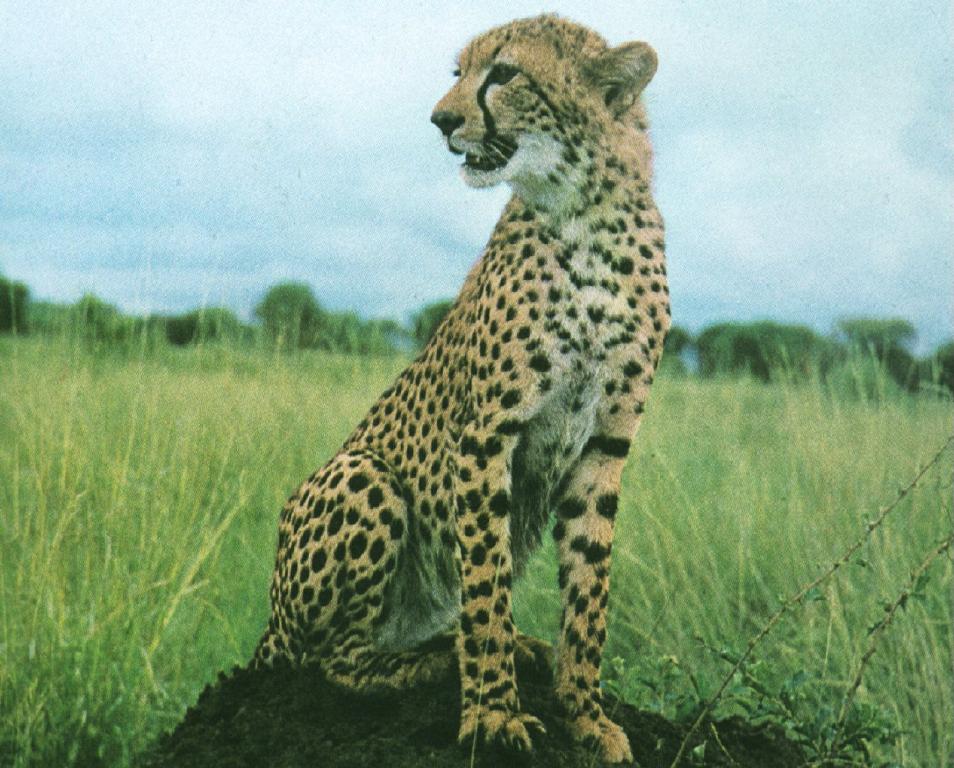
We don’t blog about wildlife too often, but I was intrigued by a recent article in The Guardian that reported the precipitous return of cheetahs to India. Indeed, the cheetah is to return to India more than 60 years after hunters shot the last three on the subcontinent.
Sites are currently being picked for the reintroduction of the animal. Eight cheetahs are being brought into India from countries including Iran, Namibia and South Africa. The budget for the reintroduction project is around £500,000 ($816,000 Canadian). Cheetahs will help restore the grasslands of the country and put pressure on state governments to enforce wildlife protection to ensure the animal's sustainability.
Wildlife, specifically tigers, have been adversely affected by poor wildlife protection policies across India. Conflicts between poor local communities and tigers, corruption and smuggling tiger parts to east Asia are only some of the reasons why the tiger population has shrunk drastically. India's population growth has also put immense pressure and stress on the tigers effectively encroaching on their territory. In fact, the tiger population shrunk from 3,600 in 2002 to 1,400 in 2010.
There is widespread enthusiasm for the return of the cheetahs; however, experts have noted that the herds of deer and antelopes --that once provided the cheetah’s diet-- are long gone. Thus, they think such a reintroduction –while a matter of national importance—is futile and bound to fail given the harsh conditions. Nonetheless, this decision, led by Indian Minister for the Environment, Jairam Ramesh, is critical because the cheetah is the only animal to have become extinct and such reintroduction signifies a renewed commitment to wildlife preservation.
The three reintroduction sites are the Kuno-Palpur Wildlife Sanctuary and Nauradehi Wildlife Sanctuary, in the central state of Madhya Pradesh, and Shahgarh in the desert near Jaisalmer, Rajasthan. "All three sites will aim to sustain a population of more than 100 cheetahs and create a tourist business" that will benefit local communities among other things.
Key message: India’s commitment to wildlife protection has thus far been less than impressive. While it is easy to criticize the reintroduction of the once extinct cheetah, I commend the country on its renewed interest to this very important matter. I hope that tigers will also receive more respect and be provided with more space, unmolested by human stresses.
Thursday, July 15, 2010
A Dolphin jumps out of its tank, while its friends watch closely...
Why the dolphin jumps out of the tank is unclear. Was it for food? Did it misunderstand directions? Was it trying to escape?
What amazed me about this video was how quickly all of the other dolphins in the tank rushed over to see what was going on. There is an intellect about these creatures that we severely underestimate. You wouldn't see goldfish coming over to check out their buddy being taken out of the tank.
This video was all too reminiscent of the acclaimed documentary, The Cove, in which the brutal slaughter of dolphins in Japan is showcased for all the world to see, despite the best efforts of the Japanese government. It also explores the political and cultural relationships people in Japan have with dolphins and how much of it is a fiction created simply to drive an economic boon. I highly recommend watching the wonderful, but deeply disturbing film.
Wednesday, June 9, 2010
An "Economy vs. Environment" Debate

I was reading an article from the New York Times titled "Muddy Road Molds Debate on the Future of Guyana". The article reminded me of that classic debate between the economy and the environment. While this particular example is far more complicated, it illustrates how a country (Guyana) has the opportunity to pave a 300-mile road that connects the capital (Georgetown) to Letham, a boomtown on the border with Brazil.
Investors from Brazil are ecstatic about this because it would allow them to search for a deepwater port near Georgetown, giving northern Brazil a "modern artery to export its goods to the Caribbean and North America".
For Guyana, the project presents an opportunity and a threat. Could the road help provide Guyana with an identity, especially an economic identity? This small country of 753,000 is the poorest in South America, with per capita income lower than Bolivia. The road would help Guyana reap significant benefits from trade and take the country more aggressively forward into the global economy.
On the other hand, Guyana could take the more ecologically sustainable path to its economic development. Indeed, the President, Bharrat Jagdeo (who visited Trent University in October) has demonstrated great leadership on forest protection policies and other environmental initiatives.
Environmentalists are deeply concerned about the potential road. Paving it could damage the forest, disrupt and displace river otters, arapaima fish and jaguars. It is projected that two million acres of rain forest could be affected if the road is paved.
Road proponents have acknowledged that the project could bring about upheaval. But they also see how it could ease Guyana's poverty. But, who's going to pay for it? The Prime Minister of Guyana, Sam Hinds, supports the project, as long as Guyana could find $350 million to finance it. There is no indication as to how much the Brazilian government will pay for the project. Their return on investment would be quite adequate considering their expanded trade routes. While the road would be stretched across the country of Guyana, it would be completely inequitable for this poor nation to finance the project at 100%.
Citizens have come out and expressed their deep concerns. Justin de Freitas, 35, who worked as a porter along the road said "that road is going to end our way of life".
There are others as well (including Indigenous) who could be affected by such a project.
To build or not to build? A looming question with seemingly clear costs and benefits. Does the country risk sacrificing its native species, local ecosystems and forested areas for a paved road that will ostensibly bring economic progress? Does it jeopardize its image as a global leader in forest protection policies? These are just some of the tough battles that Guyana now faces with concomitant pressure from the rising economic power that is Brazil.
Key message: These projects are incredibly complex. Squandering an economic opportunity for environmental protection is always a tough one to swallow. A country like Guyana has ambitions to utilize more renewable energy and continue to protect its pristine forests. However, tough decisions lie ahead about economic opportunities that can potentially bring about more benefits to the country's citizenry and alleviate national poverty.
Tuesday, March 9, 2010
No need to salt our roads: Spring is approaching and salt poisons our water…
A geological study from the University of Toronto has found that road salt poses numerous threats to groundwater and water quality. Their research findings come from a study based on Pickering, ON. Pickering is a GTA community relatively close to the 401 highway and a community that has witnessed a lot of suburban growth. Both the 401 and suburban roads use copious amounts of road salt for highway and road safety and to minimize the likelihood of accidents. Alas, in the Pickering context, a lot of this salt has ended up in a nearby watershed called Frenchman’s Bay, a lagoon on the shores of Lake Ontario.
The geologists found that over 3,600 tonnes of road salt end up in Frenchman’s Bay every winter due to direct runoff in creeks and streams. It is no coincidence that the fish population in this lagoon has been declining due to increased levels of salinity. Putting the salinity levels in some context, it is estimated that the lagoon has levels of salt that closely resemble ocean water. Higher levels of salinity simply contaminate the waters and drive the younger fish population away. Younger fish, unlike older fish, do not have the capacity to cope with saline intrusions because they are not used to it.
The impacts of road salt on Pickering's ground and surface water imply a higher than average amount of road salt usage. In Canada, about five million tonnes, or approximately 150 kilograms per Canadian, is used on roads each year to make them safe for travel in winter. A lot of this road salt is applied to roads in Ontario and Quebec.
Where does government intervention fit into all of this? Well, Environment Canada has recognized the “adverse” impacts of salt on wildlife, plants, water, soil etc. In the past, they considered adding road salt to the nation’s list of toxic substances, but... that never happened. Six years ago, the government instituted a “voluntary code of practices” to "encourage municipalities and others to use the de-icer more sparingly", while maintaining highway safety.
It is the province though that is using road salt for the 401 highway, not the municipalities. Plus, communities like Pickering are growing rapidly placing more pressure on local government to salt their roads because it is the most economically sensible way of ensuring road safety.
Voluntary code of practices should not be applied in this particular case. The geological study provides convincing evidence that road salt has negative ramifications for the large Pickering watershed. While other options are currently being reviewed, I think that municipalities must establish regulations that govern the use of road salt to account for their environmental impacts. Quotas must be established until we come up with more sophisticated engineering solutions.
Key message: The use of road salt helps make our roads safer at the expense of contaminating water quality, declining fish populations and wildlife. In an era where we are trying to sensibly integrate public policy with science, we need to find more practical alternatives that benefit society and nature.
Monday, March 1, 2010
Score one for the precautionary principle...

The Globe and Mail recently reported that a new study by researchers at the University of California Berkeley has found that when male frogs are exposed to a herbicide commonly used in Canada, they can be turned into female frogs. The study, published in the Proceedings of the National Academy of Sciences, focused on the chemical atrazine, which is a weed killer commonly used in North America but banned by the European Union.
Atrazine has brought up concerns from authorities and health officials as it has been found throughout drinking water systems and especially in agricultural regions. Although Health Canada has explored atrazine before, it has yet to deem it riskiness enough to ban in entirety. The United States Environmental Protection Agency is in the same boat.
The EU has a tendency to ban things that are relatively new, not well understood and could potentially be harmful. It adheres to something known as the precautionary principle, which simply states that we should make decisions very carefully and perhaps not adopt certain things until we know much more about them. For example, the EU has banned almost all food products that have been genetically-modified, citing that just too little is known about them yet to be throwing them into the food supply. In North America, genetically-modified foods run rampant.
The precautionary principle is becoming increasingly important as we start to realize that decisions that were made several years ago are starting to have unexpected consequences. For example, links have been drawn between the chemicals put into the drinking water supply that we flush down the toilet and decreased sperm count in men. Who would've seen that coming? And with more and more technological and biochemical advances being made every day, sometimes it is important to stop and think about what impact it might have.
Sometimes there is no evidence to backup the application of the precautionary principle. But when studies like this come along, it is probably worth taking a stronger look at what effects this herbicide could have. Having human beings starting to change sex could be a little problematic...
Monday, December 7, 2009
Where'd the Otonabee River go?...

I kid, of course. But considering the state of the Otonabee River over the past few weeks, it wouldn't be too surprising.
I was probably as surprised as anyone else when I walked downtown by the waterfront to find a dainty little stream where the mighty Otonabee River used to be. The water levels were down drastically, as the few small islands of the Otonabee all of a sudden looked like overbearing mainland. Worst of all -- aesthetically, at least -- was the unfortunate state of the exposed ground that had formerly been river-bottom. The weirdly coloured muddy surface was not a particularly desirable replacement for the river.

But more of a problem was the fact that there was very little water left. So where did it go?
Well, as it turns out, some emergency repairs had to be done on one of the locks south of Lansdowne. Clearly the necessary repairs warranted more than a couple folks hopping in with SCUBA gear with a hammer and nails in hand, so the federal authorities (who manage the lock system) decided to drain the thing. Apparently, this involves draining the river several kilometres upstream, too.
The pictures I've included are from outside my house just north of downtown on the Otonabee. The river was down between two and three metres and looked considerably different. Some islands have been exposed, a big patch of mud lies covered with seagulls and ducks and the river's edge has a tidal feel to it. The river looked much worse farther south. Compare the third with the fourth, which are taken from the same area.
 Draining a river several metres is not without its risks. In an interview with the Peterborough Examiner, Trent professor Tom Whillans outlined several of the environmental effects this could have. Many of the concerns are focused on the impacts it might have on wildlife. According to Whillans, all sorts of creatures are at risk, but only if the river bed area freezes for an extended period. Lucky for the fishes and turtles, this December has been usually warm. I knew there was a silver lining to the Tar Sands projects.

So the crisis is averted. Phew. That I know our water is OK, I think I'll go water my driveway for the day...
Monday, October 19, 2009
Raaawwwwrrrrr! Me eat wind turbine...

The opposition to wind power is becoming increasingly diverse. The disdain for the industry is no longer reserved for upset property owners, saddened bird and bat lovers, low-frequency electromagnetic wave health worriers or the powerful fossil fuel industry.
No, the newest threat to wind power is a giant, four-armed monster. Where these monsters can be found is so far uncertain, but warnings are being issued to the world on value-brand tissue boxes.
I took this picture of my sister's tissue box. At first (and still) am not sure whether the tissue company is advocating the destruction of wind turbines, or whether it is highlighting how these monsters will soon rid the world of all its trees and wind turbines. Unless of course, an unnamed band of green superheroes are able to fend it off with large orange balls.
If the latter is indeed the case, a certain irony can be found in the message: the monster is destroying trees and tissue paper is made from trees. So who is the box really attacking?
Whatever the reason, be prepared to see a few of these monsters at any upcoming town hall meetings on a wind power development. Just make sure to pack your orange balls.
Thursday, June 25, 2009
A naturalized swimming pool...
I saw this on TV a little while ago and was immediately fascinated. As you'll see from the video, this Peterborough resident decided to build a swimming pool in his backyard. But rather than building a regular concrete, chlorinated swimming pool, he built a naturalized one.
That is, rather than requiring chemicals like chlorine or salt, the homeowner planted different trees, bushes and other plants in on the edges of the pool that naturally clean the water. He also has a rock waterfall where the water is pumped up to the top of the waterfall and is slowly fed back through the rocks, which also helps to filter the water.
It has a rubber lining underneath which was covered by rock, gravel and plants to simulate a pond. It's deep enough the jump into from a well-hidden diving board and most importantly, blends into the backyard very well.
It's clean, green and looks very natural.
I'm personally intrigued by such a thing because I (like many other people) love swimming pools, but am fully aware of the environmental downsides of them. This type of thing could be a wonderful, guilt-free alternative. And he lives in the city. It's a little touch of the cottage or country in your urban backyard.
No word on cost, but maintenance sounds very low. No need to add chemicals or to unnecessarily heat it (it might be a bit cold, but perhaps you could look into heating it slightly, maybe with solar...) and no need to drain it in the winter. He just shovels off the snow and turns it into a make-shift hockey rink.
One bit of opposition to such a thing is that this particular pool has wildlife in it: frogs, water-insects and other little creatures. While it certainly makes it more natural, it can creep some people out...
Sunday, June 14, 2009
Re-visiting that national parks conundrum…
Managing parks can always be challenging. As previously discussed, India and Botswana have serious political pressures with their park management. In India, state governments in the south are adding more zoning laws to protect the endangered tiger species. The creation of this zoning has led to the displacement of thousands of Indigenous peoples living within these vast parks. In Botswana, people are forcefully removed from parks because the government ostensibly wants to protect and preserve species. Removing human pressures is seen as an optimal goal. But remember, there is always that hidden agenda of actually getting to the natural resources that are overwhelmingly concentrated in these parks.
Is this really a problem though? Well, yes because natural resource extraction produces winners and losers. In natural resource management theory there is a concept called Pareto Optimality. The Pareto Optimality principle suggests “a state in which the resources of the environment are being used in such a way that no individual can be made better off without some other individual being made worse off. In other words, it describes a ‘zero-sum’ situation because new benefits that one individual receives must be compensated by losses experienced by another individual. So with context to parks and wildlife, time and time again resource interests from companies supersede those of community and wilderness interests. The benefits of resource extraction for instance, always favour the company because of collected capital or wealth, however the loser continues to be the community at large and the various species affected by the process of resource extraction.
Namibia seems to understand how to minimize this through their policy of Community-Based Natural Resource Management (CBNRM) but this problem continues to be manifested in parks around the world.
So, the primary economic decision is always associated with extracting the resource in abundance to generate higher returns for the end product. The result, there is no concept of a conservation culture or wilderness recognition and at times, the environment is simply ravaged, leaving no room for regeneration.
This may not seem like a big issue but it certainly is. Canada will face numerous challenges in the future with its national and provincial parks. As natural resources dwindle in supply, we are going to turn to areas that we have not adequately explored yet because of rigid zoning laws. Those areas are parks. We need to take pro-active measure to ensure that those laws do not vanish. I think we need to have a stricter biosphere reserve zonation policy. The biosphere reserve concept was first introduced in 1968 by the United Nations Educational, Scientific, and Cultural Organization (UNESCO). Its primary aims at that time were threefold- promote ecological sustainability, minimize biodiversity loss, and enhance linkages between cultural and biological diversity.
The biosphere reserve zonation concept is an effective and rational tool for park management. It has three zones- The core zone monitors natural changes and serves as a conservation area for biodiversity. Human influences are limited because of its rigorous protection standards. The next zone is equally as important for the park- a buffer zone which allows for low-impact activities such as research, environmental education and recreation. Finally, the transition zone, as stated by UNESCO, allows and encourages sustainable use of resources by local communities.
Key message: Biosphere reserves are crucial for advocating the protection of ecosystems and striving towards protecting the rights of the species found therein. They involve and heavily draw upon the community for consultation and advice.
They also limit natural resource extraction because the rights of wildlife supersede those of the companies.
Saturday, April 18, 2009
Wildlife and Community Based Natural Resource Management in Namibia…
This is our 100th post. Special thanks to all of our passionate readers, keen followers and avid "enviroboys" fans for continuing to read this blog. We appreciate the comments and input that you have provided to us to make this blog more exciting and more fun to read.
Among many of the aims of this blog, one is to maintain an on-going dialogue on several issues that pertain to the environment. Chris and I blog a lot about some of the contemporary environmental issues within North America and feel that providing some insight and analysis into issues from different parts of the world would be useful for our readers. This entry is about the successes of community based natural resource management in Namibia.
Wildlife management is always tricky business. As I alluded to with India, tigers are becoming more scarce and the state government wants to protect them by relocating people who are living within the park. An effective tactic, but not the most equitable. When it comes to actually preserving wildlife in national parks or game reserves, numerous challenges arise. Mostly due to the fact that wildlife is an open access resource meaning no one owns it and therefore there are little incentives to conserve them. Consequently, a lot of wildlife is lost due to excessive poaching.
Namibia is an exception however. The government principally relies on community based natural resource management (CBNRM), which is premised on the management of natural resources and wildlife through development that is economically viable, socially beneficial, and ecologically sustainable. There has been this push because the locals have witnessed uncontrolled poaching of wildlife. The locals also have cultural and spiritual connection to wildlife and the land. They do not control it, but they highly value it. With the starting of CBNRM policy approach in 1980, wildlife has been better protected and valued across the country. It has brought about a system that gives locals a chance to identify poachers and bring them to justice. These locals are like traditional authorities serving the interests of the common good. The country is slowly seeing a shift towards giving the local people land rights to manage natural resources and wildlife in game reserves.
In addition, they have established “conservation conservancies” which are land titles held by the government but give the locals the opportunity to manage wildlife through ensuring adequate protection of these species. Conservancies disallow poaching on these lands which makes it easier to control and monitor hunting. With a population of about 2 million people, 220,000 (10%) are living on these conservancies. The people are very connected so much that there are annual general meetings so that people can vote on the future course of action for wildlife preservation. Folks this is a democratic process for wildlife protection and preservation, something we are not accustomed to in North America. Tourism has also been on the rise in Namibia employing the locals with jobs that they are generally content with because they know that they are contributing to the betterment of their natural environment. Moreover, they are getting trained through these jobs and many go on to start their own local businesses (developing human capital).
Through a CBNRM approach, and with the implementation of conservation conservancies, the people have been given appropriate incentives to protect wildlife and this has avoided the tragedy of the commons. The country understands that you do not need PhD wildlife biologists to manage these game reserves and conservancies. The locals can manage them just as well given the right incentives, rights and laws that permit them to do so. CBNRM has also given women a chance to get closer with land rights ultimately providing them with an avenue to look after endangered species and not worry about being forcefully relocated by the government.
Key message: CBNRM provides incentives to conserve natural resources and protect wildlife. Legislation that gives communities the power to create their own conservancies is very progressive and equitable. Allowing local communities to create conservancies to manage and benefit from wildlife on communal land is a step in the right direction.
Saturday, April 11, 2009
National park debate…
There are 1400 tigers presently in India. The country has 28 tiger reserves and 8 more are being added within the next 10 years. India’s population already at 1.1 billion, is going to probably surpass China’s 1.3 billion in the near future. We cannot forget that India's population rose by 21.34 % between 1991-2001. With 1400 tigers left in the country and with population pressures mounting one has to ask… is there a future for tigers in India?
Or....."What price should India pay to save its rapidly diminishing forests, and for whom, a trophy animal like the tiger, or its original inhabitants?" This is proving to be a difficult question to answer. Nagarhole National Park located in the southern state of Karnataka is facing a big conundrum over their tiger population. You can read the article here, but the main point is that the park has both a small tiger population and original tribal people living there. There are 1000 families living in close proximity to the tigers and other wildlife, this is problematic because it poses numerous threats to them. Some of the preservationists and government officials are worried about having the human population there because of the destruction of the tiger habitat, forest fires, logging, wood collection, and modern development etc.
The government is now relocating people outside of the park because they want the tiger population to be free from anthropogenic pressures. Ecologists are in support of this action claiming that nature comes back dramatically once you remove the pressure and stress, it is naturally resilient. Moreover, tigers are a species that reproduce in great numbers but cannot do so under great pressure. What is contentious here is that the government included in the land rights law a measure that allowed for the expulsion of settlements from areas deemed critical wildlife habitats, but with explicit consent of villagers. It is always challenging to receive consent from the villagers because some are in favour but the vast majority are in opposition to the proposal. About 1/3 of the 1,000 families who live inside the park have moved out.
What should we think about? According the article, compensation for these people is insufficient. Monetary benefits do not always solve the problem, these people have a close and intimate connection with the land and live off of it. Essentially, such an approach removes them from their natural capital. India`s economy is now booming with 9 percent economic growth, does it even enough have room for these tigers? This is a problem faced in places like Botswana as well. In Botswana, parks and game reserves are developed with an ostensible justification to protect species and wildlife.
As I learned from a talk last week delivered by a Botswanan scholar, diamonds are usually located in these parks and are difficult to get to with a human population living around them, the solution: move the people out. The hidden message here is that governments use this justification to evade the political controversy that accompanies natural resource extraction in parks. In other words, saying they are going to protect species when really they are developing parks and zoning areas for the purposes of getting to the natural resources.
Key message: Lots to think about here but in relation to India, is the government going to continue creating tiger reserves? The human population is expanding rapidly and this will indirectly affect the tiger population. It seems like a win-win situation for the government. They can create and preserve parks through relocating the Tribal population (who receive little benefits from the state) and protect tigers while concomitantly exploring natural resources. Because the people have been relocated, they cannot contest and oppose these actions because they are no longer living there. Always think critically about national park development not only in developing countries, but in developed countries like Canada.
Wednesday, April 8, 2009
There's walleye in the Otonabee?...
I just received a public notice from the utility company, Peterborough Utilities Inc. (exciting name, eh?), warning me not to be afraid of the team of flashlight-wielding intruders running up and along the banks of the Otonabee River during the next few nights.
It turns out these suspicious assailants are not robbers or even secret FBI agents searching for a downed alien spacecraft, but actually investigators from an environmental firm. They're checking out the spawning activities of the walleye that gather near the hydro generating station directly beside our neighbourhood.
Apparently it's all part of the "new Species at Risk legislation". That legislation is the federal Species at Risk Act (SARA), which is six years old, which I suppose might be considered "new".
In any case, it's nice to know that they're looking out for the walleye. As a fisherman, I might be tempted to take advantage of these spawning areas. But there's little fun in that. And it's not like they interrupt me in the bedroom.
Thanks for the notice, PUI. It's a lot better than the military regiment located down the road. They seemed to overlook the fact that residents might be afraid of camouflaged warriors darting through the neighbourhood at night with assault rifles. It might have only been "exercises", but I had my spatula ready to combat any would-be assailants.
Subscribe to:
Posts (Atom)